
Lots of things are produced in Rwanda, including bottled water, many bottled juices (mango, pineapple and passionfruit being the most popular), liquid yogurt (kefir), coffee and black and green tea, as well as several brands of beer. However, I thought you’d be most interested in reading about some of the more personal and common items made in Rwanda that one can purchase.
Below are examples of Rwanda’s famous Imigongo wall art, traditionally (and sometimes still) made of cow dung (Cows have a revered status in Rwanda) applied in distinctive geometric shapes directly to the walls of huts and painted with natural pigments of red, black, white and gray. Today, however, other colors have been added and the designs are more often painted onto carved wood panels, usually by women. I love the simple, vibrant, geometric designs and have several of these adorning the walls of my house.


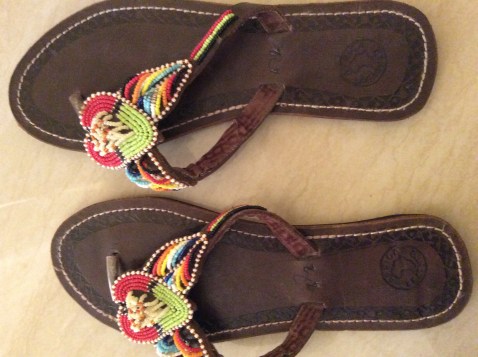
These stylish and very popular beaded sandals are a favorite of mine and my female law students. Because they are available throughout Rwanda, I had mistakenly thought that they were made in Rwanda. I was wrong. I was recently told that they are made by the Masai peoples from Kenya and Tanzania. It goes to show what a market there is for shoes made in Africa, instead of importing shoes and sandals from outside the continent. My American size 8 (European size 42) foot is relatively large compared to Rwandans’ and so limits my shoe selections.
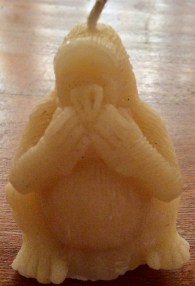
Below is a beeswax candle of one of Rwanda’s famous gorillas.
Speaking of bees, Rwanda is also known for its honey (ubuki in Kinyarwanda). Below is a jar of Rwandan honey next to Rwandan peanuts (ubunyobwa in Kinyarwanda), one of mine and my co-workers’ favorite snack foods. The container of peanuts costs 500 francs or about 62 cents.
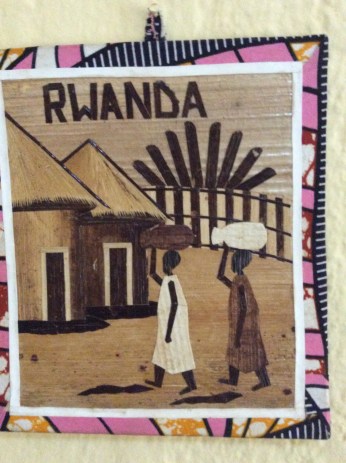
 Below is a small wall hanging made of pieces of wood pasted onto fabric-covered cardboard. It depicts the traditional cozy Rwandan huts protected by an enclosure at the time the first Europeans arrived in Rwanda in 1894. Like most Africans, Rwandans have amazing posture and are adept at carrying many things on their heads.
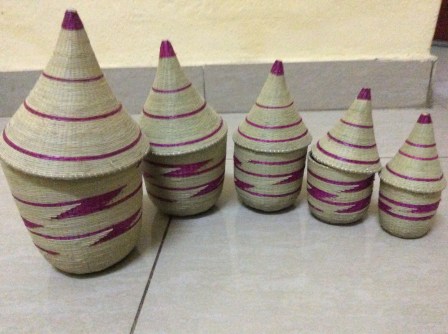
The below baskets remind me of the traditional round Rwandan homes that had conical, pointed roofs made of straw, like in the above picture. These baskets are very popular with Rwandans. A very large basket in this shape is used to collect money from guests at weddings, graduations, etc. The below baskets are a set of nesting baskets, which like the Russian matryoshka nesting dolls, can all fit into the biggest basket.
These traditional containers were once used for beer (inzoga) or liquid yogurt (ikivuguto). Now, I often see them as decorations, as these which I saw in a roadside food shop:

Amavuta y’inka (cow fat cream) is a very popular cream, which is used as a hand or body lotion. I use it daily. This one has aloe vera has an added ingredient, making its color green.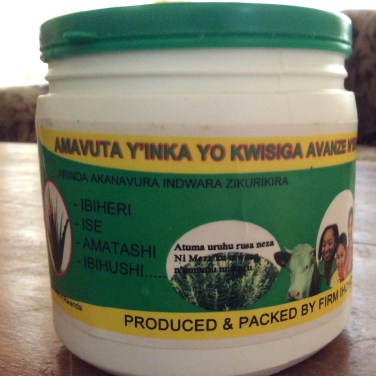
Inkoko (below) are Rwanda’s ubiquitous flat baskets, mostly used as a platter for fruit, but can be used as a wall hanging. I use inkoko both ways.


These colorful wall hangings that can double as trivets. I have these three on the wall above my bed:


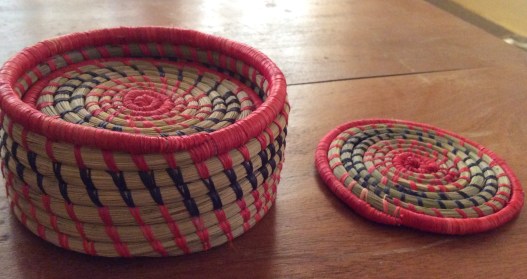
Colorful coasters with a matching holder.
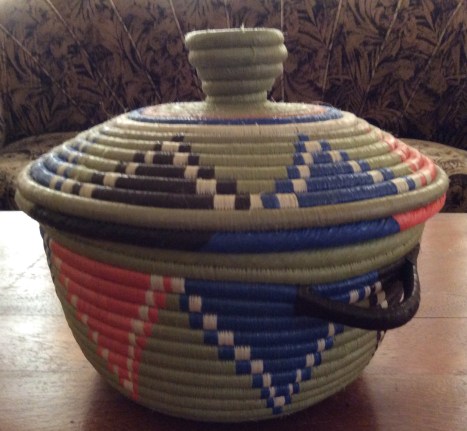
This looks like a casserole dish, but in fact is simply a colorful basket with a lid on it:
Rwandans make lots of things from fabric, including shoulder purses, coin purses and backpacks. They also make stuffed animals from bright and colorful fabric.


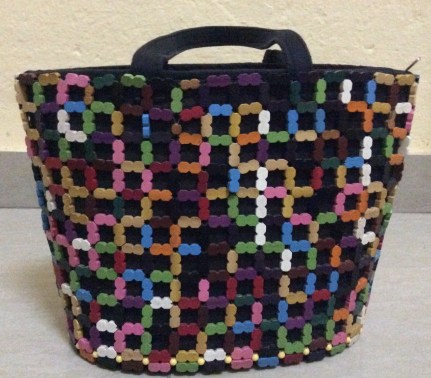
Here is a colorful purse/bag that a co-worker gave me for my birthday:
Below is another birthday present from my friend Nicole, a fun wooden sculpture of giraffes:

The below cups are made by potters of the Gatagara Pottery Works in a village not far from my town. They go nicely with my Rwandan fabric tablecloth.
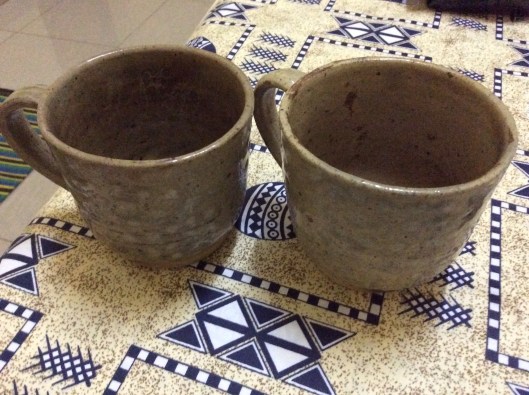
Rwandan markets are loaded with a wide variety of colorful fabric. Most of it is imported, but some fabrics, like my tablecloth (above) and the below drum fabric that I couldn’t resist, are made in Rwanda.

Rwandans do fun and crafty things with fabric, like how they transformed a plain T-shirt into this classy top by adding a few strips of leftover fabric:

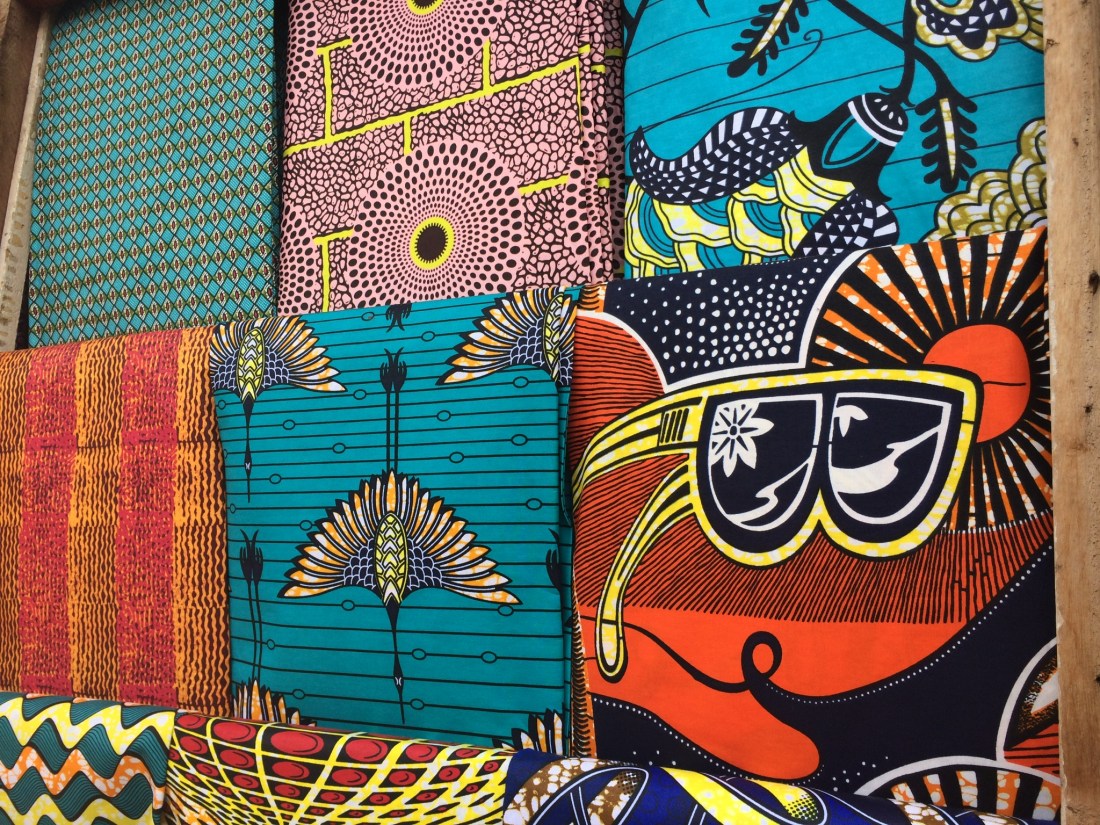
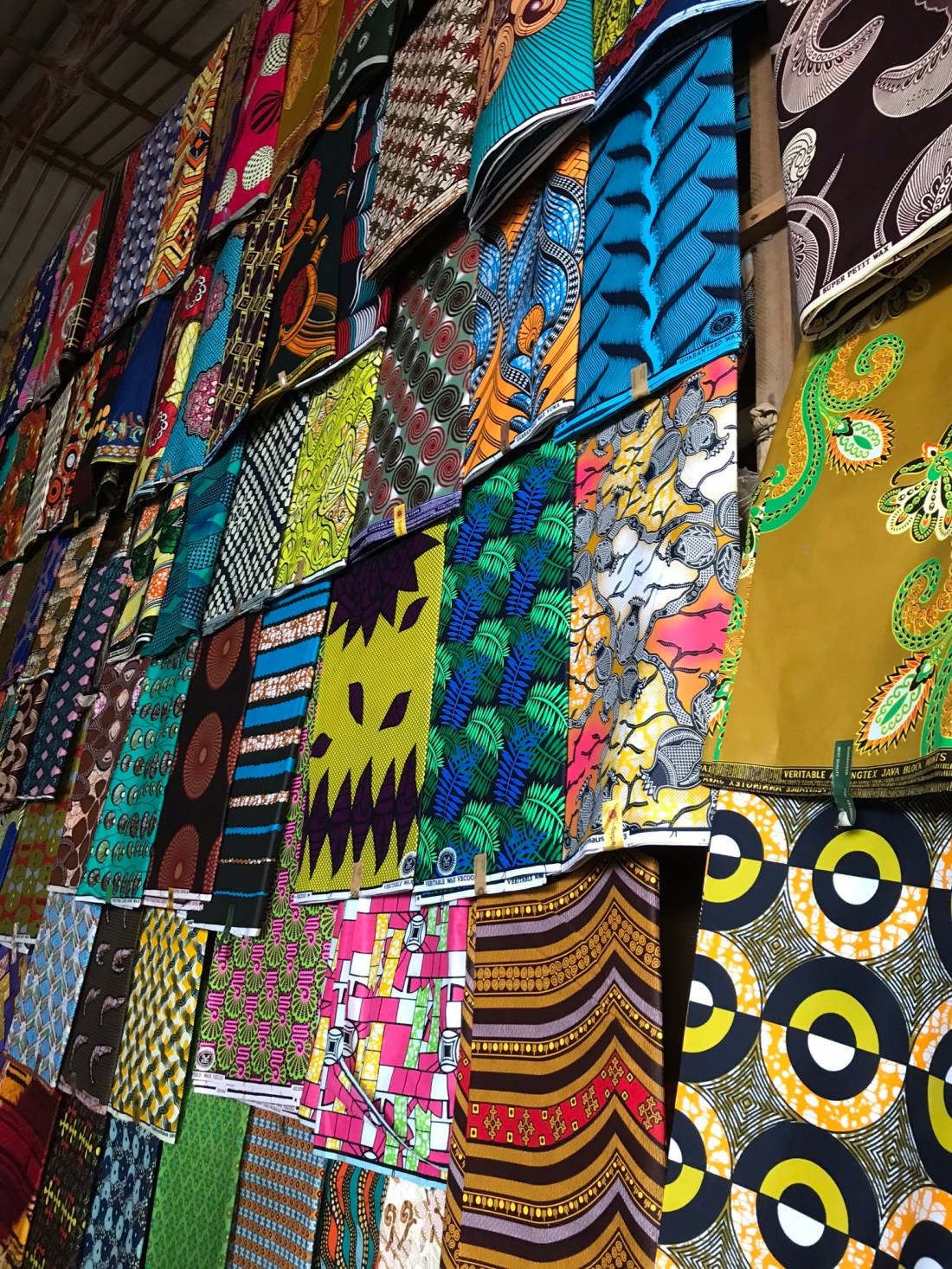
And, finally, while most of the below colorful fabrics are NOT made in Rwanda, they are a staple of Rwandan markets. Because all women wear dresses made by local seamstresses (abadozi) from such fabrics and some adventurous men have pants or shirts made from them, they are synonymous with Rwanda for me.



 Ruminations from Rwanda
That was a fun visual excursion of local and other Rwandan products. Not surprised that they are colorful, useful, artful, and low tech, capable of micro financing and development. I’m surprised not to see wood carvings, masks, etc. so ubiquitous in Ghana.
Vincent
LikeLike
Pat,
These items are beautiful! How can you resist them? How can you bring them back home with you? Perhaps you can begin a marketing business for Rwandan crafts and arts? just a thought. . .
Gerri
>
LikeLike
Thank you. I learned a lot about Rawanda. reminds me of things in Sierra Leone, 50 years ago.
> WordPress.com
LikeLike
Thanks for sharing Pat. I think I would like to try the milk fat cream and aloe? Sounds interesting. There are places here in the states where you can buy Rowandan, Guatemalan crafts as you showed here; purses, aprons, baskets etc. I usually find them at co-ops, fairs and there is a little place on Vashon Island in Washington that exclusively sells products made from indigenous peoples from around the world. Usually women’s groups that help those women and girls in their prospective countries. I’m sure your house is very colorful. Take care Pat.
LikeLike
Thank you Pat, very interesting and beautiful . Tess
LikeLike
The photos are fab. I am particularly enchanted by all the photos of the fabrics sinceI have several pairs of pants from Senegal from similar fabrics. I love them. and of course, having been in fashion in my younger days, printing, batik etc were part of my studies. What a variety of items are made locally. As always, your posts are a delight and I appreciate every one. much love from or yoga gang, saw Kate and Adam at their new home near York PA just after Mother’s Day. They are doing well, Kate has finally found a local yoga studio that feels like home, and
Adam has a fabulous studio in a former garage the property. Belkys is in
Thailand as home base for her work in the SouthSudan and Kenya.
more soon, can hardly believe that you have been offering your expertise and sending these posts for more than a year.!!! with love, xo h
LikeLike
Pat,
I am glad to see that you are able to make new blog entries. It is great to see some of the things made in Rwanda. I will mention this at our next HHC club meeting.
Steve
LikeLike