
Our total hike was 5 1/2 hours today. 7:45 a.m to 1:15 p.m.
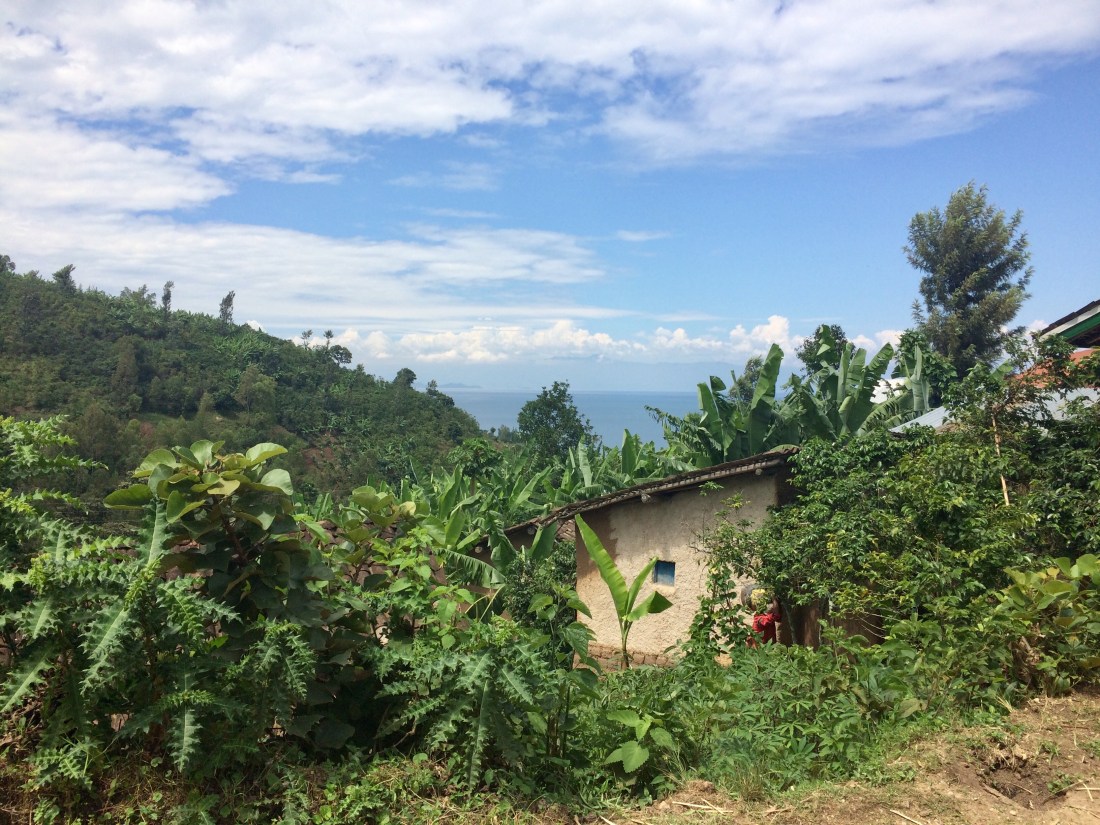
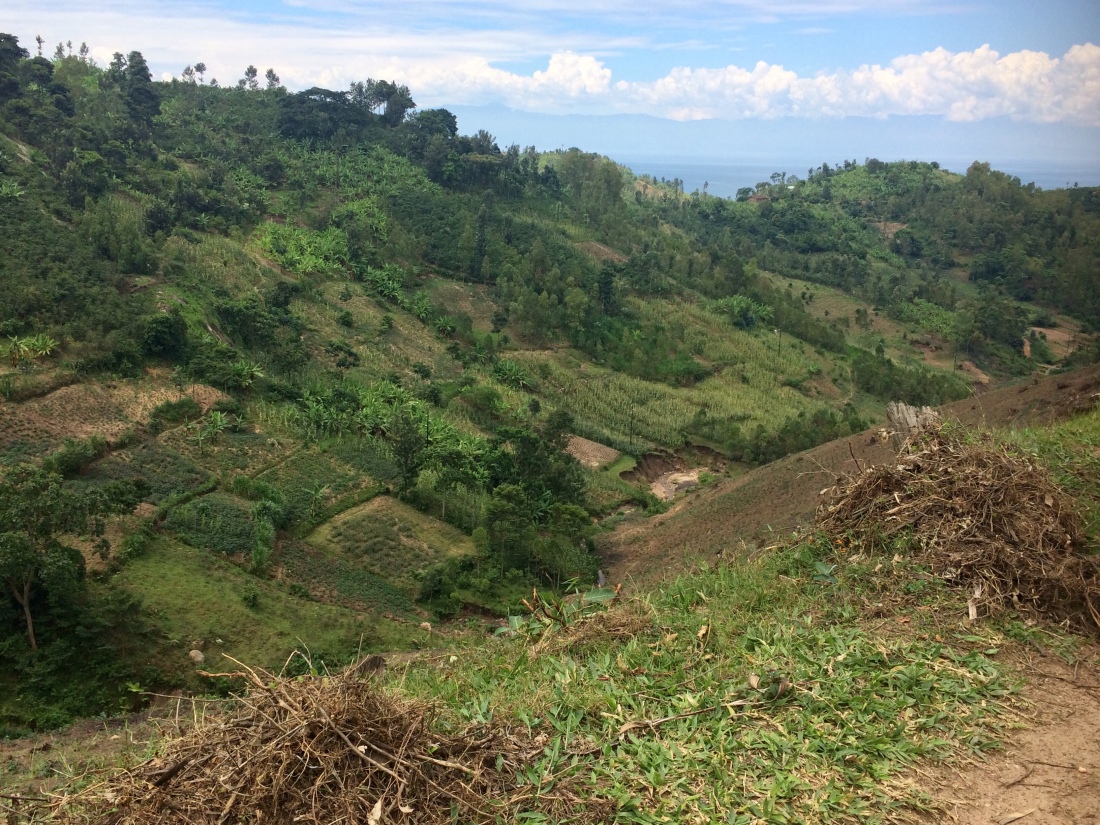
We waved goodbye to our sweet guesthouse in Cyimbiri but not before getting the directions for the shortcut to rejoin the Trail. This saved us having to hike back up the long hill to reach the Trail. Not only was the shortcut shorter, it was beautiful, at first hugging the edge of Lake Kivu, then moving inland through lush tall grasses, beautiful flowers and a coffee plantation and then to Nkora Fisher Village.
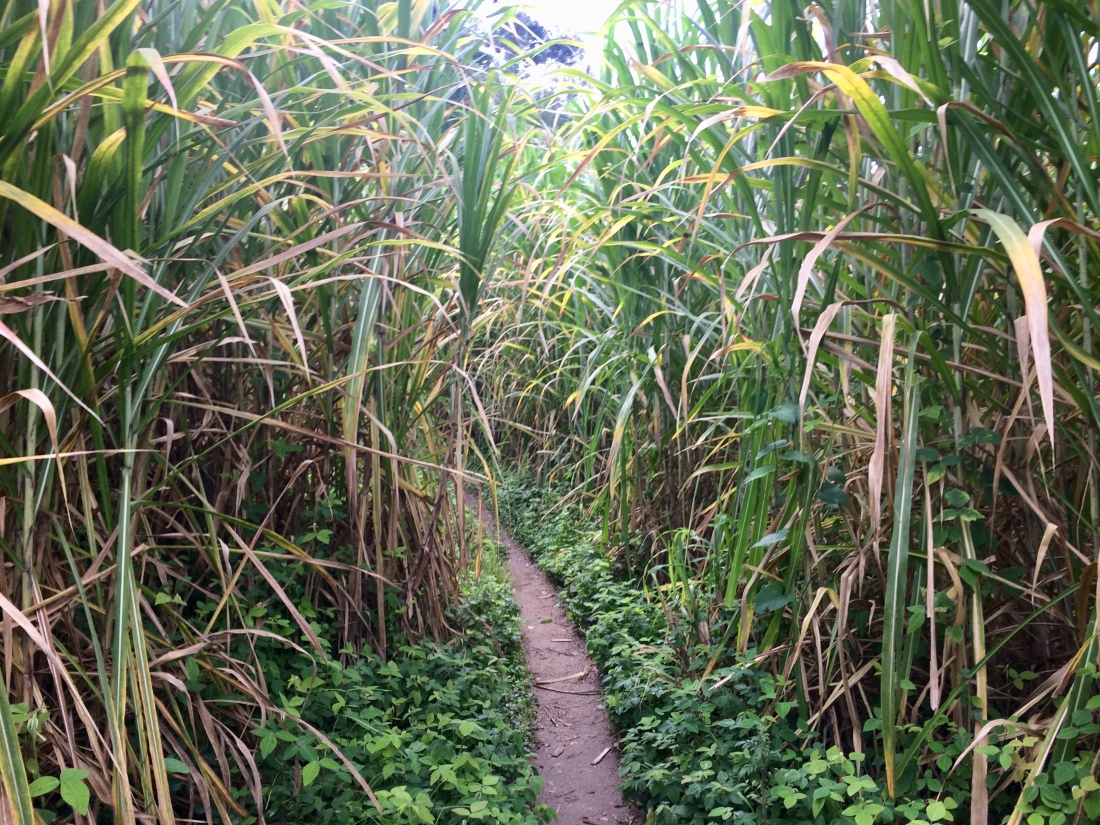
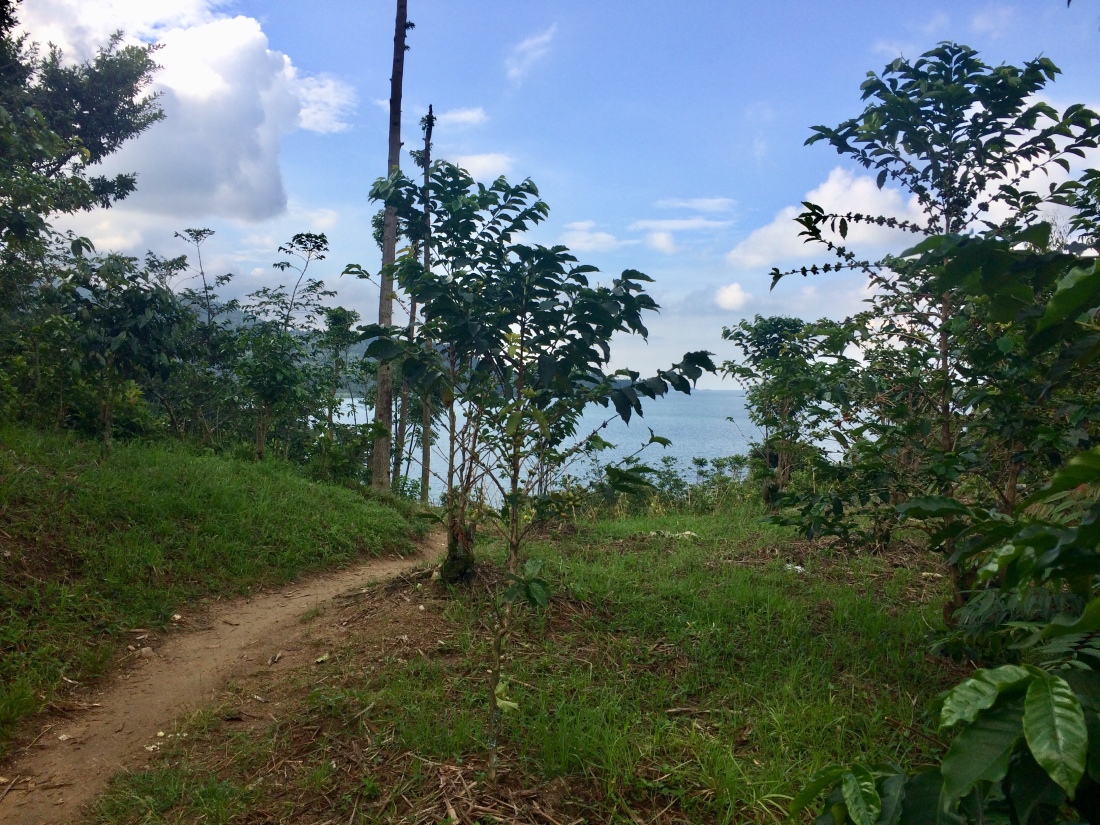
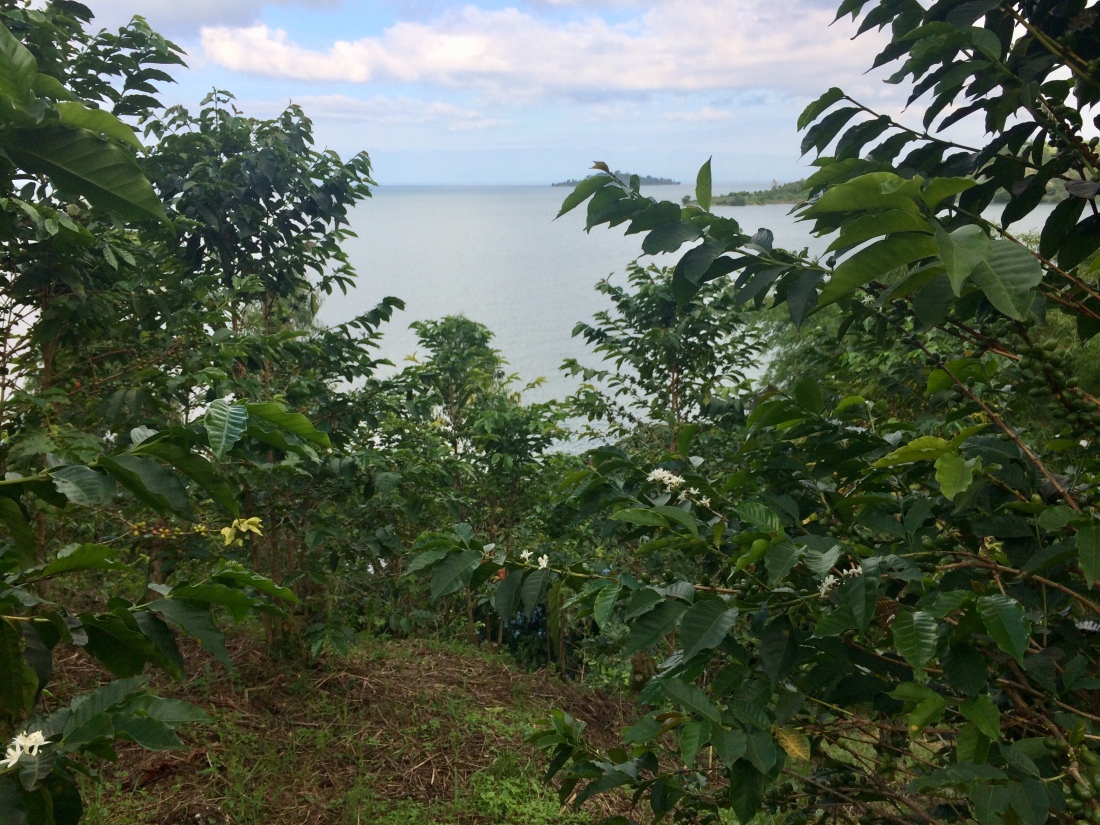
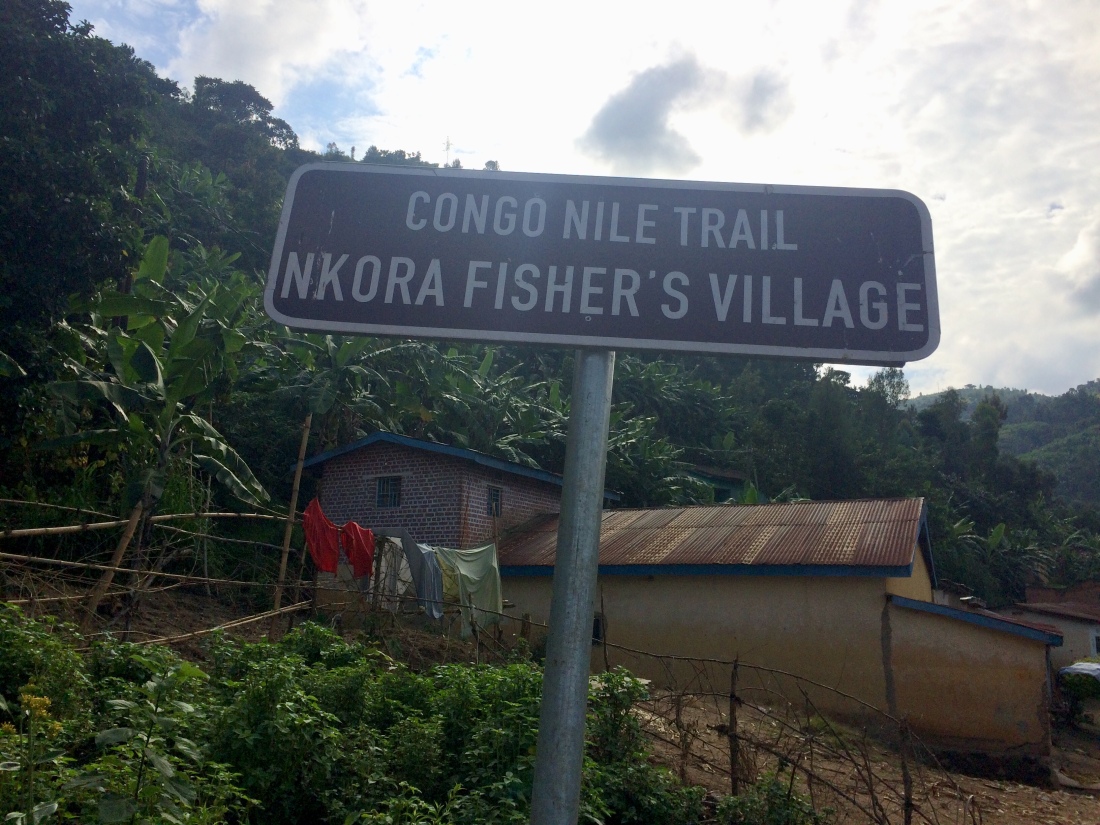
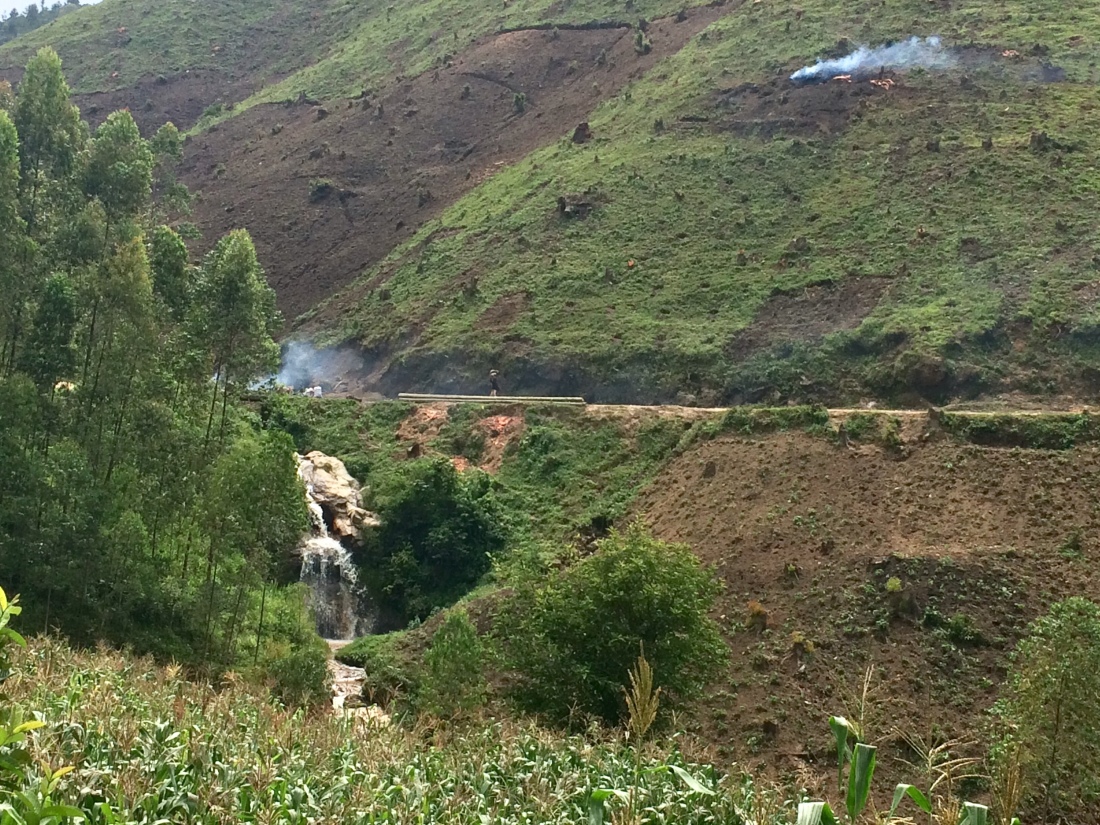
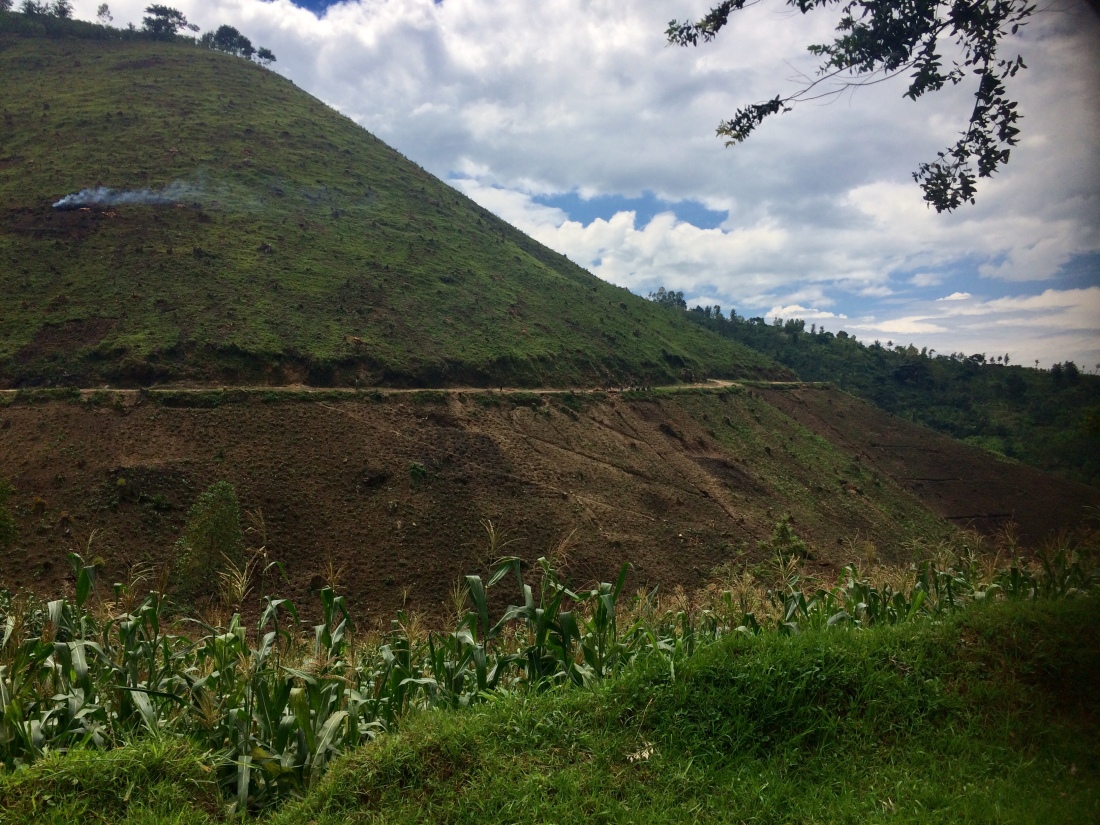
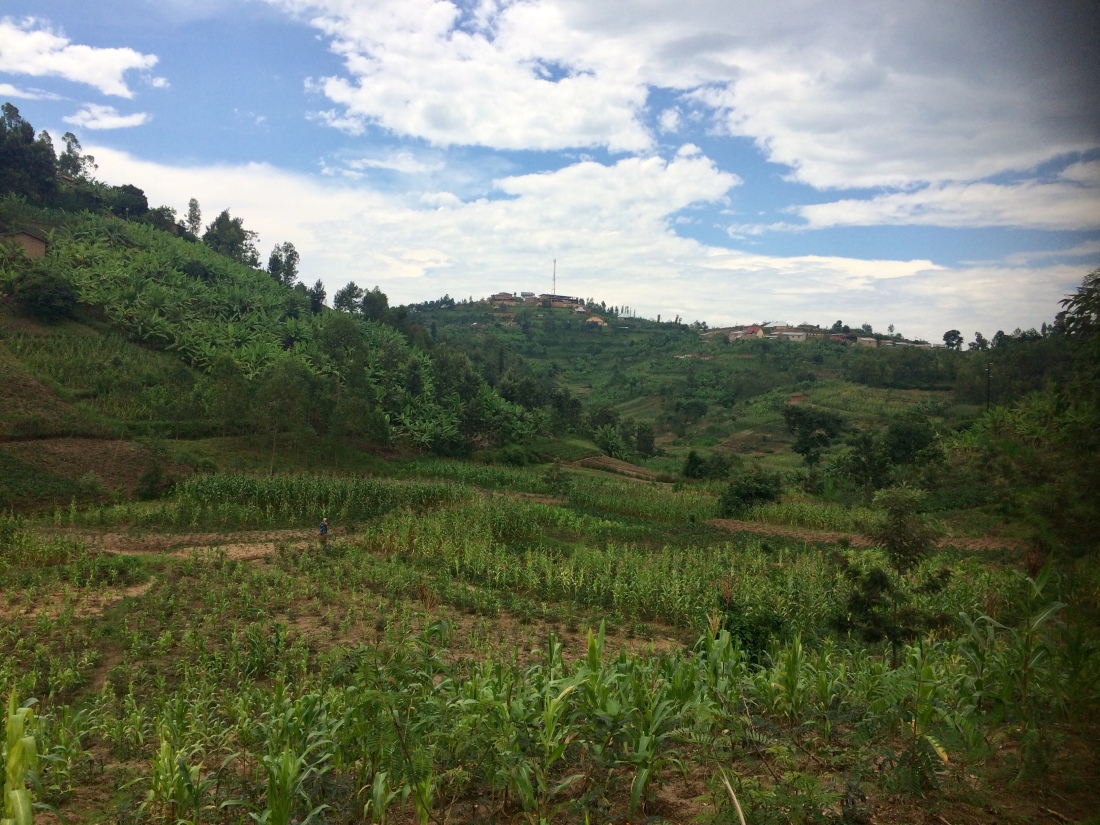
Later, we hiked through a village with vendors sitting on the side of the road, selling huge, gorgeous mushrooms. We saw corn growing everywhere – rows growing in gardens between houses, as well as huge fields running up and down the sides of the steep mountains on both sides of the road. And, of course, bananas and plantain.
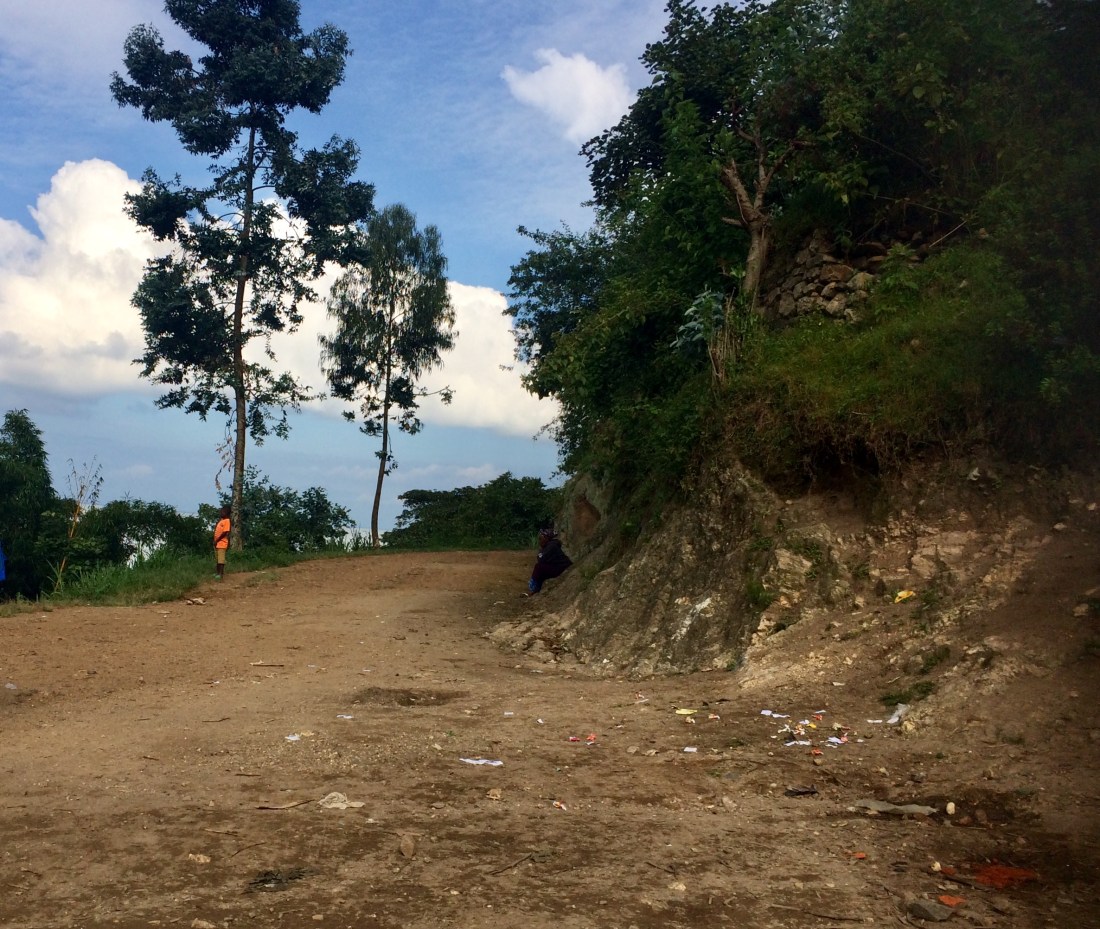
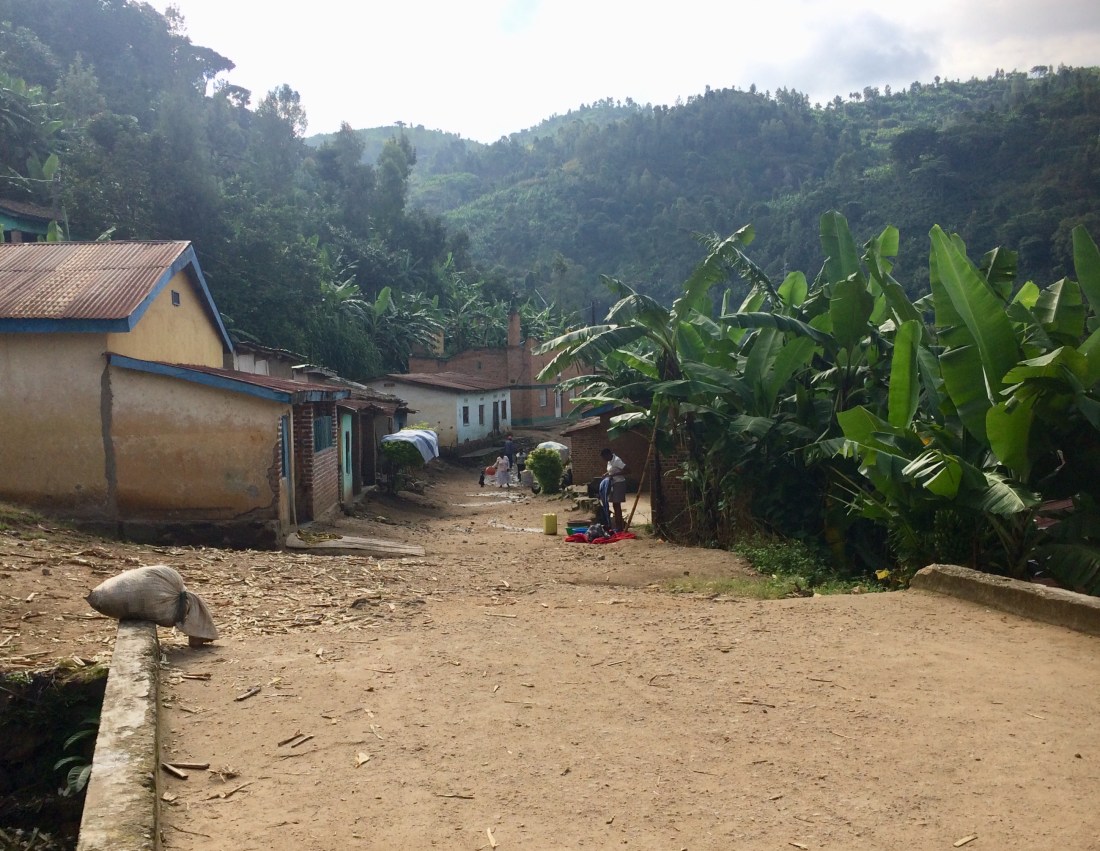
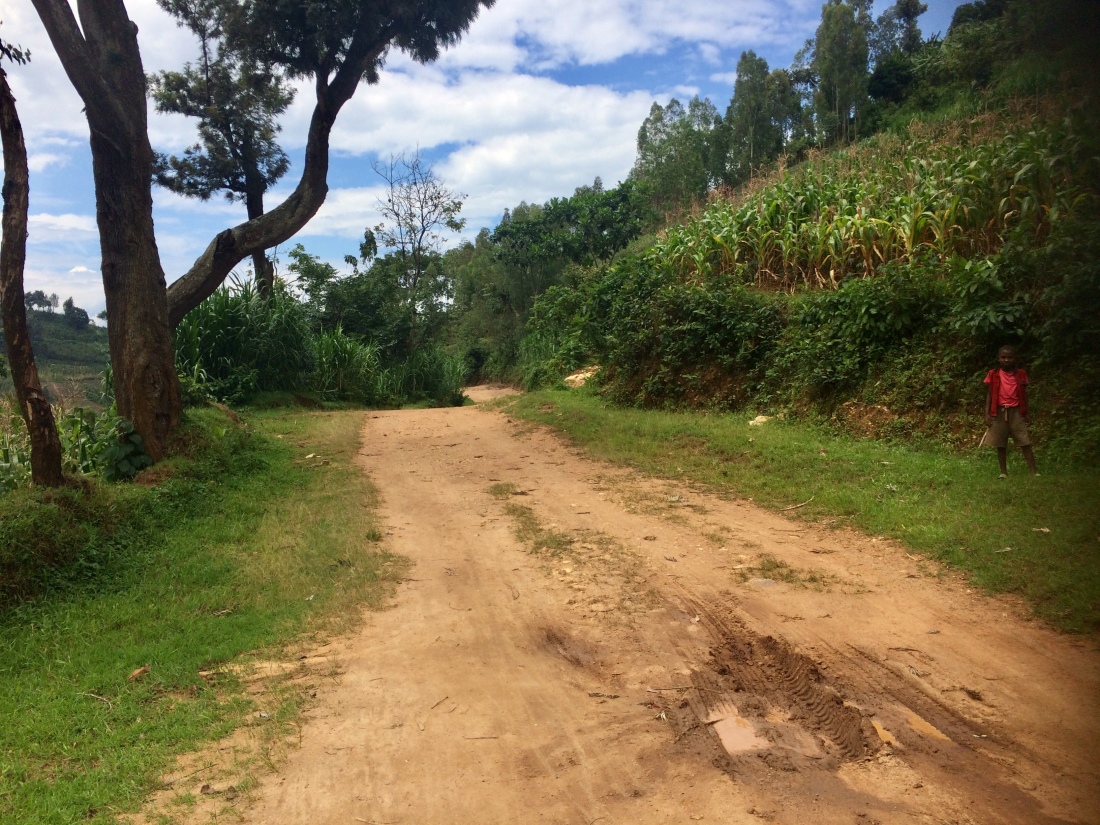
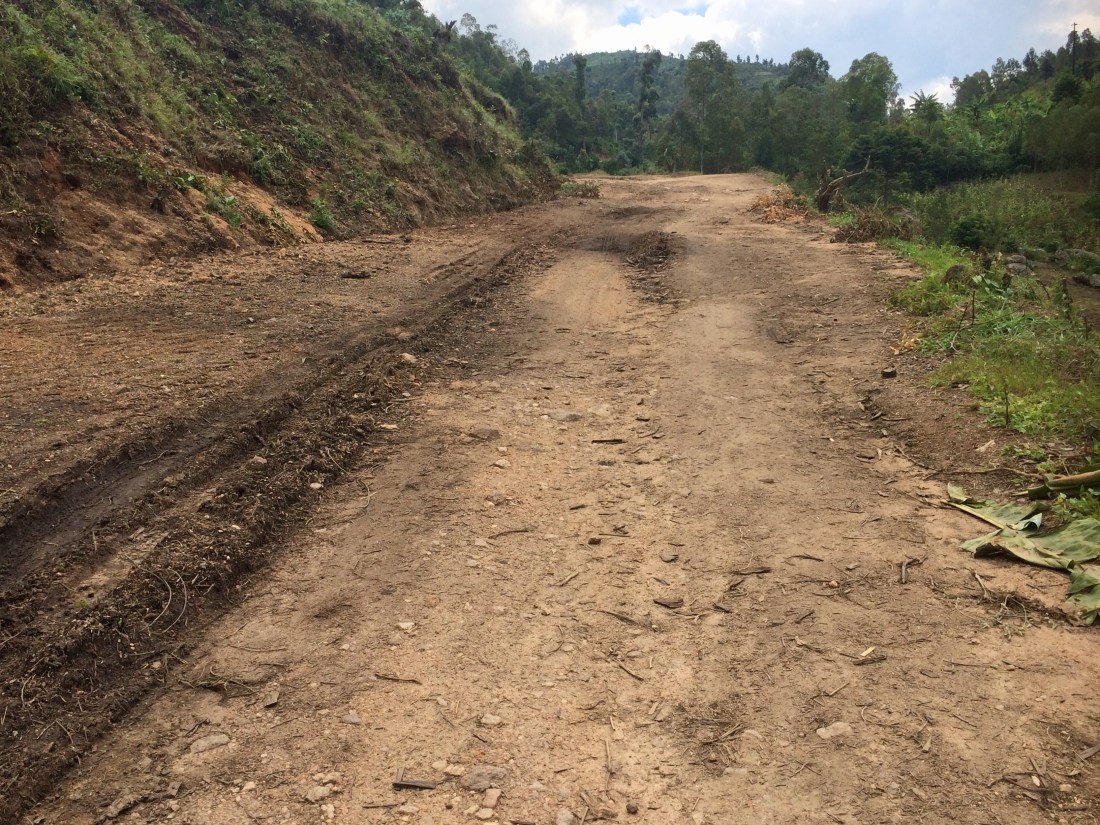
Today’s hike was shorter and easier. The trail was not so hilly or rocky. There were throngs of kids – some charming and some annoying, relentlessly asking for money, water, a bottle, ijana (Rwanda’s 100 franc coin, about 11 cents). Several adults today asked for ijana. We simply smiled and said, “Oya” (no).
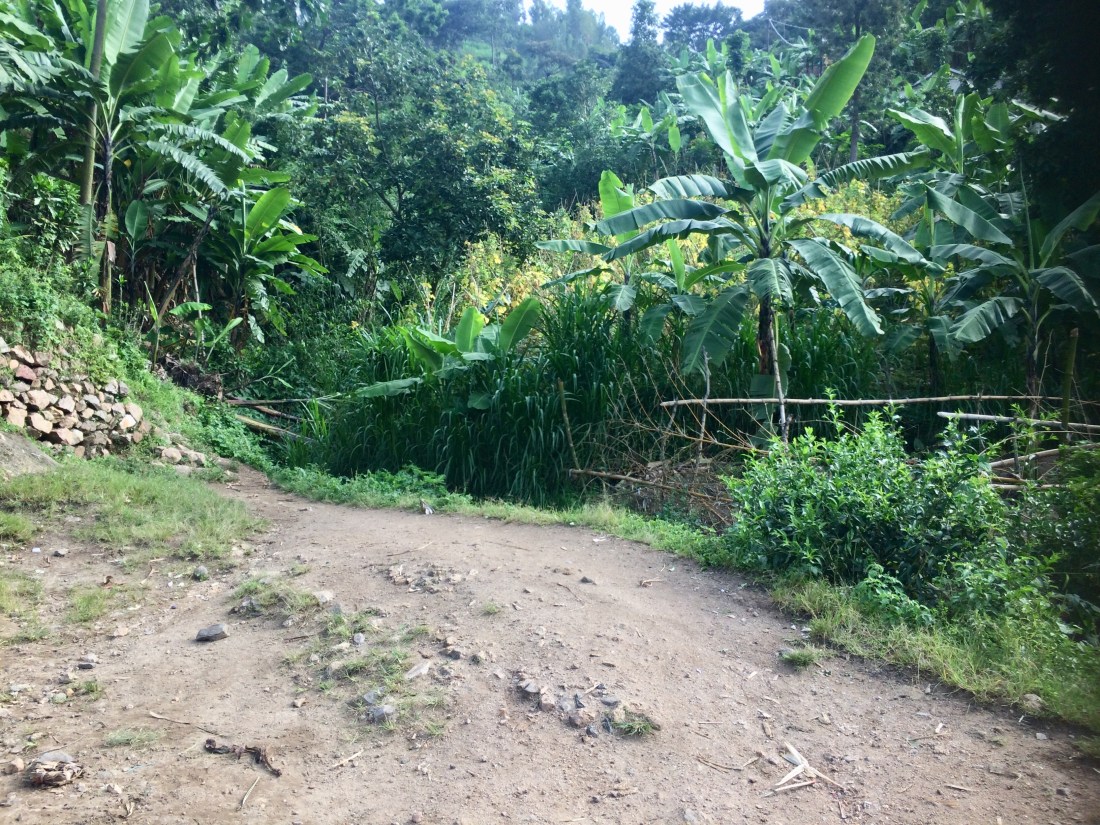
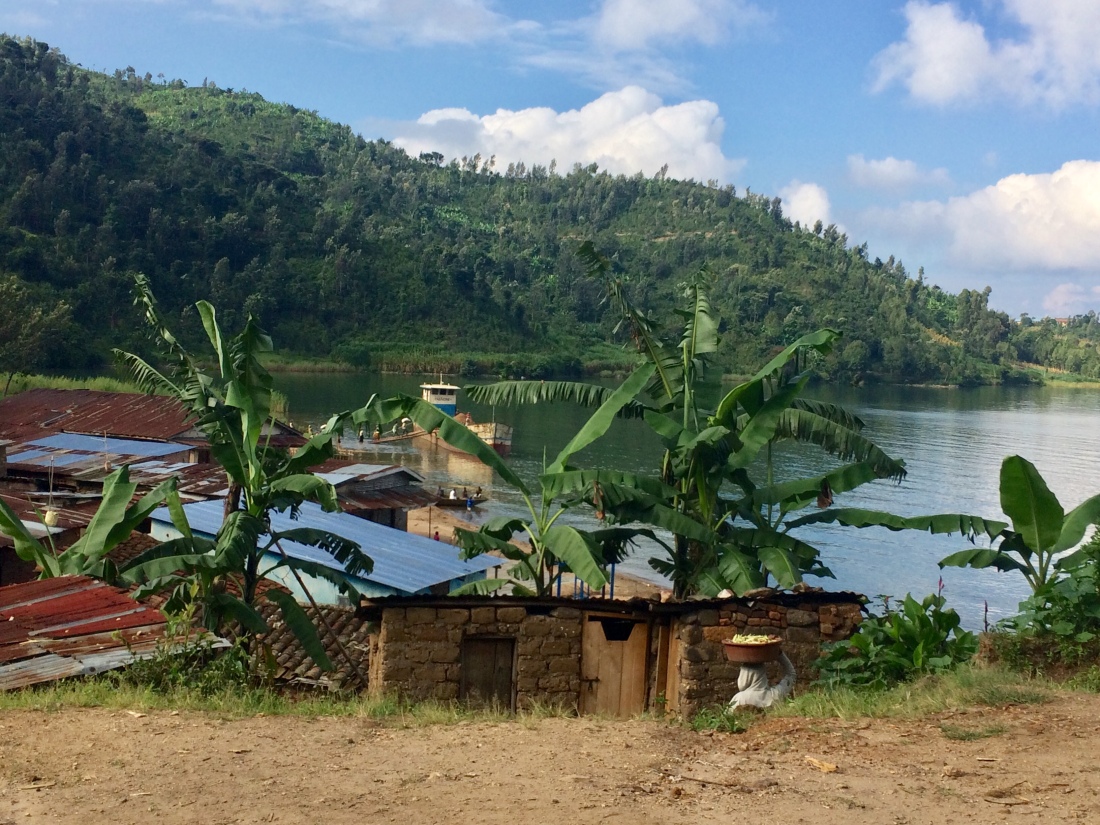
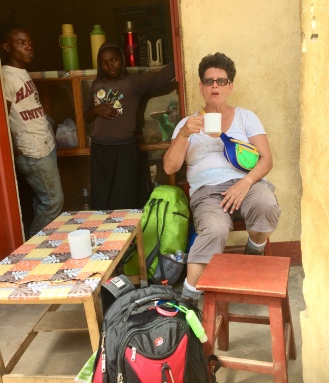
We stopped for Mukara mid-morning and drank our tea surrounded by ten or twelve kids, a crowd of young men and one elderly man, who stunned me by grabbing my hiking sticks and threatening the kids with them, shouting at them to go away and leave us alone. The kids all instantly ran away, but gradually some sheepishly reappeared. They offered to find us bananas but we said we didn’t want any.
Bathroom breaks on the trail are problematic because you are never alone; someone is always watching you. Fortunately, because of the heat, despite drinking lots of tea and water, we seldom needed a bathroom break. However, in one town this afternoon, I did. So, I asked a shopkeeper where to go and he took me across the street and past several houses and past a woman bathing (we smiled and greeted each other) to a latrine, probably his family’s. I paid him ijana, 100 francs, as that is what I’ve paid in towns and cities to use a public restroom.
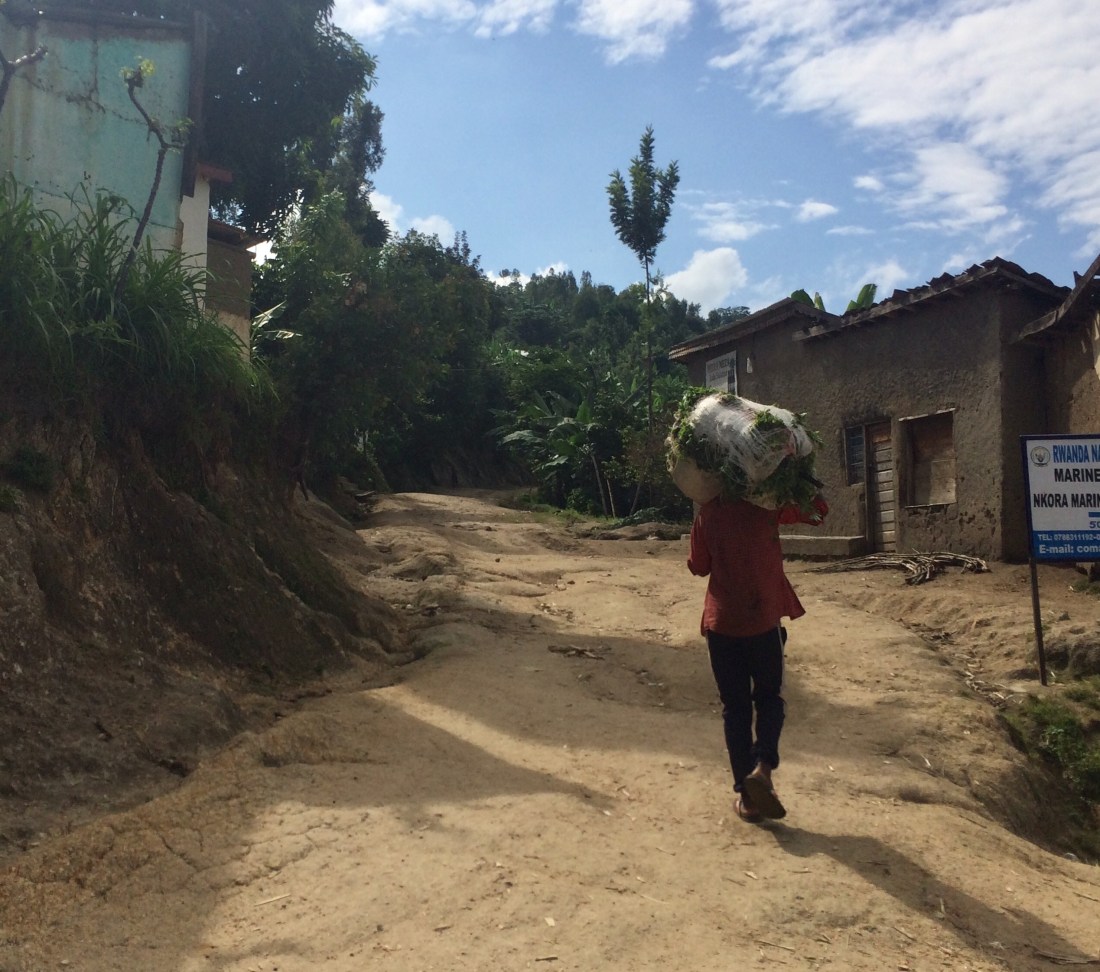
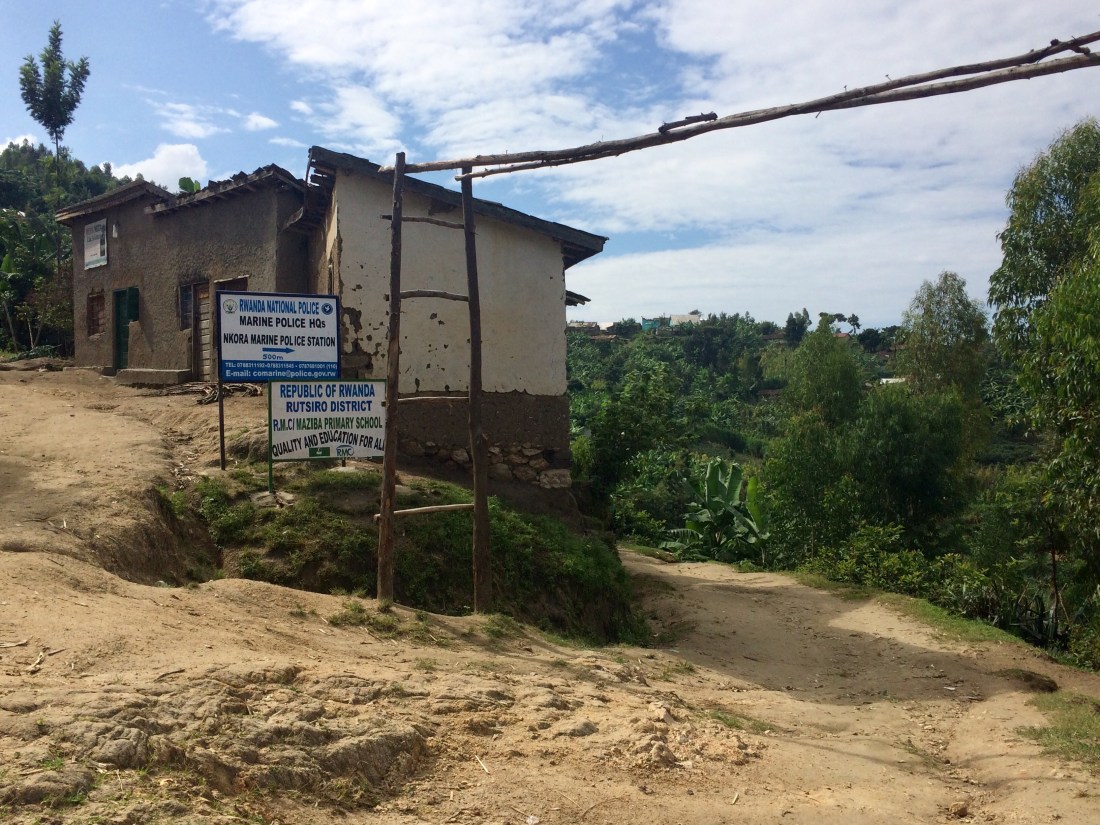
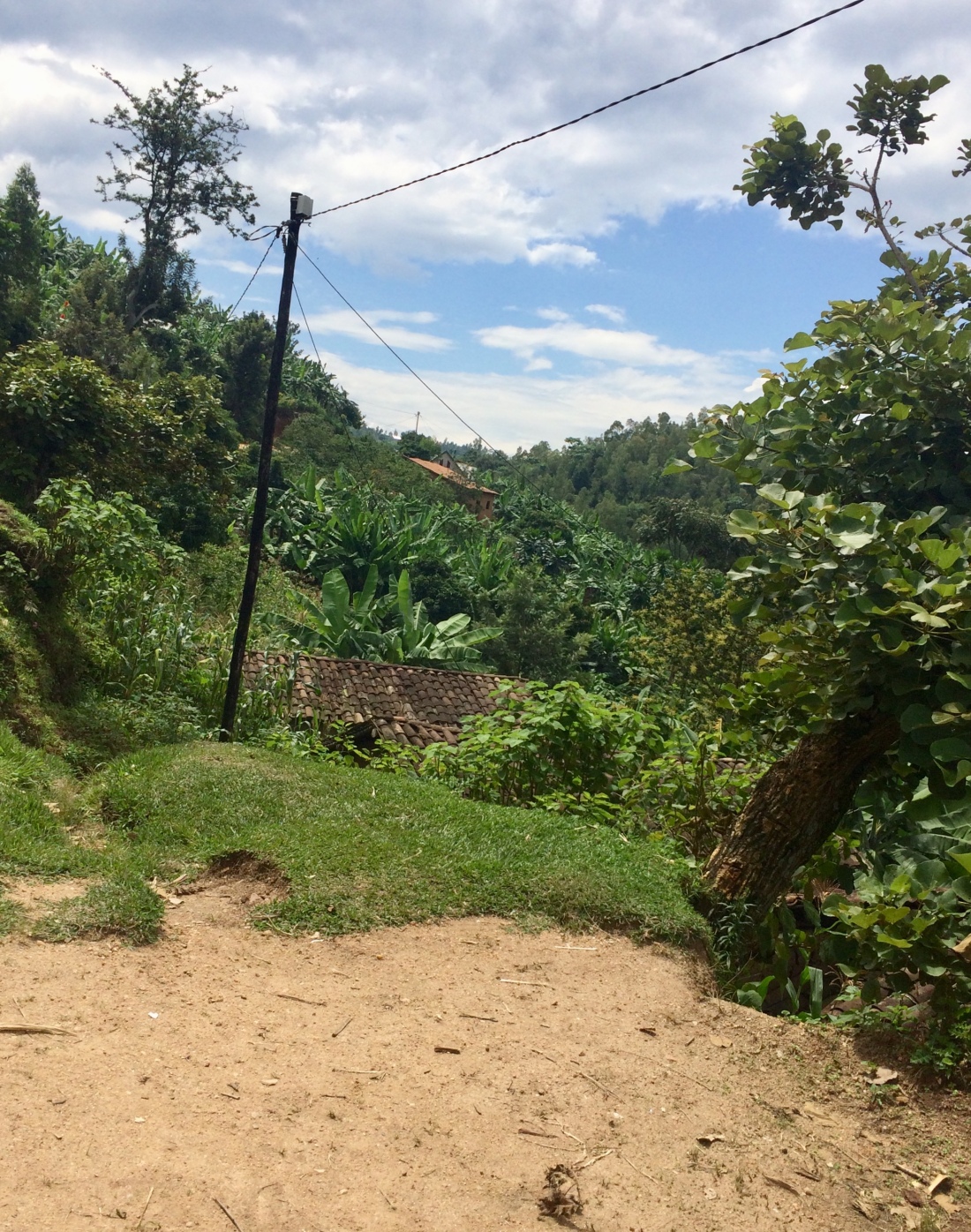
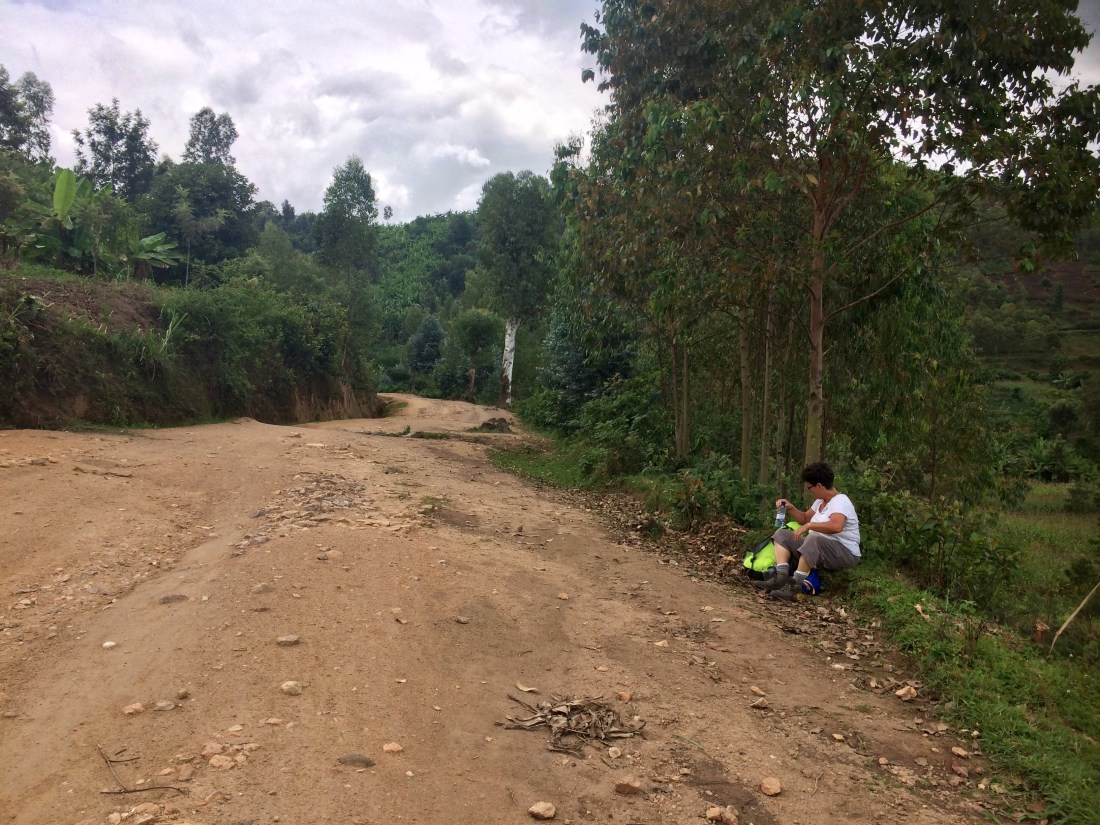
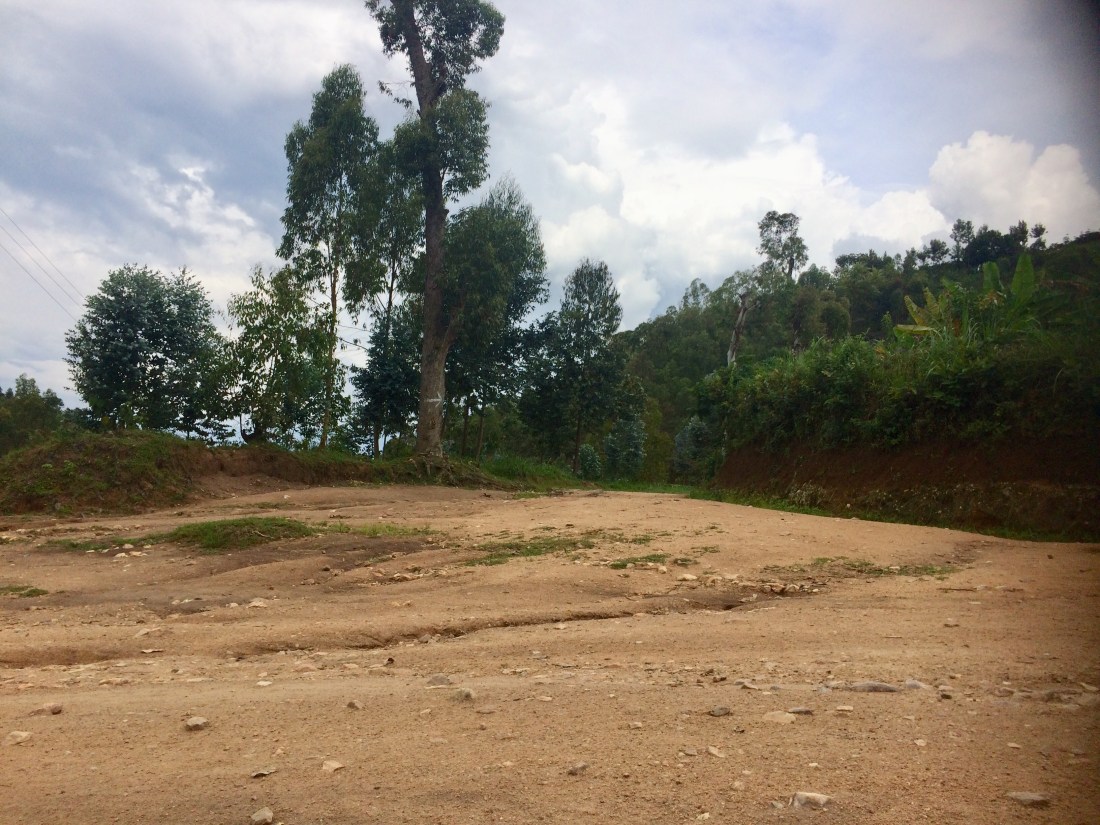
More photos of the trail. MTN is the most popular phone company. One can add money to one’s cell phone at any of MTN’s numerous yellow kiosks throughout the country.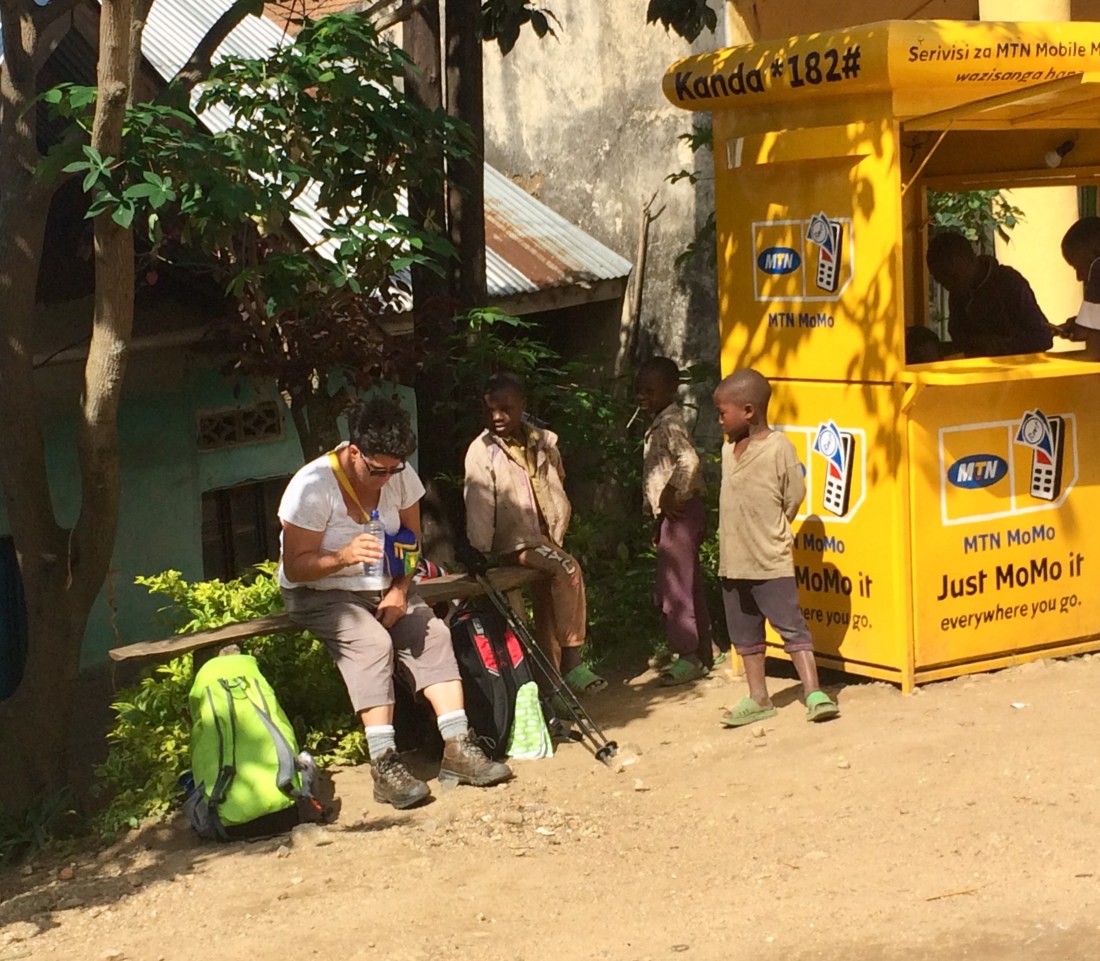
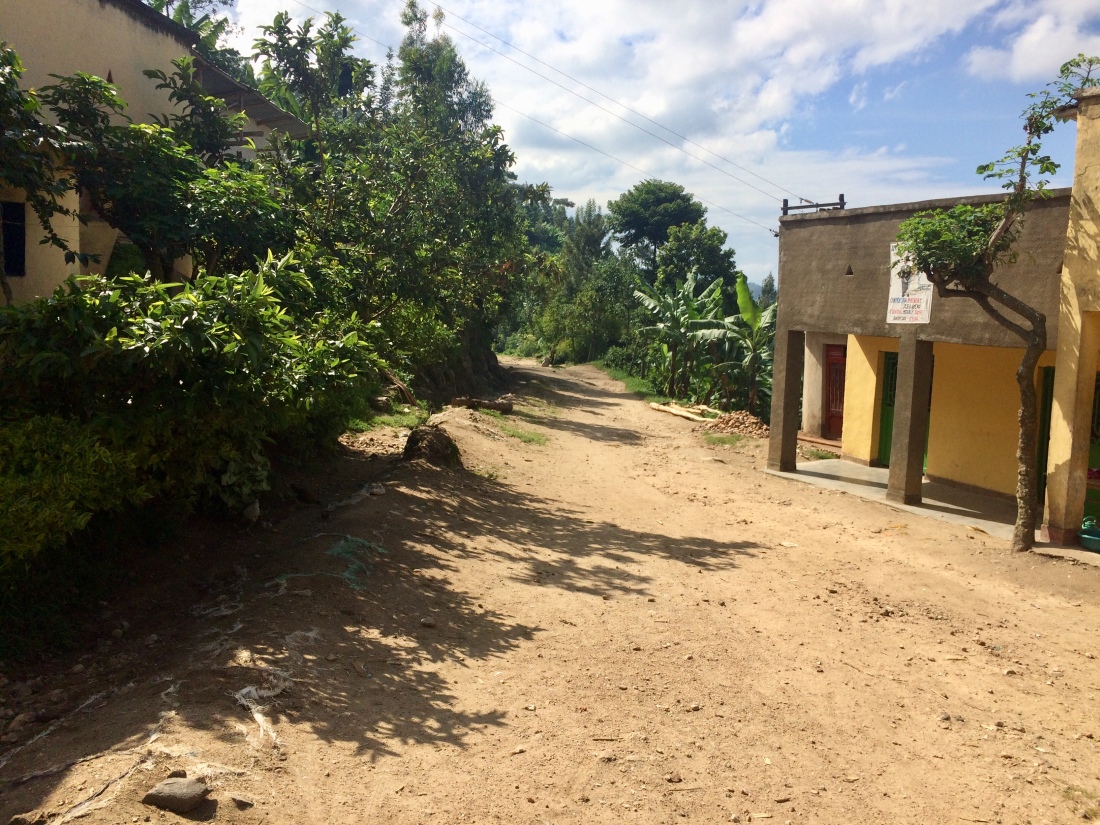
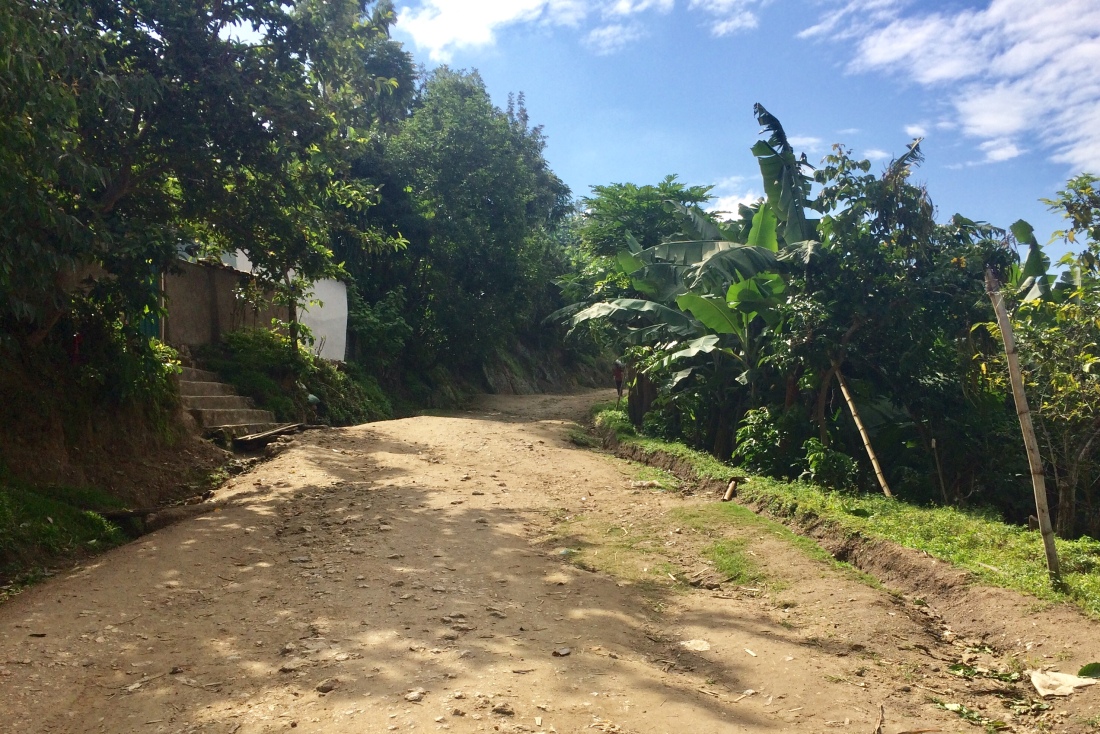
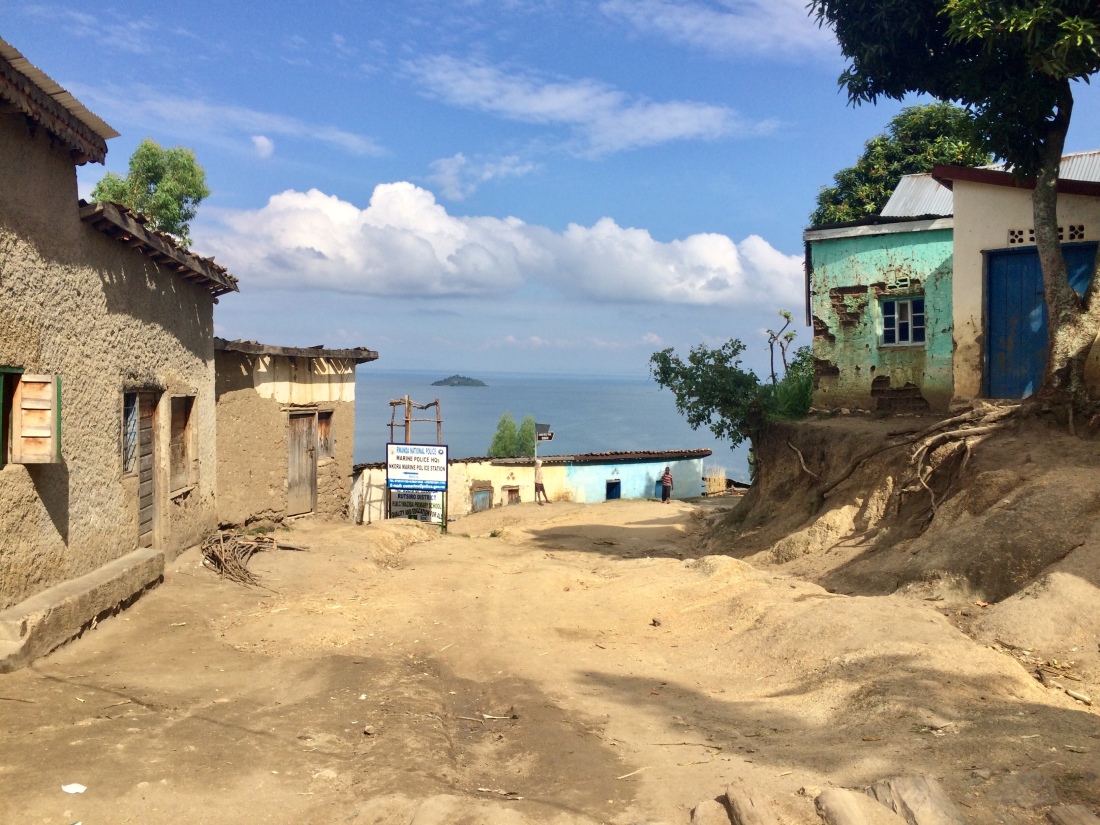


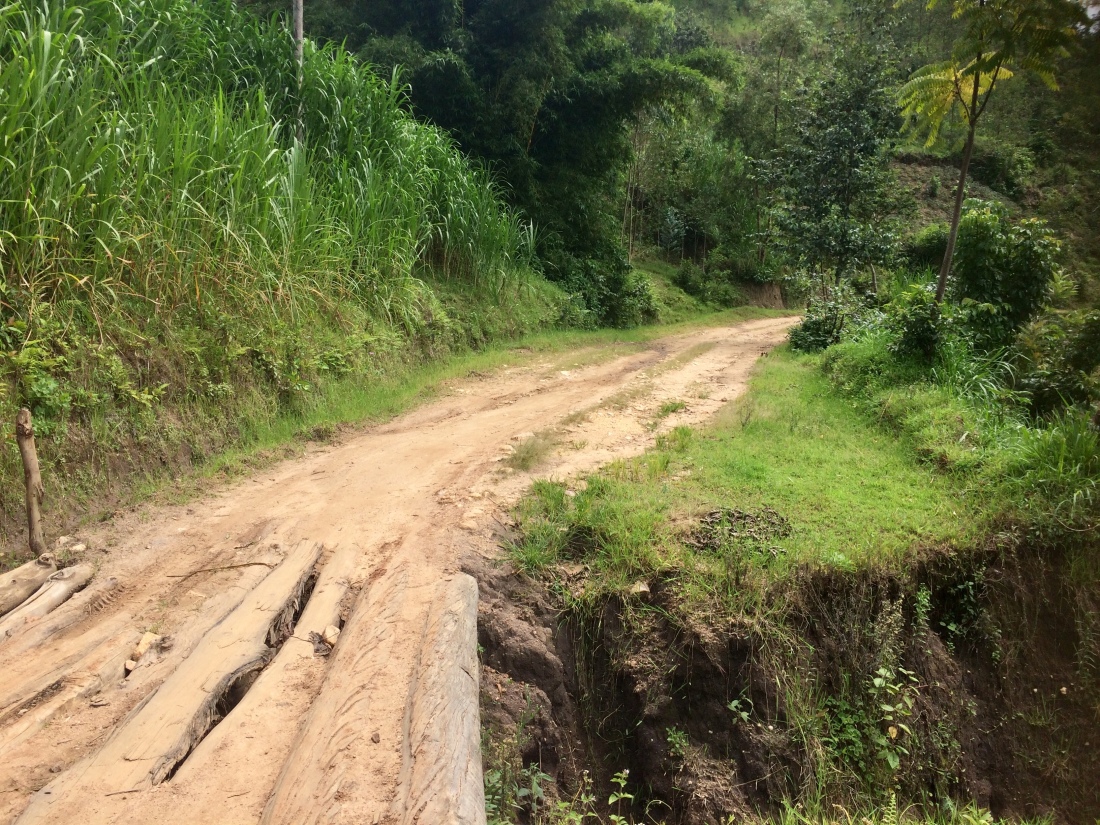
The bridges all are wooden. This is one of the longer bridges.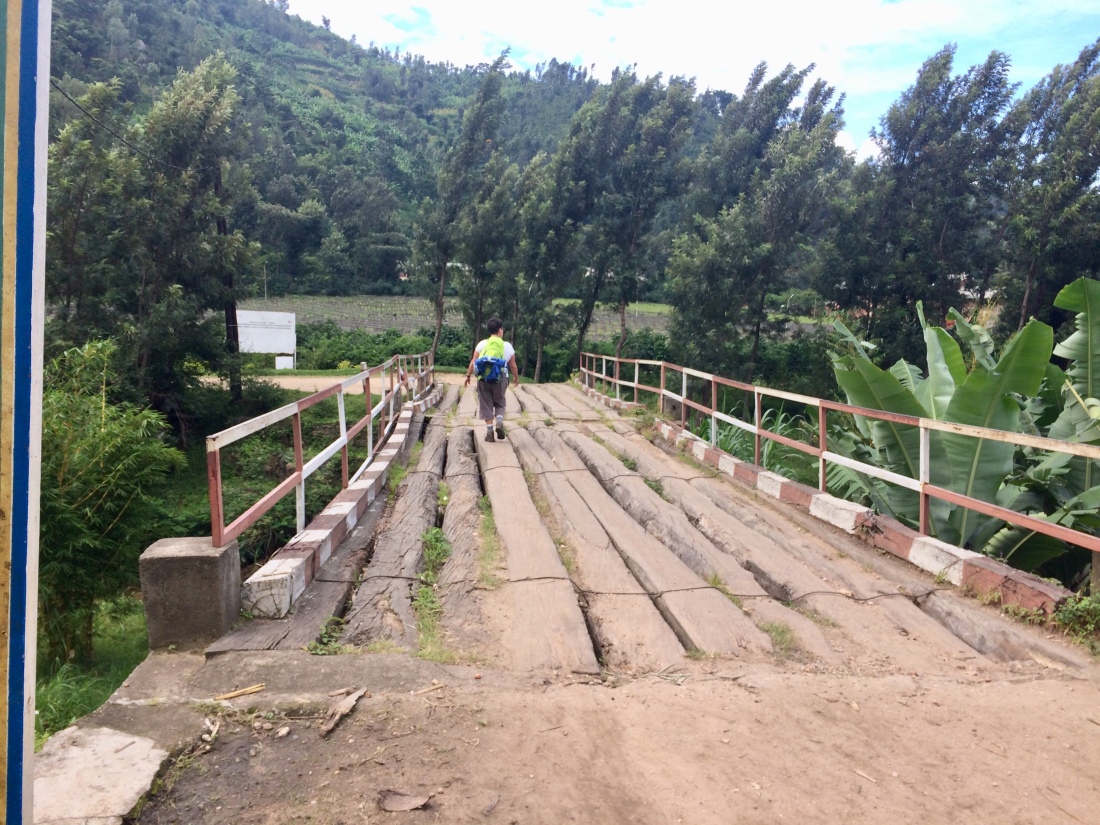


We came to a village and what looked like a fun restaurant. We asked if it was open but were told that it was still in the planning phase and had not yet opened for business. Hopefully, future hikers can stop here for a beer. Icyerekezo means Vision, a popular name for shops in Rwanda.


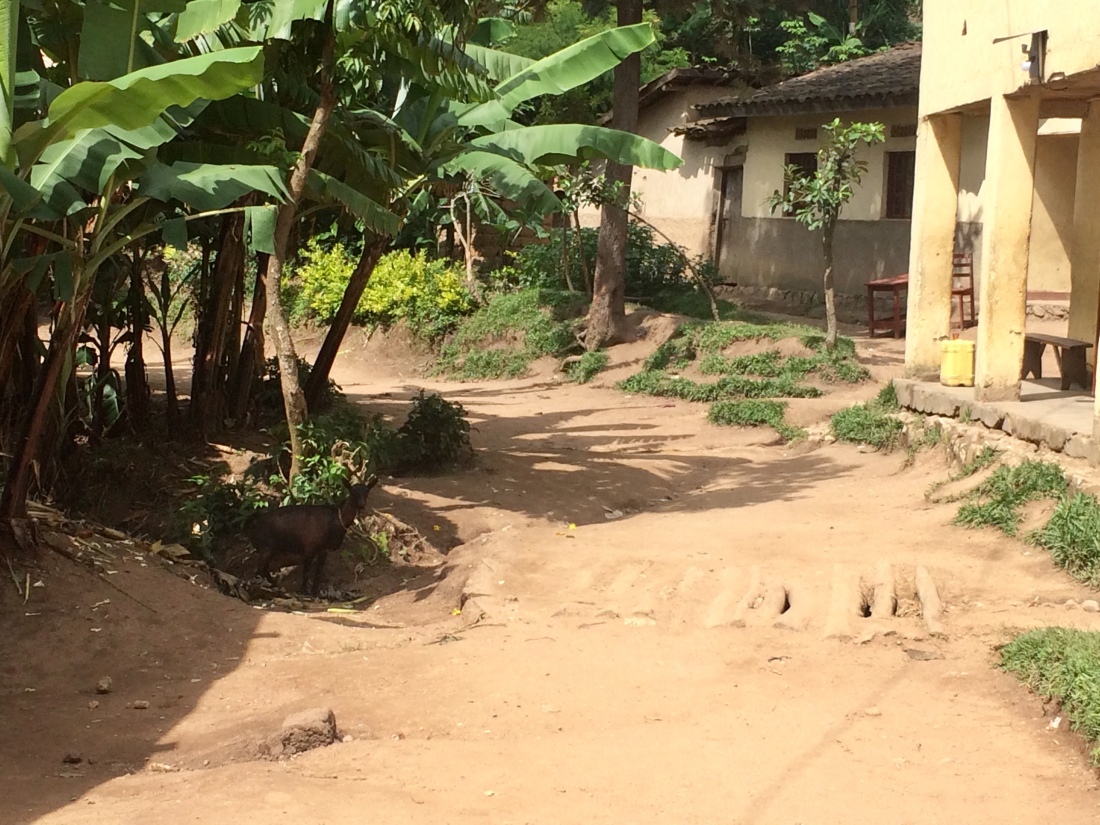
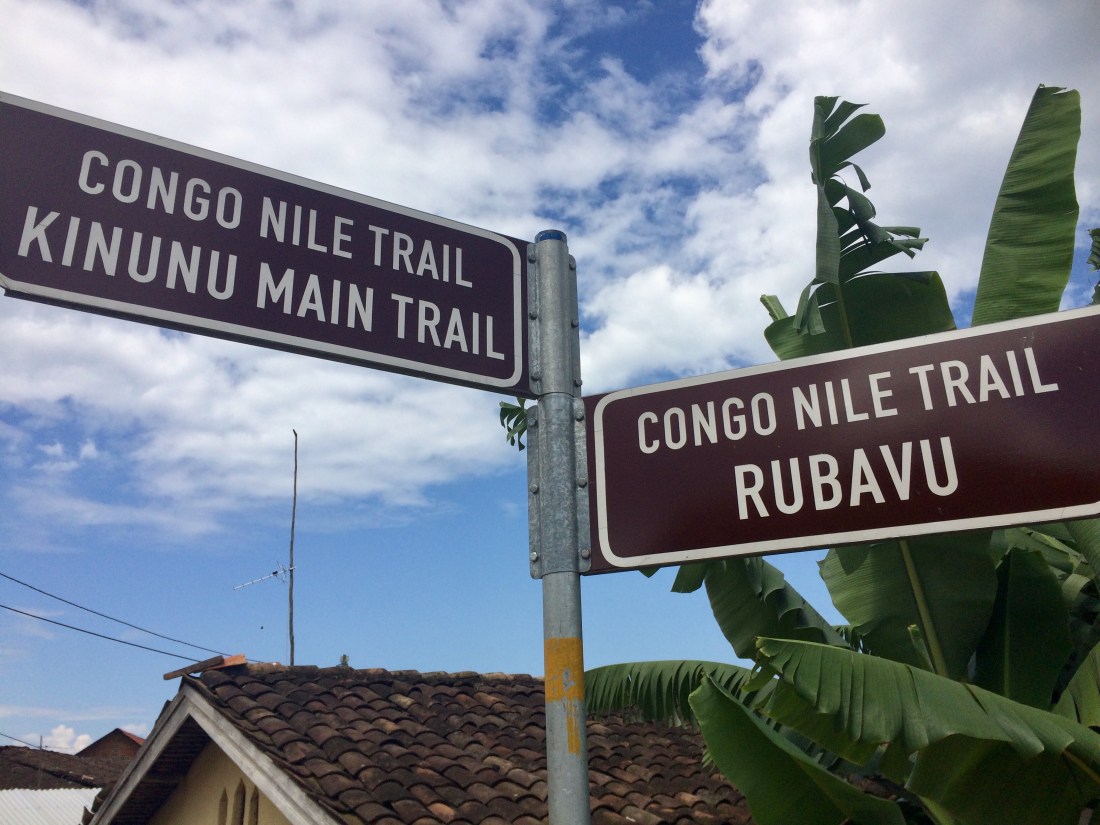
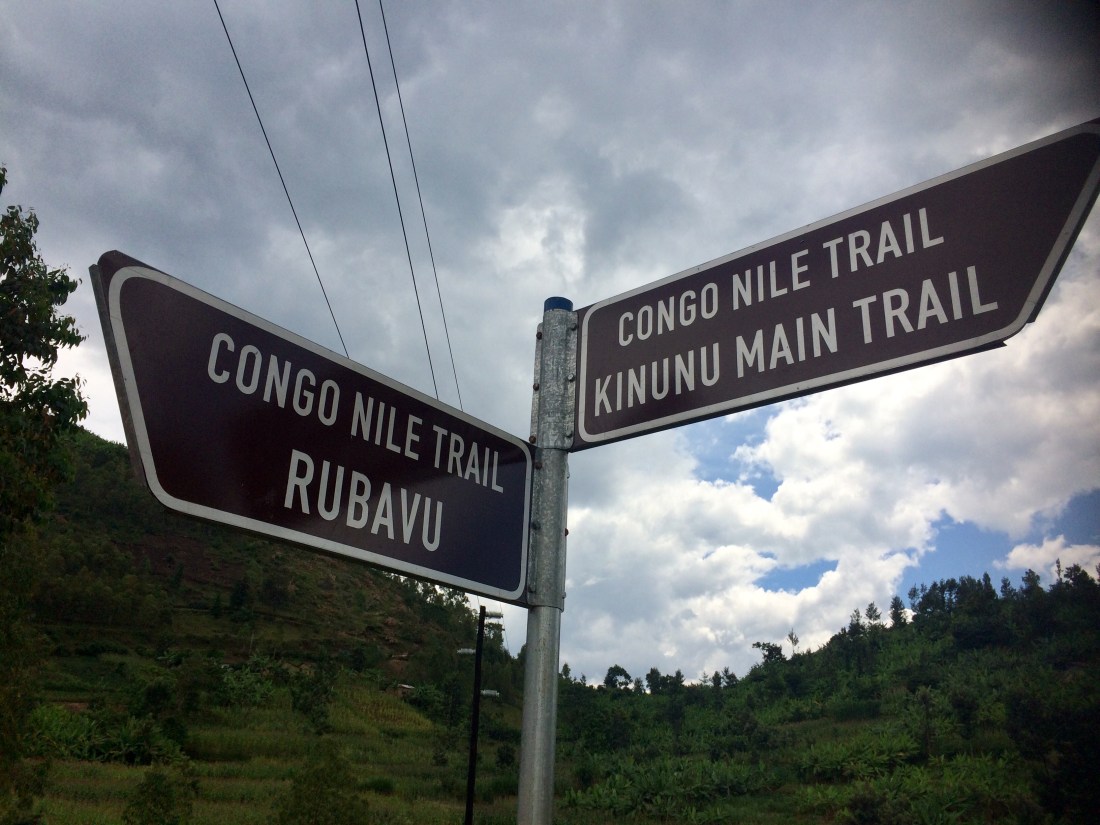
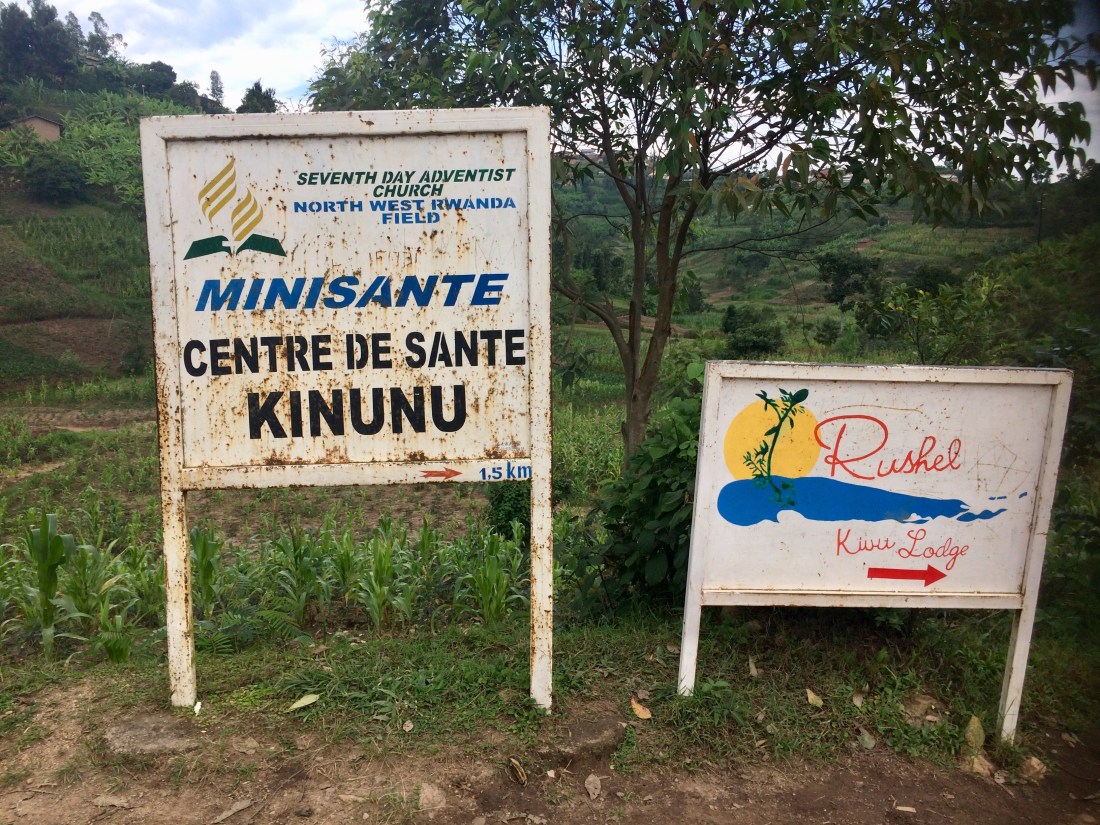
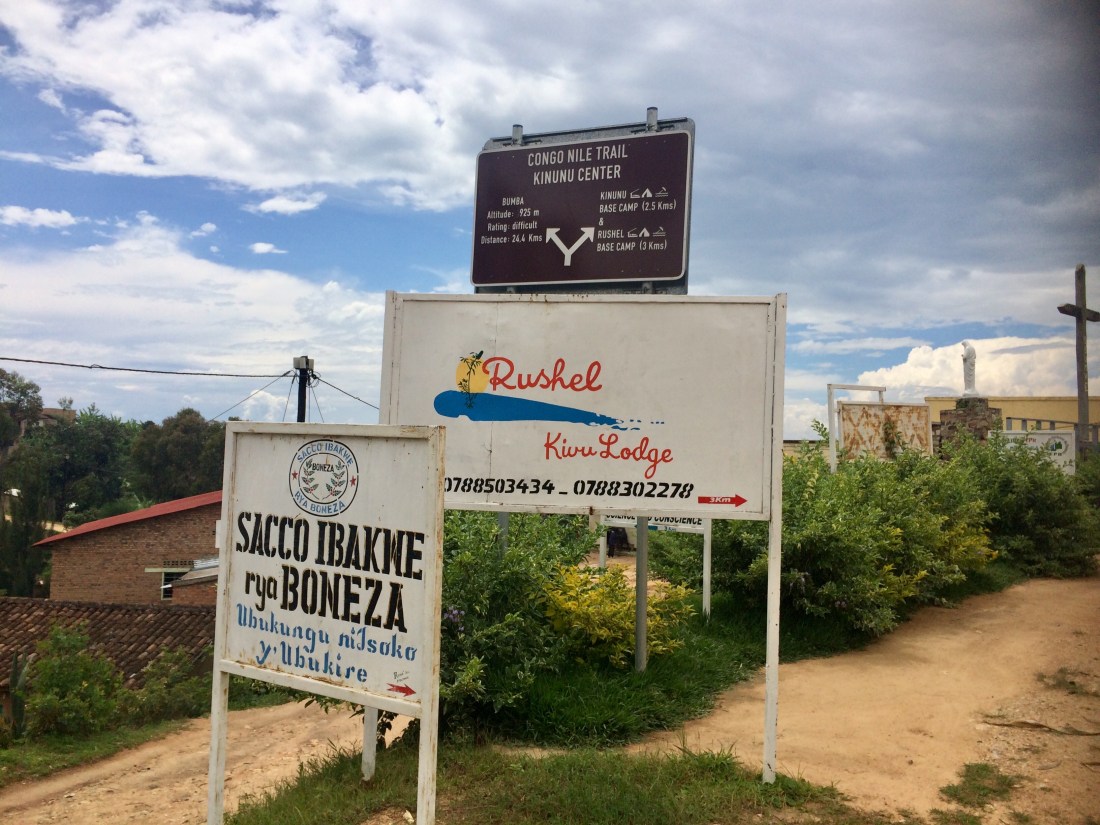
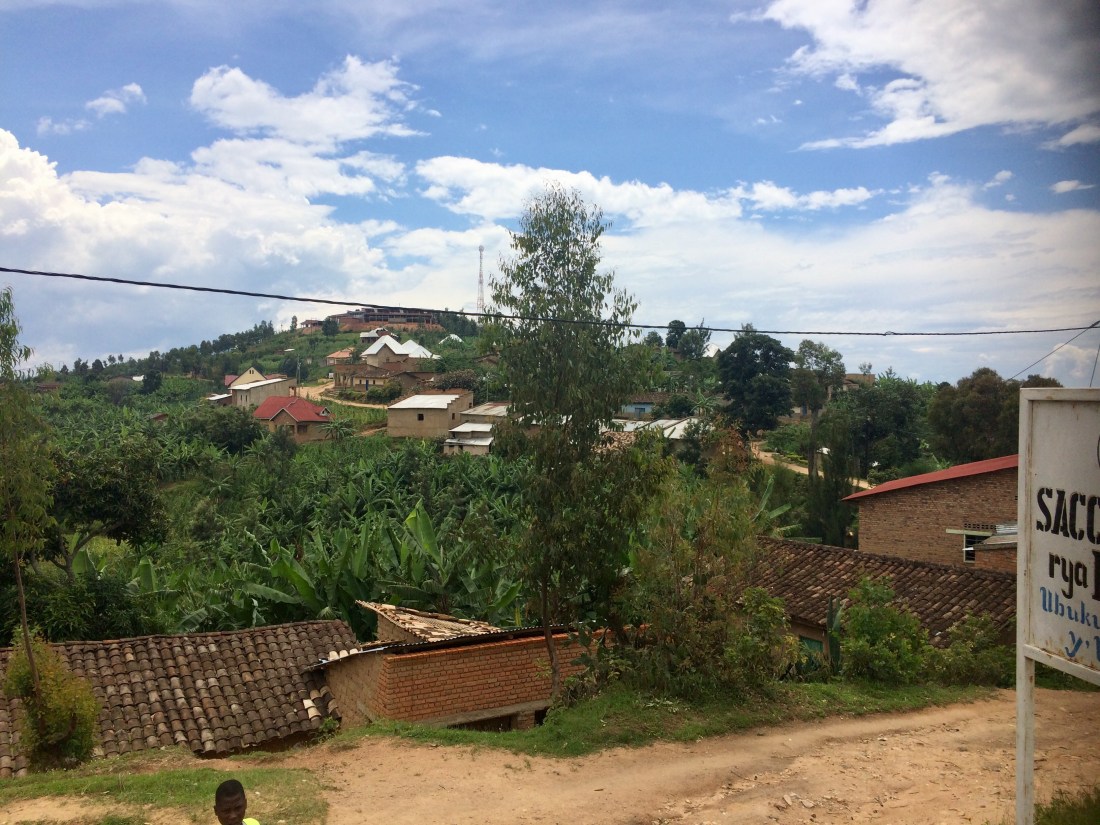
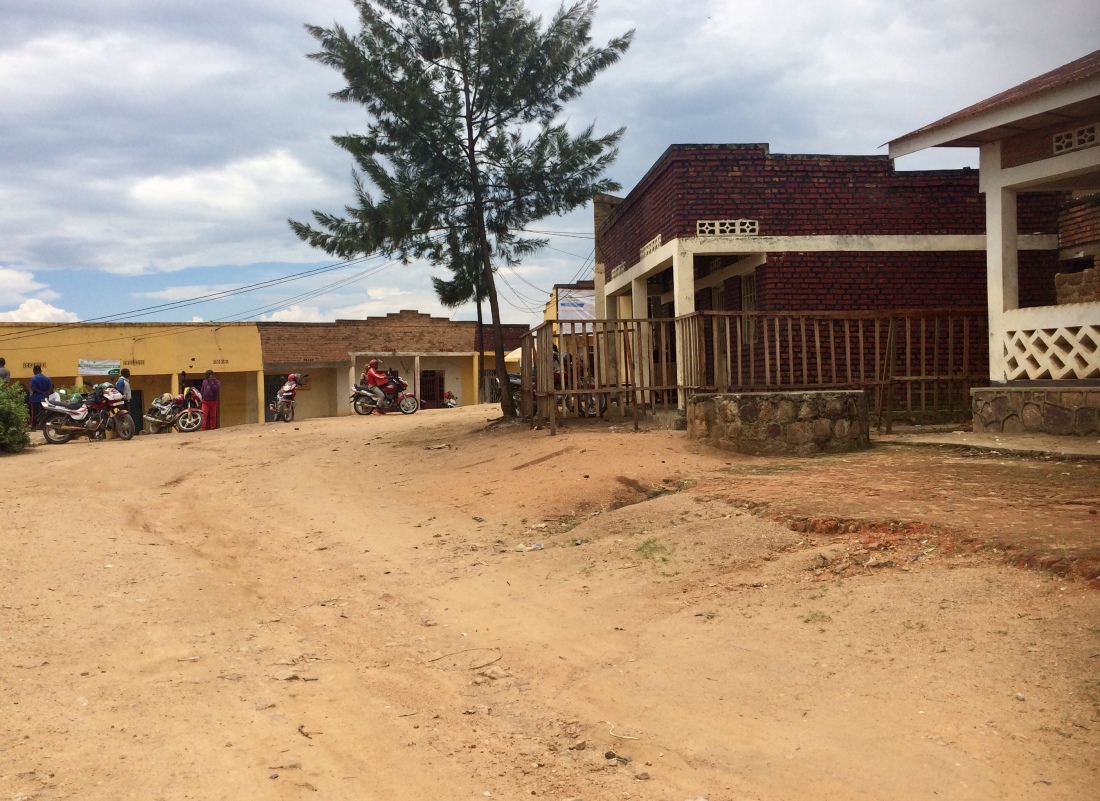
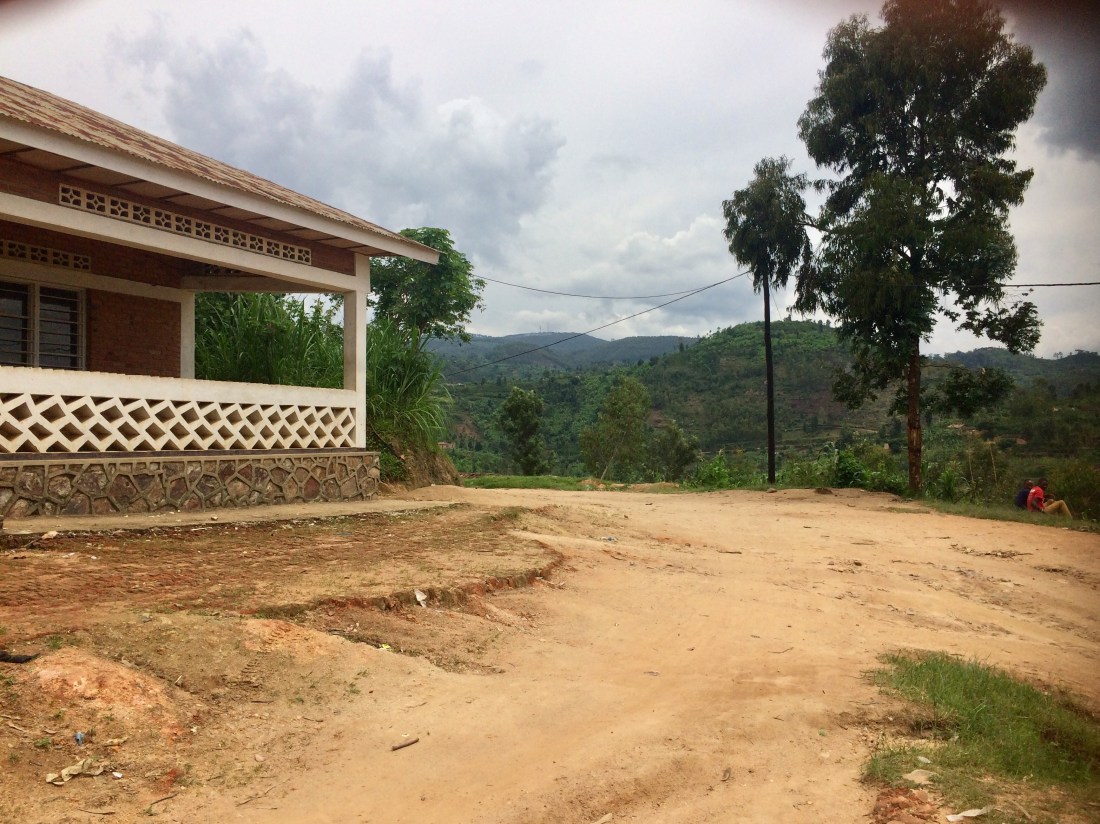
When we got near to Kinunu, I called the Kinunu Guesthouse. I was told that one room was 45,000 francs with 2 twin beds, including breakfast. So, we looked for the Kinunu Basecamp, a campground, but couldn’t find it, despite seeing signs for it.


However, we did see signs to turn left for Rushel Lodge, which we later learned has luxury tent camping. Instead, we turned right to look for Kinunu Basecamp. We passed the Kinunu Guesthouse and a little further down the road stopped to sit so I could call the Rushel Lodge to check their prices, when a very young woman came towards us from the Kinunu Guesthouse. We told her that 45,000 francs was too expensive for us, and she responded that they had rooms for 15,000 francs. So, we followed her to the Guesthouse but another young woman, who was working at the reception desk, said that the room with 2 twin beds was 45,000. Again, we said that that was too expensive, but she offered no alternative. Then, Béné asked if there was a dormitory, and the woman replied yes and that it was 10,000 but did not include breakfast. Then, she added dreamily that there was an apartment for 15,000 each, with breakfast, so we jumped at that. Of course, they didn’t take credit cards, cash only. The women weren’t friendly but I think it was due to language; they were very uncomfortable speaking English.
It wasn’t really an apartment, just three bedrooms (each with 2 twin beds) and one bathroom for all three bedrooms. We had the entire apartment to ourselves, but chose to sleep together in one of the bedrooms. Each of our beds had a bed net. The woman gave us each a towel so we could shower. Béné asked for a bucket so we could wash our clothes. And, we laid them on the bushes to dry.
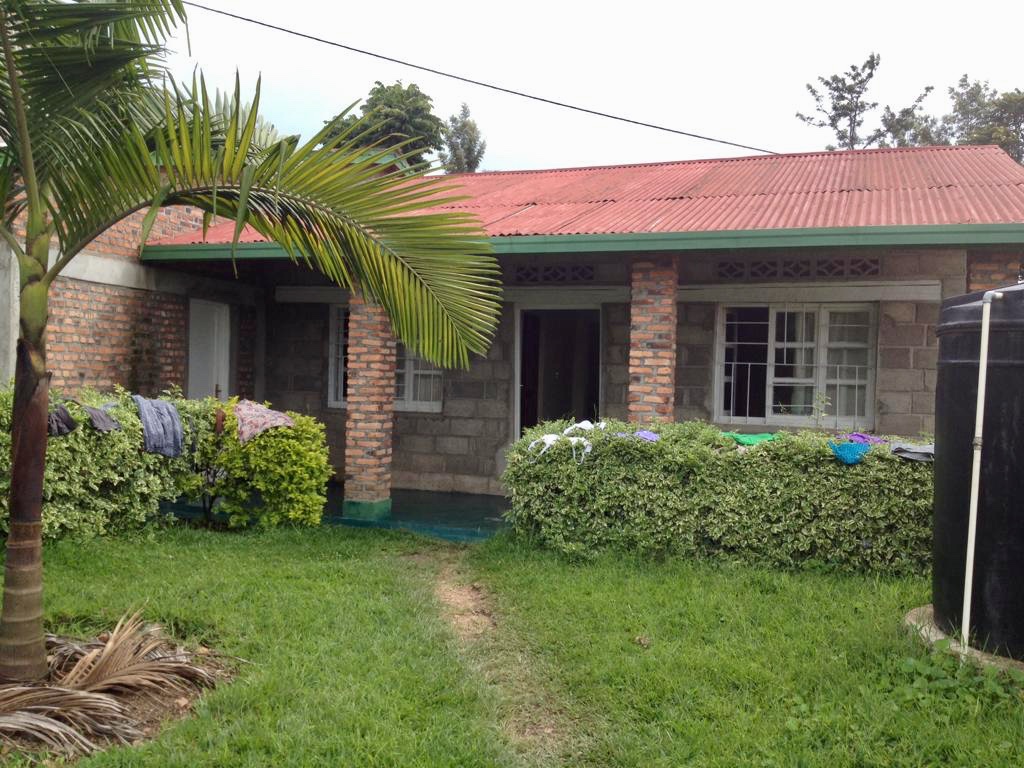
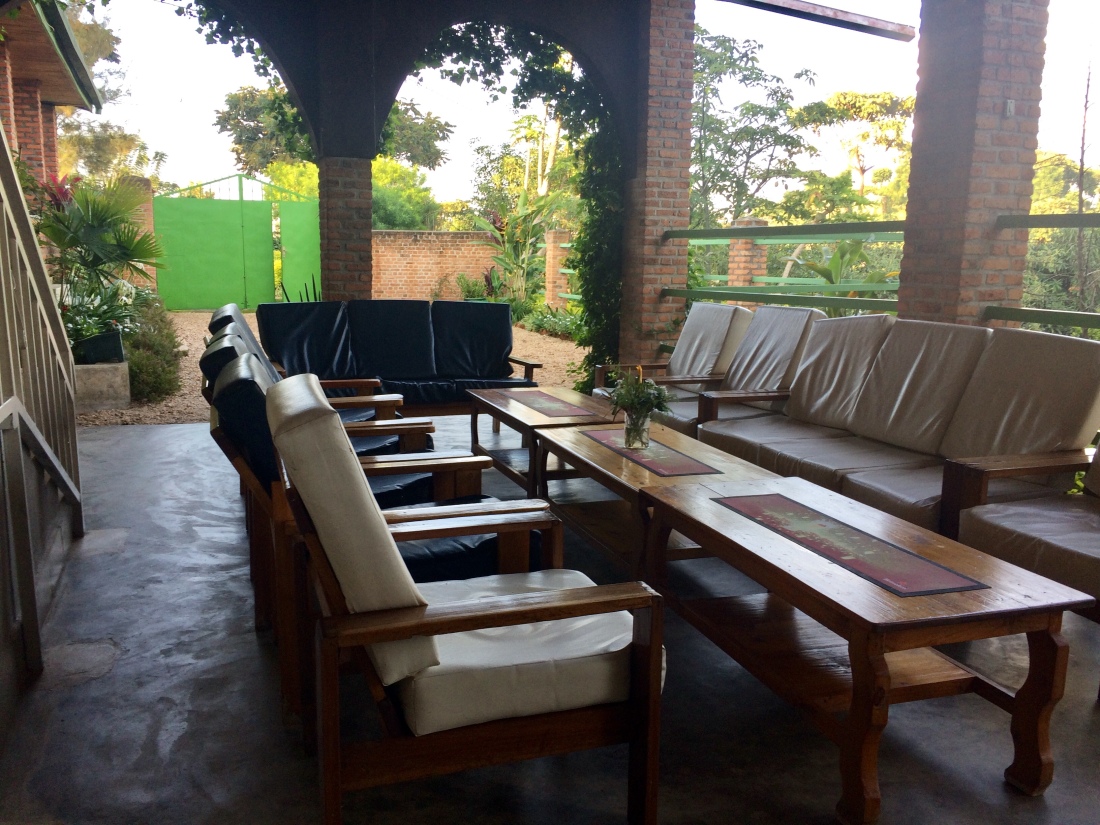
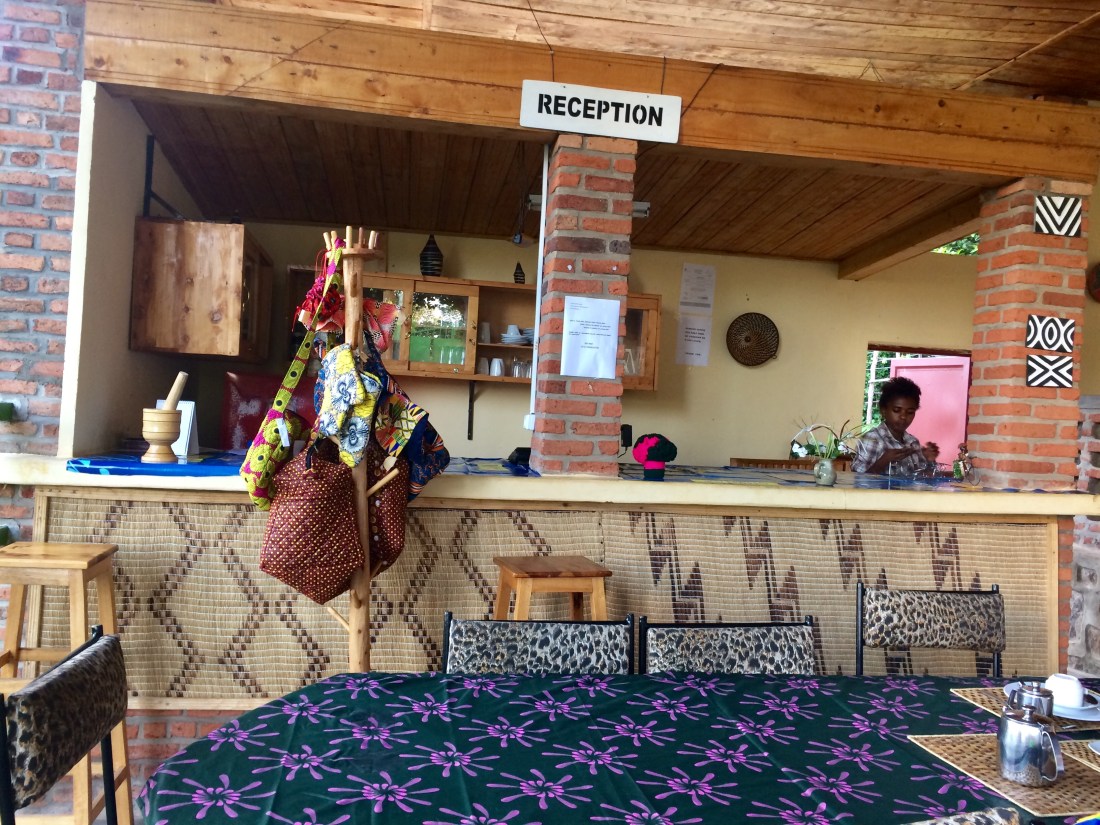

The Kinunu Guesthouse is quiet but not on the beach as we had hoped and as others have said. But, it is near the shore, actually up a hill and across the road from the shore. So, after setting out our clothes to dry, we crossed the road and walked down the hill to the beach, where there is a park with two ragged hammocks that did not look at all inviting and a swing set which we tried out and found fun. Afterwards, we returned to the road and walked to the Rushel Lodge to do more exploring.
The Rushel Lodge is quite lovely and upscale, with gorgeous grounds and a large beautiful beach. In addition to rooms, they have luxury tents for $50/night, including sleeping bags. While we were enjoying sitting on the beautiful beach, it started to rain, so we went to the restaurant for dinner. I had a Virunga Mist beer and a fish brochettes plate. For dessert, I ordered the carrot cake, but it was disappointing because it looked and tasted like bland pound cake. The total cost was 8,000 francs, about $9.00.
While waiting for our meal, we met Eric, an interesting American who had founded Marmot, the outdoor gear company, and went on to other endeavors. He came to Rwanda in 2007, fell in love with Rwanda and a Rwandan woman and decided to stay, marry and start a business selling cooking stoves that use wood pellets, eliminating the toxic smoke associated with cooking with charcoal or firewood. Not only are his stoves better for the environment than chopping down trees, they are healthier for the households that use them. Before coming to Rwanda, and not knowing what my accommodations would be like or if I’d have facilities for cooking, I had discovered Eric’s stoves on the internet and kept them in mind in case I would need to buy one. It turned out that I didn’t need the pellet stove because my house had electricity and, when I arrived at my site, my Peace Corps supervisor convinced me to buy an electric stove top, which I put into my kitchen and then never used, since I always eat out. (I’ve since given the stove top to three of my former Cameroonian students who opened up a restaurant in town.) Coincidentally, a few days before we met Eric, the New York Times ran this article about him and his environmentally-friendly stoves.
After dinner, we returned to our guesthouse for a sound sleep. The next morning at 6:30 a.m., we had another filling breakfast, which included an omelet, buns, fruit (pineapple and bananas) and coffee, hot milk or tea (Rwandan green or black tea bags). 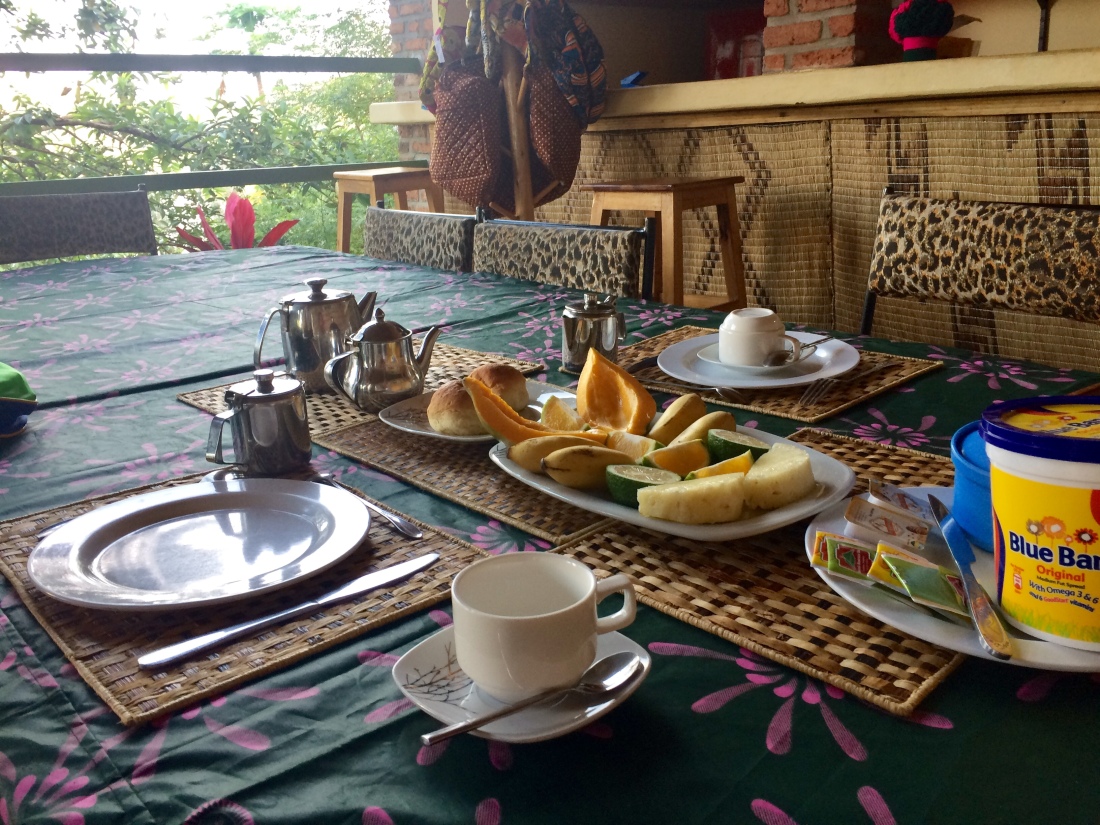 We took two of the small bananas for the road. The same two women served us, but they spoke very little English and had no information on the Trail. However, one of the women kindly walked us to the start of the short-cut trail that begins just to the left of the entrance to the Rushel Lodge. Without her help, we would never have found this connector trail and would have been forced to climb the hill back to the main trail.
 Ruminations from Rwanda
What a wonderful trip!! Love, Love.
> WordPress.com
LikeLike
Reading all your missives with relish and getting my vicarious thrills to boot. Keep on trekking,
Love you, Cynthia
LikeLike
Fantastic adventure! Love all the pictures!
LikeLike
I love your oics❤️❤️❤️, next time have someone take your pic and send to us…..sending you many kisses and hugs….rafi 😘
Sent from my iPad
>
LikeLike
A real adventure! Love the photos too.
LikeLike
Haven’t heard from you for awhile—what’s up? Absolutely love all your postings especially the travelogue re your Christmas hiking trip! Take care—
LikeLike