Hiking in Ruhango

Ruhango is a big town just a half hour bus ride away.  My friend, who teaches in that town, loves to hike and so took me on a lovely hike just outside of the town.  Here’s what we saw.

IMG_E5421

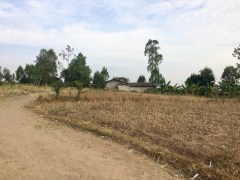
Farm fields.  Since this is the dry season, nothing is currently growing in this field.


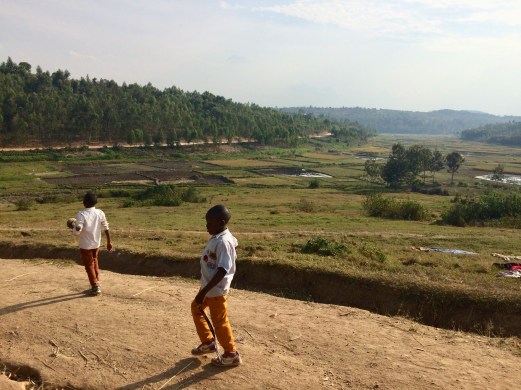
Further down the road, we began to see the rice paddies on the right.  Rice is a popular starch here, along with cassava, Irish potatoes and plantain. And, much later, we passed by groves of bananas.

IMG_5415

IMG_E5414IMG_5416


And then some cows, which are immensely important in Rwanda.

And a nicely maintained, very cute house.  And another.

Rwanda is very hilly so there are constant ups and downs.  The valley with the rice paddies, being flat, provided a nice break from Rwanda’s usual hilly terrain on either side of the valley.

Liberation Day

Liberation Day is a national holiday, meaning no school for me.  Because Liberation Day falls on the 4th of July, it was a double holiday for me.  Liberation Day celebrates the day 24 years ago when the Rwandan Patriotic Front (RPF) Army stopped the Genocide Against the Tutsi.  It is a time to reflect on the past, present and future of Rwanda.

IMG_E5122

I was told that there would be a big celebration at the stadium, and I was not disappointed.  Even though I arrived early, all of the stadium seats were filled, and the only available room was standing or sitting on the ground with the local children; I chose the latter.


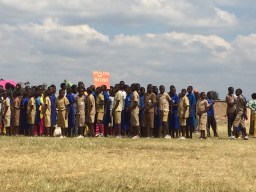
The ceremonies began with a parade of the students from some of the local schools.

IMG_5088 (1)

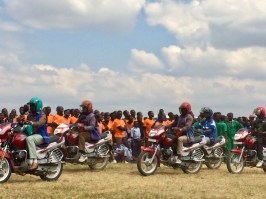
After the students came the various town guilds, including the moto taxi drivers, driving their motorcycles.  IMG_E5097


They were followed by my favorite, the bicycle taxi drivers.  Notice the ample, spongy and comfortable seats on the back of the bicycles for carrying passengers and cargo.


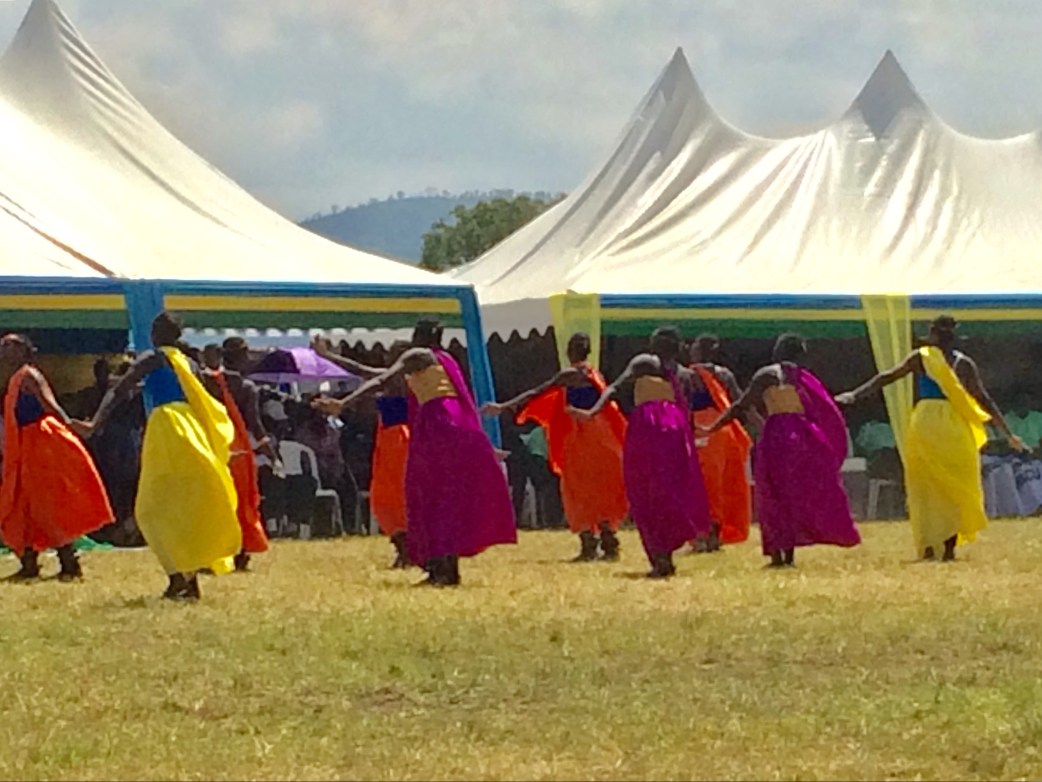
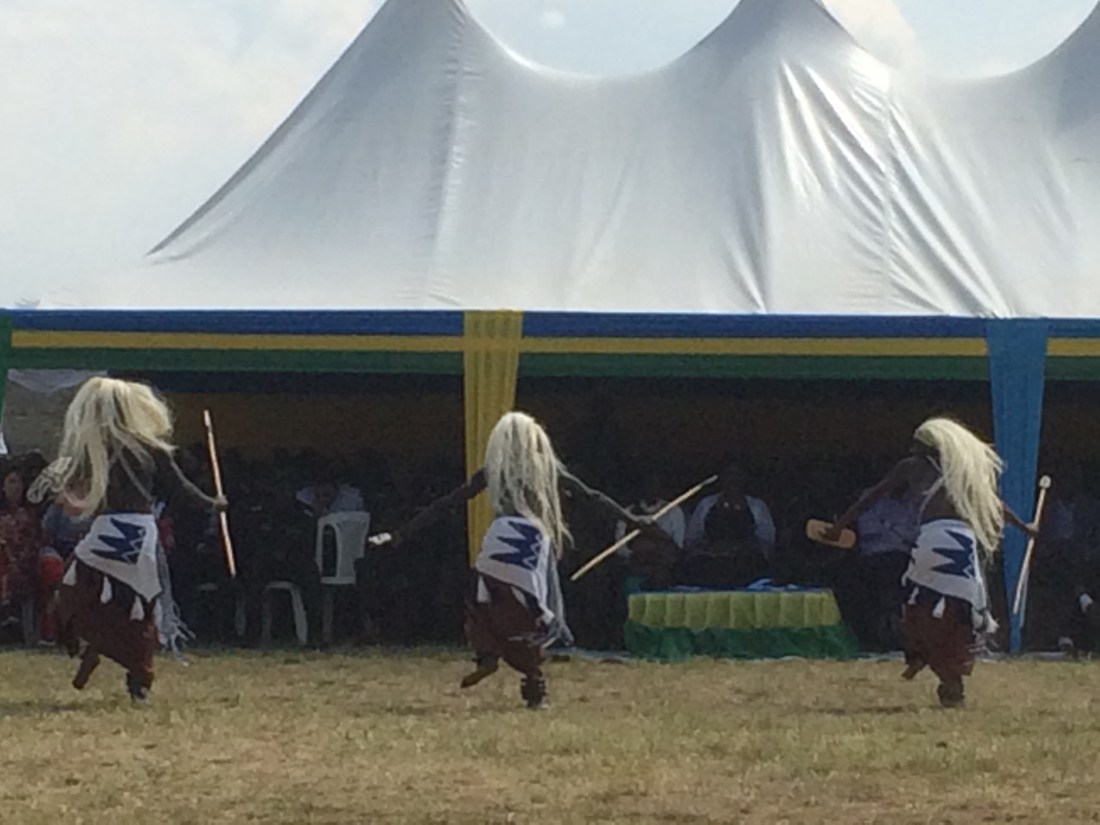
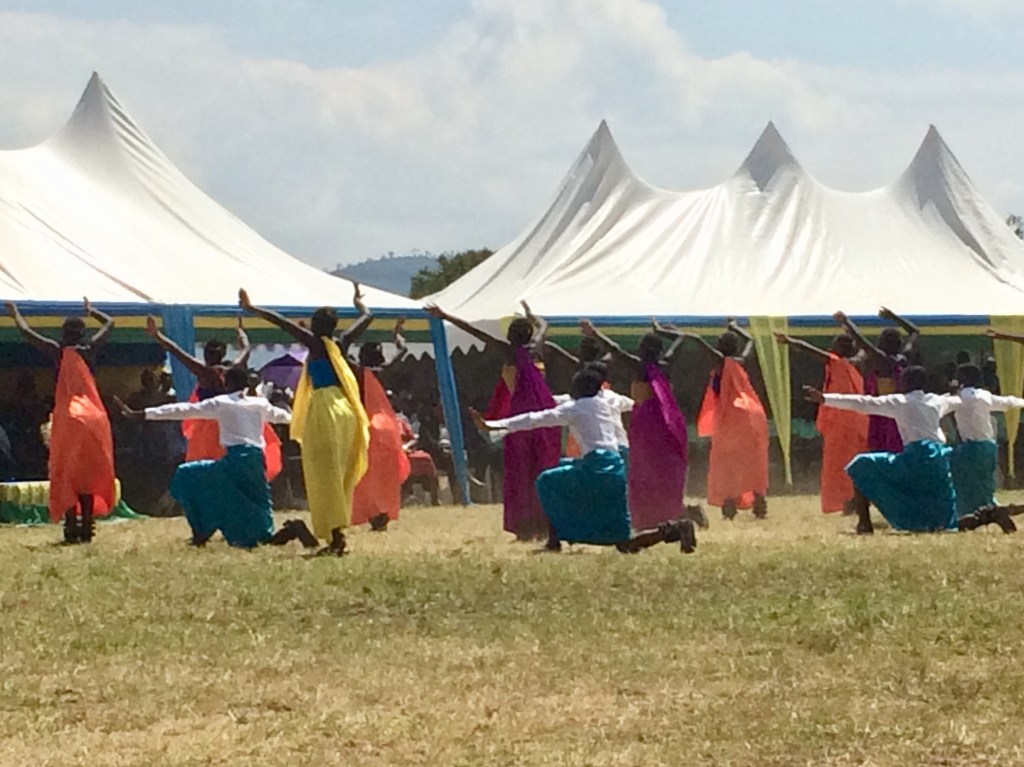
After all the processions, there were speeches.  And, then, the entertainment began.  Because Rwandans always dress extremely fashionably and I was wearing blue jeans on the bad advice of my Rwandan friend, Olivier, I did not sit with the honored guests, so I never got to see the front of the entertainers, only their backs, which is why all of the photos are of backs.


IMG_5130
Rwanda’s famous Intore dancers with their spears.

We all paused and listened intently as the President gave a sober radio address to the country in Kinyarwanda.  Then the dancing resumed.  Some of the dances reenacted scenes from the genocide (hiding in forests, running and dying), as well as the dramatic liberation by the RPF troops.  And, there was fabulous drumming.


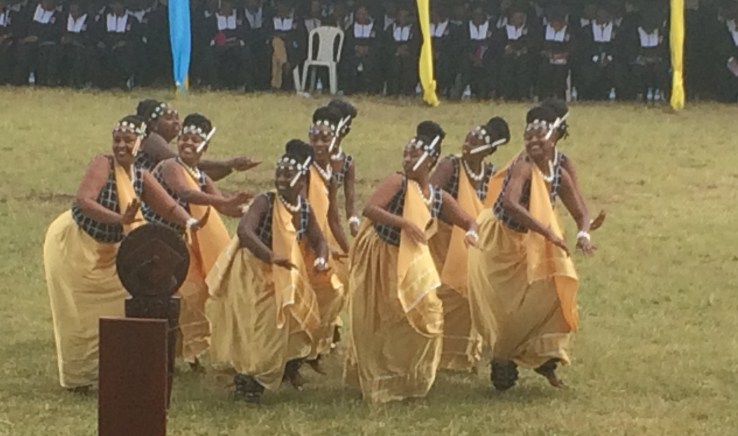
The women’s dresses are called umushanana. They are typical Rwandan traditional dress, now worn for formal occasions.  As you can see, they are quite colorful and beautiful.  They consist of a long, full skirt usually with an elastic waist, as well as a long sash.  On top a blouse (usually short-sleeved, though I have seen some tight long-sleeved tops) is worn.  It reminds me of a sari, but the midriff is covered. When the women dance in these elegant dresses, the dancing is particularly graceful and mesmerizing.


It was a fun and interesting day and the perfect way to celebrate.

IMG_E5113

Huye Mountain Coffee

The Huye Mountain Coffee Plantation is only about one and a half hours from where I live.  So it was time for a visit.  And what a visit it was!  Five Hours of coffee tasting (cupping), hiking and learning about the history and production of coffee.  I expected just to learn about coffee, but we also had a wonderful hike in Rwanda’s famous hills.

Our visit began with a freshly brewed cup of hot, delicious coffee.  Then, we met our guide, Aloyse, a/k/a “Mr. Coffee,”  who speaks four languages (Kinyarwanda, Kiswahili, French and English, which he taught himself by watching English language movies, after he realized that most of his customers were English speakers).  Mr. Coffee told us the  IMG_5168 (2)story of how coffee was first discovered in Ethiopia by a goat herder who observed that, when his goats ate coffee beans, they acted crazy and stayed awake all night.  The goat herder decided to try eating the beans himself and found that the beans had the same effect on him, keeping him awake all night so that he could pray.  He liked the effect and, thus, the news of coffee’s amazing ability to keep one awake spread far and wide so that today so many of us depend on our morning cup of coffee to start our day or our evening cup so that we can stay up all night studying for a test.

Mr. Coffee also pointed out the awards that Huye Mountain Coffee has received for its coffee, despite being a recent entrant in the coffee business.IMG_5153
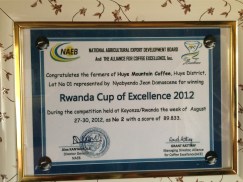
Then, we were given handsome, shiny black walking sticks for our hike to the plantation.  The hike started out easy, allowing me to appreciate the beautiful mountain views of the many farms and houses scattered throughout the hills.  We passed homes and people, some walking, but most working on their family farm plots.  We began to ascend the mountain at an easy pace, while Mr. Coffee pointed out some of the plants we were passing – cassava, sweet potatoes (different from American sweet potatoes but also tasty).  Although we are in the midst of the dry season, everything but the brown dusty road or paths was still green – just not as bright green as during the rainy season.

Our first stop was an experimental coffee plot where new plants of different varieties of coffee are planted.  Once we began our ascent, we started to see the actual coffee trees.  Because the harvest occurred months ago, there were not many berries on the trees.  However, there were still enough left for us to pick a few and break them open to IMG_5177taste the juice and extract the beans to chew.  We ascended to an altitude of about 4,000 feet, where we stopped for Mr. Coffee to lecture us on the enemies of the coffee trees – insects and fungi.  Mr. Coffee explained that Huye Mountain Coffee (HMC) has its own trees, but also buys coffee from neighboring coffee farmers.  However, it inspects the coffee on those farms to ensure that their coffee meets its high standards.  HMC is not yet certified organic, but in actuality is and will soon have its certification.  It expects that in four years all of its farms from which it buys coffee will also be organic.

We also observed the trenches created to handle Rwanda’s enormous amounts of rain during its long rainy season.

HMC exports most of its coffee, but it can be found in some specialty shops in Rwanda.  Most of the coffee goes to England, Switzerland, Japan and, of course, IMG_5236the United States.  The U.S. importer is Stumptown Coffee of Portland, Oregon.  Mr. Coffee explained that the quality and cost of HMC coffee is too high for Starbucks.
After hiking for some time, the ascent got steeper, and we reached an area shaded by a a huge Acacia tree with cute Rwandan stools and a small, blazing fire on which sat a squat, black cauldron.  Mr. Coffee opened his backpack and took out a laptop and two speakers and played some peppy Rwandan pop music.  Then, he got to work.

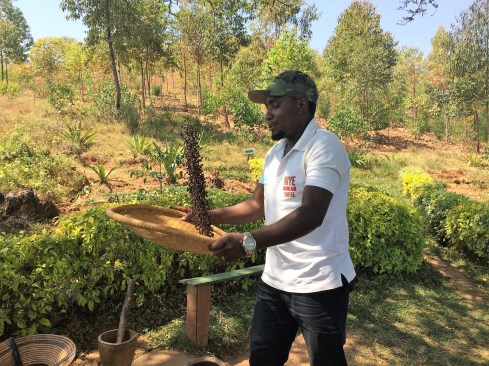
He took out some green coffee beans, poured them into the cauldron and began stirring them with a long wooden stick.  Each of us thereafter took turns stirring the beans until they were evenly roasted. IMG_5200 (2)


Mr. Coffee removed the sizzling hot cauldron from the fire with his bare hands and poured the roasted beans onto a large platter made of plant fibers to cool the coffee.  We each sampled a roasted bean, which was hard and crunchy.  IMG_5210 (2)Mr. Coffee then collected the cooled roasted beans and we packed up and continued our ascent up the mountain, which got steeper and steeper, as mountains do.   We crossed a few very short bridges made out of tree branches.  We also passed some amazingly beautiful rock, which was probably just quartz, but still beautiful.
Then, we reached a large ledge, where we all sat and looked down on the houses and people so far below us, while Mr. Coffee told us the story of a battle in the 1400s between Rwandans and an invading Burundian army.  (This area is very close to the current border between Rwanda and Burundi).  The Rwandans were losing that battle.  So, they cast a spell on a chicken and then sent the dead chicken with one of their most beautiful young women to the Burundian commander, who of course, fell immediately in love with her and brought her into his bedroom where she put the chicken on his bed.  The commander promptly died due to the chicken’s spell.  Of course, when the dead commander’s soldiers realized what had happened, they killed the young woman.  However, the spell worked because the now leaderless Burundian army was not effective in battle and were easily overcome by the Rwandans, who swiftly defeated them and recovered the body of the woman, who was now a martyr.  They covered her body in a shroud, put her in a cave in the mountain and sealed it with a boulder somewhere in the area where we were sitting.  It reminded me of the burial of the Chiracahua Apache Chief Cochise in the Dragoon Mountains in Arizona.  The graves of both are secret and not ever found.

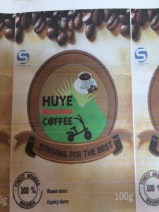
After the story, we left the rock ledge and continued our ascent, which got even steeper, and I was glad to have my walking stick, which was more like a cane.  Finally, we reached the top of the mountain, where there were benches surrounding a gigantic urn or pot with a coffee plant growing inside.  IMG_5224 (2)On one side of the urn was the HMC logo, which includes a depiction of an old-fashioned wooden Rwandan bicycle.  In olden times, such bikes were used to transport the coffee beans down the mountain.  Of course, now trucks are used.  On the other side of the urn was a painted picture of coffee farmers.  The 360 degree views from the top were spectacular.  Because Rwanda is so hilly, we saw more hills in every direction.

At first, our descent was steep.  We passed groves of eucalyptus trees.  We passed through a small village and eventually to the coffee drying facility, where Mr. Coffee explained the washing

and drying process and showed us a large washing machine, as well as the rows and rows of sheets of drying beans.  Then, he showed us their large roaster.  Finally, he took out the coffee beans that we had roasted on the mountain.  He ground them and packed them in cute bags for us.  The wonderful smell of coffee was everywhere.

From there, we walked the fifteen minutes back to HMC’s office, where we rested on comfy couches, were given another complementary bag of coffee and were presented with another piping hot cup of world class coffee.

I’ve been on coffee tours before, but this was by far the best because it included a hike in the mountains (my first since arriving in Rwanda) and a friendly, knowledgeable and fun guide.


In Search of the Southern Cross

One of my big disappointments in Rwanda has been the night sky. I know next to nothing about stars, but I love to look at them and try to identify a few favorites, like Orion and Cassiopaeia and, of course, the Big Dipper.  The Arizona sky is wonderful for stargazing, and I expected Rwanda to be even better, due to less light pollution.  However, the climate of Rwanda with its extended rainy season (almost three-quarters of the year) generally does not make for good stargazing.  Every night, when I looked up at the sky, all I saw were clouds.  On the few occasions when clouds were absent, the sky was amazing.  However, with the exception of Orion, I did not know what I was looking at. My self-imposed mission was to find the Southern Cross, which is visible south of the equator, and Rwanda is barely south of the equator.  

In June, much to my excitement (but to the chagrin of the many farmers who need rain for their family farm plots), the rainy season stopped and the dry season began.  Now, almost every night, the sky is clear, and I can see multitudes of stars.  There is some light pollution from the tall streetlights in front of my house, but if I go to the back of my house I can see more clearly.  

I needed help to identify what I saw, so I researched the various on-line star-gazing programs.  And, there are a lot!  As with most research on the internet, there was way too much information for this human mind.  It was so overwhelming that, after a week of intermittent research, I simply picked an app called “Pocket Universe” because I liked the name, and downloaded it to my iPad.  

One of my biggest problems here was confusion over directions. I was completely upside down.  What I had assumed was north turned out to be south.  My friend, Olivier, set me straight.  But, until I started looking at the night sky, it didn’t feel right.

Just like Americans, most people here do not seem interested in the night sky.  However, I have two friends who speak some English and are very interested in the night sky.  The first is Olivier and, together with the help of the Pocket Universe on my iPad, we identified Venus hanging low in the sky in front of his sister’s shop. Olivier had read about horoscopes and wanted to know his. Later, when I told him he was a Leo (the lion) and gave him his horoscope of the day that I found on the internet, he was elated. The second budding astronomer is Jared, the young night watchman at my house. Jared and I easily found Jupiter and then searched for the Southern Cross, looking southward from the back of my house.  With the help of the Pocket Universe, we found it directly over my house, as if it was guarding us.  

The Southern Cross constellation is so named because the four stars comprising it look like a cross when connected top to bottom and side to side.  Actually, however, if one visually connects the dots (stars), it looks more like a kite.  (But Southern Kite doesn’t have the panache of Southern Cross.) Thus, once one knows where to look for it, the Southern Cross is easily visible. The proper name of the constellation is simply Crux (Latin for cross) The four stars composing Crux have Greek letter names of A, B, C, D:  Alpha Crucis, Beta Crucis, Gamma Crucis and Delta Crucis, conveniently abbreviated as Acrux, Becrux, Gacrux and Decrux.  The Southern Cross is so popular in the Southern Hemisphere that several countries include it on their flags: Australia, Brazil, New Zealand, Papua New Guinea and Samoa.  

When I come home at night, I look up at the sky to see if stars are visible.  Then, after I greet Jared, I say in Kinyarwanda: “Hari inyenyeri mu ikyereri” (There are stars in the sky), and we look for the Southern Cross.  Below is a picture of the Southern Cross (the red cross) from Pocket Universe; it is more or less what the view of the night sky from my backyard looks like.

4D0CBA3E-D96B-4122-B9ED-183E134C4F90


Graduation Day

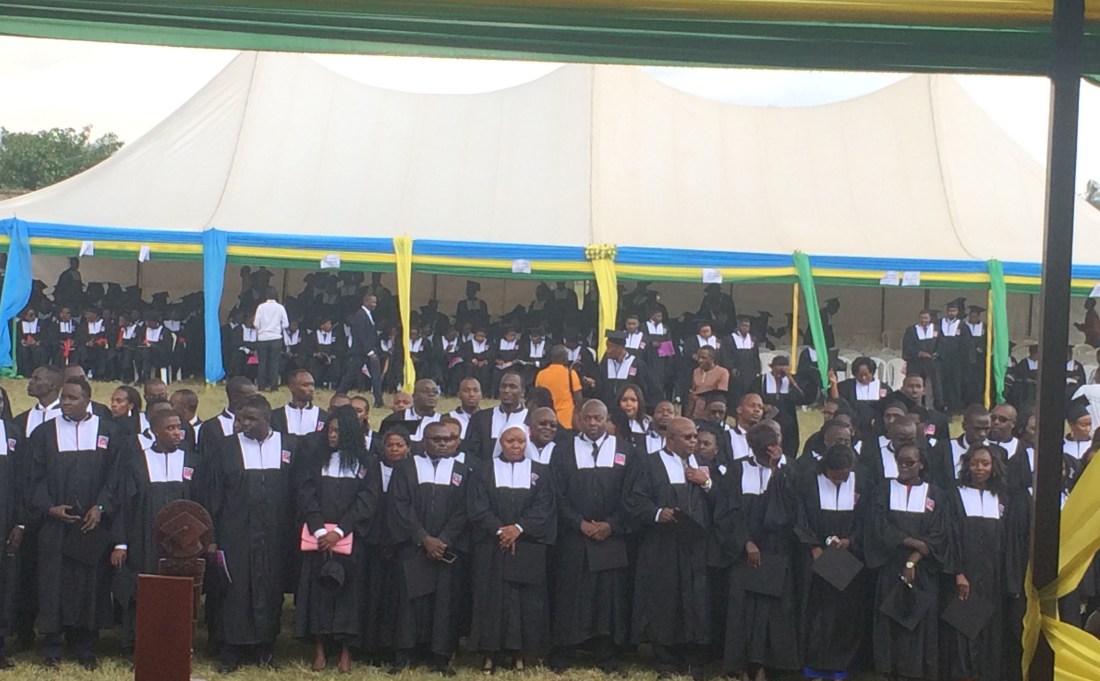
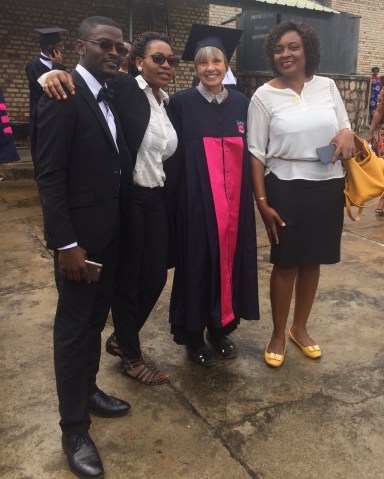
Graduation day at the Institute of Legal Practice and Development was nothing short of spectacular.  Not even a little rain could douse the high spirits of all in attendance.

be07fb01-a937-4152-8eb4-99dce8f3e74f.jpeg

The Minister of Justice spoke to the graduates and reminded them of the importance of integrity in the legal profession.

77519b83-bb3b-43c3-b70c-5993ea7e4f21.jpeg


Lecturers preparing for the graduation procession.  My hat kept falling off.

61876BCB-535A-42F4-9937-26DEC8E1AFC4

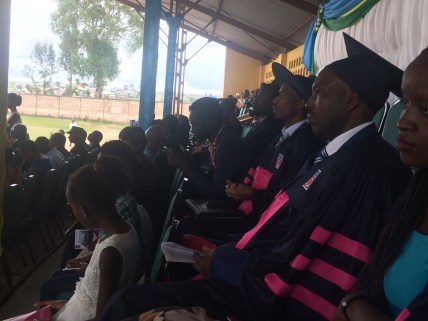
Sitting in rapt attention listening to the speeches.

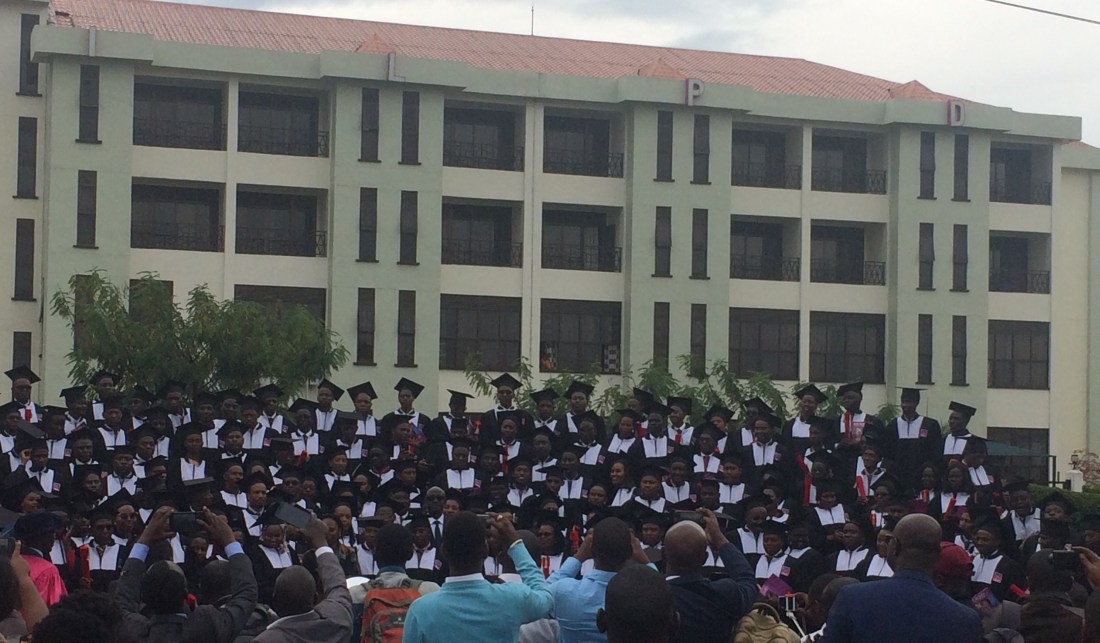
CD7073B6-5012-418A-BF1D-FE94925A78D5The graduates in front of the Office & Dormitory Building

726973A4-0F9E-4C1E-B801-A1816FBB5A00


The cultural entertainment.  Fabulous dancing.

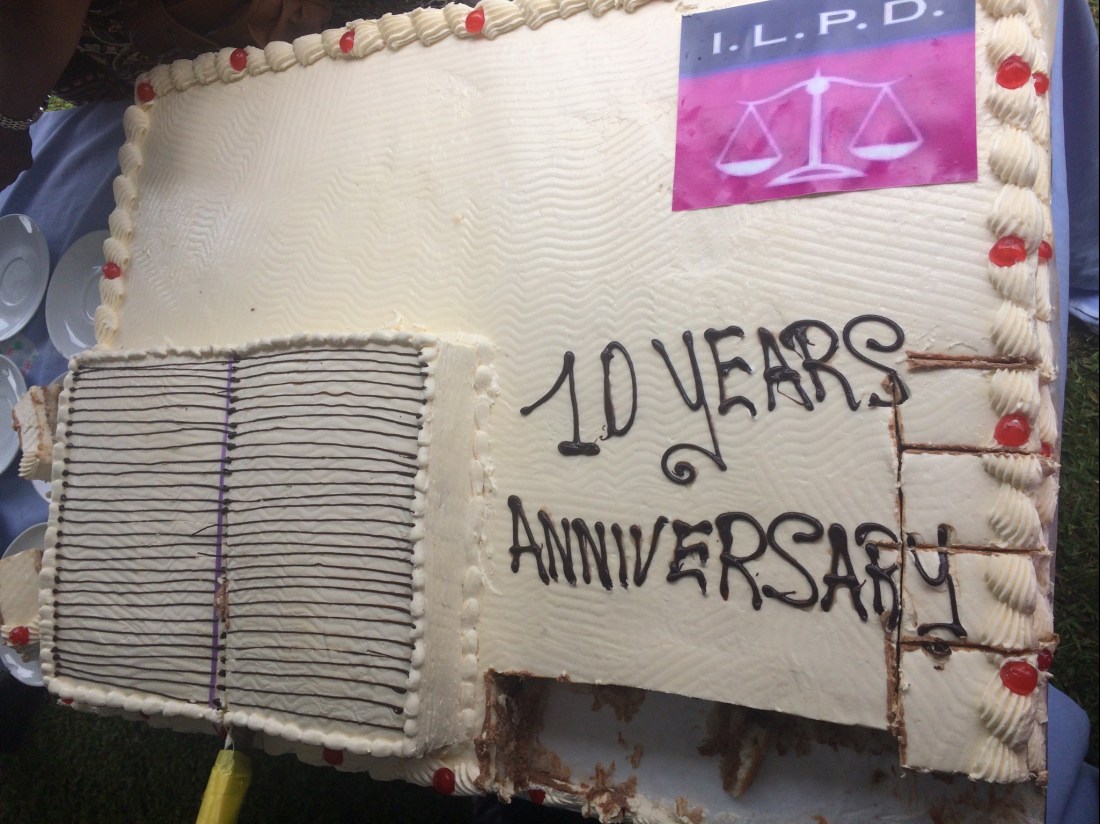
7F8C1496-B24C-4E06-850E-919F90D580D9The male dancers mesmerizing us.11C6346F-EDAE-4898-A58E-85D9506CC665The partly eaten & very delicious 10-year anniversary cake.

a77d558f-69f9-404a-b217-51f2129ff7e1-e1530457954805.jpeg                  Enjoying the festivities.


The above are two beautiful examples of typical Rwandan formal dress for women, worn by two staff members to the graduation.

Turbo King

Saturday’s Umuganda (monthly community work) consisted of weeding a steep walking path, using hoes.  As I was weeding with a borrowed hoe, I noticed so many young people wearing Turbo King T-shirts.  A young woman handed me a Turbo King T-shirt & insisted I put it on.   After we finished work, a young man who had been working beside me invited me to the Turbo King Cup at the local stadium to watch football (soccer) matches for our town.  He explained that Turbo King was sponsoring a football tournament to promote their beer.

Turbo King is a Rwandan beer that I’d seen on the shelves of many stores, but I’d never actually seen anyone drinking it.  It is a dark ale, 6.5% alcohol, which is higher than the usual 5% beer here.  It is bottled in Rwanda by Bralirwa (short for its French name of Brasseries et Limonaderies du Rwanda) Brewery, a subsidiary of Heineken.  Bralirwa is the largest brewery and soft drink company in Rwanda and has been around since 1957.  It also sells Heineken, Amstel, Primus & Mutzig beers, all ubiquitous in Rwanda, as well as a dark stout called Legend that I have never seen sold. Turbo King is a relative newcomer, having been introduced into the Rwandan market in 2009. Its logo is a lion, the King of the jungle, apparently representing the beer’s strength.  Its slogan is “Open up to the lion in yourself, enjoy a Turbo King.”

So, after Umuganda, I followed the people who, like me, were wearing Turbo King T-shirts, to the stadium to watch the soccer playoffs.  Turbo King is traveling around the country, holding these playoffs.  I was told that there will eventually be a winner in each of the five provinces and more playoffs until a single team comes out on top as the winner of the Turbo King Cup.

Like the rest of the world, Rwandans have been following the Igikombe cy’isi (Kinyarwanda for the World Cup of soccer) and cheering for the African teams.  Now, that all the African teams have been eliminated, there now is the Turbo King Cup to satisfy our soccer interest.

I watched two games in the Turbo King Cup, staying for the second only because my Umuganda partner was officiating.  IMG_5054 (2)He turned out to be an excellent referee – cool, calm and amazingly able to keep up with the fast play.   Local children practiced playing the drums that had been set out.

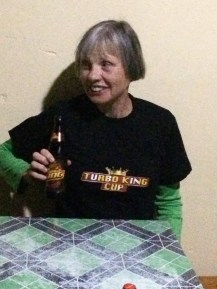
That evening, to acknowledge my Turbo King-charged day, I decided to “open up to the lion in myself and enjoy a Turbo King” in my favorite local little restaurant.  Clarisse, the owner, was shocked when I ordered a Turbo King.  She thought I was joking.  Not only is it considered a man’s beer (it’s touted for its masculinity), but I had never ordered alcohol before.  When she realized I was serious, she asked if I wanted a large or a small bottle and whether warm or cold. IMG_5073 (2)


I played it safe with a small bottle & chose a cold one.  The taste was bitter and not to my liking.  IMG_5079 (2)I asked Clarisse to cut a lime for me to squeeze into the beer, thinking it might cut the bitterness.  However, even with the lime, it was still not to my taste, so I reluctantly gave up trying to find the lion in me and paid 500 Rwandan francs (approximately 60 cents) for the experience.  So ended my Turbo King day.


Gatagara Pottery Works

016c36980778b77c890ea655b65b059744293570cf

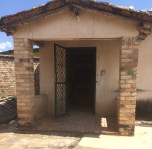
I finally finished grading 87 papers & am back to blogging.  Last Saturday, my friend convinced me to take a break from grading to meet her at the Gatagara Pottery Works, which is halfway between our towns.  The pottery works are less than 10 miles from Nyanza, the town where I live, so I hopped on a bus and quickly was there.  The place where the bus stopped is nondescript.  015e74ebc7e71e84ac58469232a73a47cca8a5c103From there, we walked 2 kilometers through an interesting village to get to the pottery, which was locked.  However, a man who saw us agreed to find a worker with a key.  Soon, a man who worked at the pottery opened the door to the pottery for us. First, he took us to the shop

010673482cbf022bfaf9bc8069b9ebcbeb76054f6b

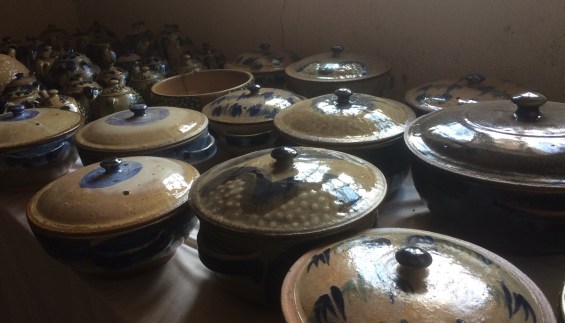
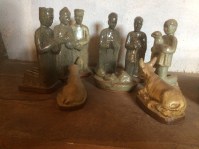
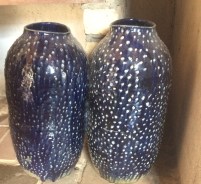
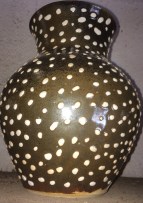
where we saw so many beautiful objects – cups, glasses, teapots, bowls, casserole dishes, vases, candle holders, a creche, and even ashtrays with built in holders for four cigarettes.  (I had to ask what they were.  I thought they might be incense holders.)  The ashtrays were no doubt popular in 1979, when the pottery was established by Belgian ceramists, and eventually employed up to thirty workers.

0155a6661e6a4398069f10f6a7d84d4bf22db4ddb3

During the 1994 Genocide against the Tutsi, some of the potters were killed, and the business halted.  Fortunately, three years later, it resumed.  Today there are twelve pottery workers, plus an accountant.  Louis, whom we did not meet, 0188ae82b8ecd7ad43241cecb3c5646dedee41002fis the only worker who has been there since the beginning.  The workers are Batwas (sometimes known as Pygmies), a minority group in Rwanda, comprising approximately one per cent of the population. Traditionally, pottery was their main occupation.  The clay is local, from the surrounding hills.  However, the colors are imported from Belgium.  I’ve been told that some of their items are sold in the tourist venues in the capital city.  Their main clientele are tourists, because the items are much more expensive than what is available in the local markets for the average person.   However, the ceramics are rather impractical for tourists because of their weight.  Each item is quite heavy for its size.  Although I wanted to buy one of everything, after considering the weight and the difficulty of transportation back to the states without breakage, I settled for two beautiful ceramic mugs,  from which I’ve since been drinking my coffee and tea everyday.

Below are more photos of the pottery whose official name hails back to its Belgian founding: Cooperative Poterie Local de Gatagara.  Everyone we met there spoke Ikinyarwanda, and many spoke French.  Fortunately, my friend spoke fluent French and was able to ask on my behalf whether lead was used in the pottery making.  She assured me that the answer was non/no.

Kigali Peace Marathon

0AD634B1-54AA-4302-B92A-41E61D6AE0A1The Kigali Peace Marathon is about peace. The race begins and ends at Amahoro Stadium, which means Peace Stadium.  Indeed, Amahoro (Peace) is a common Kinyarwanda greeting in Rwanda.  The Kigali Marathon events were (1) full marathon, (2) half marathon and (3) 7 km fun run. Five days before the Kigali Peace Marathon, without having trained at all, I decided to register for the half-marathon race. After an internet search, I booked an economically-priced guesthouse said to be a five-minute walk from the stadium.

The day before the race, I took a bus into Kigali.  We were delayed for over an hour waiting for a cycling race to pass by on the road.  After arriving at Nyabugogo, the main bus station in Kigali, I took a taxi to the stadium to pick up my race packet by 6 p.m. It included my number, a yellow plastic water bottle, a yellow backpack, a yellow singlet and pins to pin my number to my singlet.  Everything was yellow because the race’s main sponsor was MTN, whose logo is “Yello,” apparently a take-off on “Hello” but yello because their logo color is yellow.  MTN is a South African telecommunications company and the major phone and internet provider in Rwanda.  It is my carrier, so I was glad they were sponsoring the race.

After some difficulty, I found the guesthouse, which was about a ten-minute walk from the stadium down a steep, rutted dirt road.  The guesthouse happily accommodated me by providing an extra early breakfast of an omelet, bread and coffee at 6:15 a.m. and allowing me a late check-out so I could leave my belongings in the room until after the race.

The race beginning was well organized. At the entrance to the stadium grounds, we formed two lines: male and female.  We were eachC74D2978-9554-4177-A1FE-FFFBF343C191 patted down by security officers as we entered the grounds.  Only participants were allowed to enter the grounds, so my friend who accompanied me waited outside.

The participants then walked to the actual stadium, milling around as we awaited the order to convene at the starting line. There was no food, so I was glad to have had a substantial breakfast.  I chatted with an American woman who worked in the Congo (Rwanda’s neighbor to the west) for an NGO that encourages running.  She was running with a large group of Congolese teenaged girls.  At around 7:15 a.m., we amassed at the start line, and at 7:30 a.m., we promptly started the race.

97182FE9-4087-4E28-AD98-699A0E807B51
Congolese girls’ team in red.

I started the race by giving high fives to all the children along the side of the road.  About half-way through the race, however, I realized that I would never finish if I continued doing that, so I resorted to waving and saying “Mwaramutse” (Good morning).

Kigali is extremely hilly.  Rwanda is known as the land of a thousand hills.  (It’s actually more like 100,000 hills, as there are hills everywhere one looks.)  On one of the heartbreak hills during the race, I was panting so heavily as I walked up the steep hill that a young Rwandan man, who appeared to be no more than 20 years old, asked me if I was okay.  I assured him that I was, but I don’t think he believed me because he walked beside me up the hill.  Once at the top, he sped off like the rabbit he was.  About 2 miles from the end of the race, I got the first shin splint of my life after running down a steep hill.  After about 15 minutes of walking it off, I felt fine again.

At various spots during the race, there were a few water stations where we could fill our water bottles.  One station even had plastic cups, which surprised me because Rwanda is in the forefront environmentally, even outlawing plastic bags.  When I mistakenly thought that I had only about 20 minutes left, I tossed the plastic water bottle I’d been carrying.  What a mistake – because I was unable to get a refill at the final water station as there was only a large decanter and no cups, so I cupped my hands and tried to drink from them.  About three-quarters through the race, we were given 2 fingerling bananas, which all the runners, including me, gobbled up.  At two spots during the race, we were given thick water-soaked sponges to squeeze on our heads to cool off.  I took advantage of the sponges and in fact cooled off, but in a few minutes the water had evaporated and my singlet was again dry.

Fellow runners and walkers gave encouragement to one another, saying “Komera!” (Kinyarwanda for “Be strong”) or “Couragé” (French for Courage).  I learned a new Kinyarwanda phrase when a fellow runner said, “Izuba ni gincye cyane,” meaning “The sun is way too hot.”  He was right, and there was very little shade.  I had forgotten to wear a hat, but fortunately did not get sun-burned.

The race was generally well organized with police or race staff at all intersections directing us where to go.  However, the organization fell apart at the end. After we entered the stadium grounds and ran to the actual stadium, no one was there to direct us into the stadium. I followed the runners in front of me, running past the correct stadium entrance and around to the farther side of the stadium.  After I entered the stadium on the wrong side, I didn’t see where the finish was. Yet, I was in an area where runners had already finished, were wearing their medals and were standing around chatting.  It seemed very anti-climactic.  So, I asked a medal wearer where she got her medal, and she told me she received it when she crossed the finish line. Then I asked where the finish line was, and she pointed towards the entrance to the stadium that I had run past.  Thus, I had to run back around to the first entrance, re-enter the stadium, cross the official finish line and obtain my medal.  I was happy just to have participated and finished.  Although there was music in the stadium, unless one was part of a team, there was nothing to do.  So, I exited the stadium and the adjacent grounds to find my friend, who was waiting near the street for me.

861ADAD8-3F3C-4C78-A7DE-EC5A19AF783C
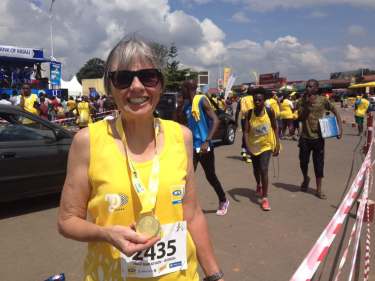
With my medal after I finished

The race attracted participants from many countries.  I heard many languages being spoken.  The top 3 male marathoners were, not surprisingly, Kenyans, with the winner clocking in at 2 hours, 23 minutes and 42 seconds.  The top 3 females were 2 Kenyans and a Ugandan.  The top female’s time was 2 hours, 54 minutes and 1 second.  The top male half-marathoner was Rwandan, with a time of 1 hour and 16 minutes.  He was followed by 2 Kenyans.  The top female half-marathoner was Rwandan with a time of 1 hour, 28 minutes and 53 seconds.  She was followed by a Kenyan and another Rwandan.  I came in 886th place out of 1,052 half-marathoners.  My time was 3 hours, 21 minutes and 36 seconds.  A disappointing time, but a super fun day.


April & Yogurt

Historically, April was an important month for Rwandans.  They called it “Mu Kwa Kane” (meaning fourth month) but also “Mata,” which comes from the Kinyarwanda word for milk: Amata.  The reason April is called Milk has to do with cows, which are immensely important in Rwanda.  Traditionally, a family’s worth was determined by the number of cows they owned, and cows were given (and in some places still are given) as a marriage dowry.  The importance of cows stems from their ability to produce milk.  For as long as anyone can remember, Rwandans prized cows for their milk.  

Because April comes at the height of the rainy season, there is an abundance of greens for the cows to eat, in essence creating a banquet for the cows.  This feasting by the cows makes them their fattest and, as a result, they produce enormous quantities of milk,  Hence, April was called Mata to acknowledge the time when the cows (and thus Rwandans) had plenty of milk.

Milk continues to be important to Rwandans.  Every town that I’ve been to has Milk Stores that sell fresh milk and yogurt.  Nyanza, the town where I live, is particularly known for making yogurt. In fact, it has two dairies.  Nyanza’s association with yogurt heralds back to pre-colonial times, when the King, who lived in Nyanza, employed a royal yogurt maker, who lived next to the King.   

Fortunately, I don’t need a royal yogurt maker to enjoy fresh yogurt.  The Nyanza dairies deliver fresh yogurt daily to small stores and the milk stores, and other small shops make their own yogurt from starter, so it is easy to purchase a cup of fresh yogurt. I often see the dairy trucks on the road in Nyanza, delivering milk to other parts of Rwanda. 

42C01652-F5DC-40DB-98E1-BF16F4482E1E
My evening cup of liquid yogurt at my favorite shop.

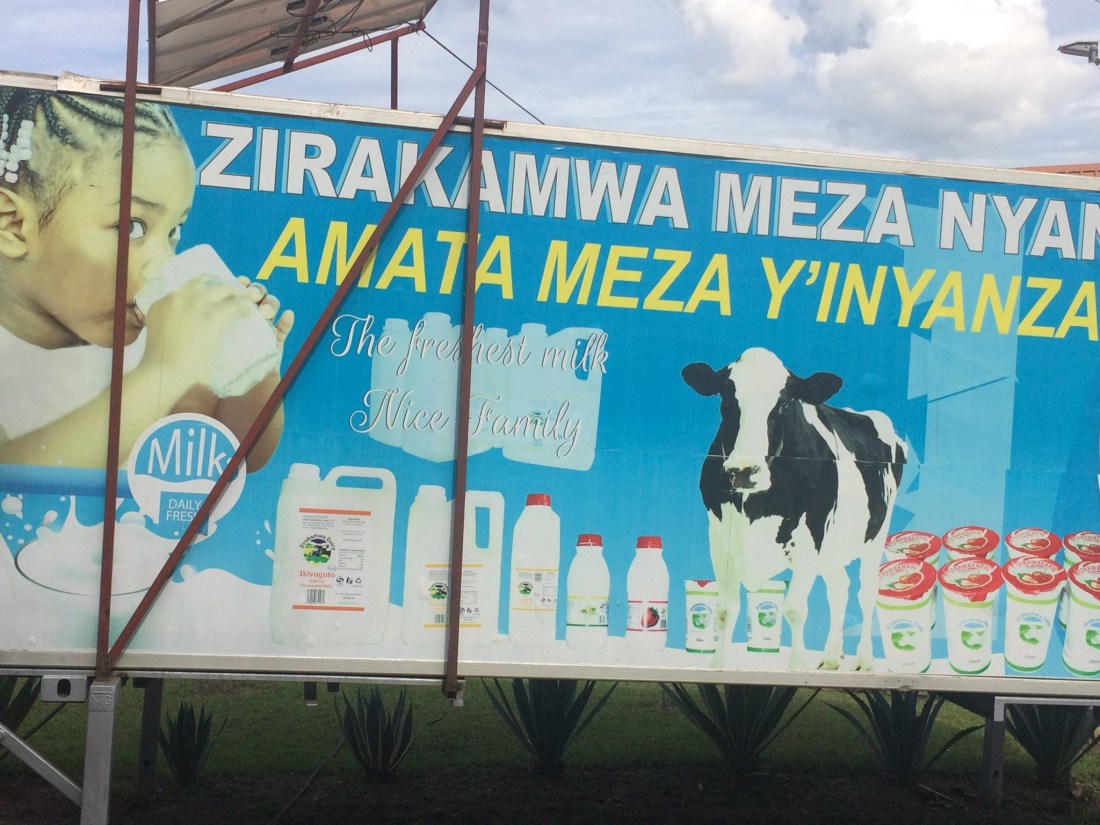
I have come to enjoy my daily cup of Nyanza yogurt, which is called ikivuguto (pronounced ichi-vu-gu-tow) and is actually more like kefir (liquid yogurt) than the thick yogurt that we are accustomed to. Ikivuguto has a delicious fermenty taste that most Rwandans and I particularly enjoy.  For those wanting flavored and sugary yogurts, at least one dairy company makes a pink, strawberry-flavored yogurt with added sugar that is sold in some shops.

af6e6eff-1d1a-43b6-b646-b095ce4a7e32-e1524987861537.jpeg
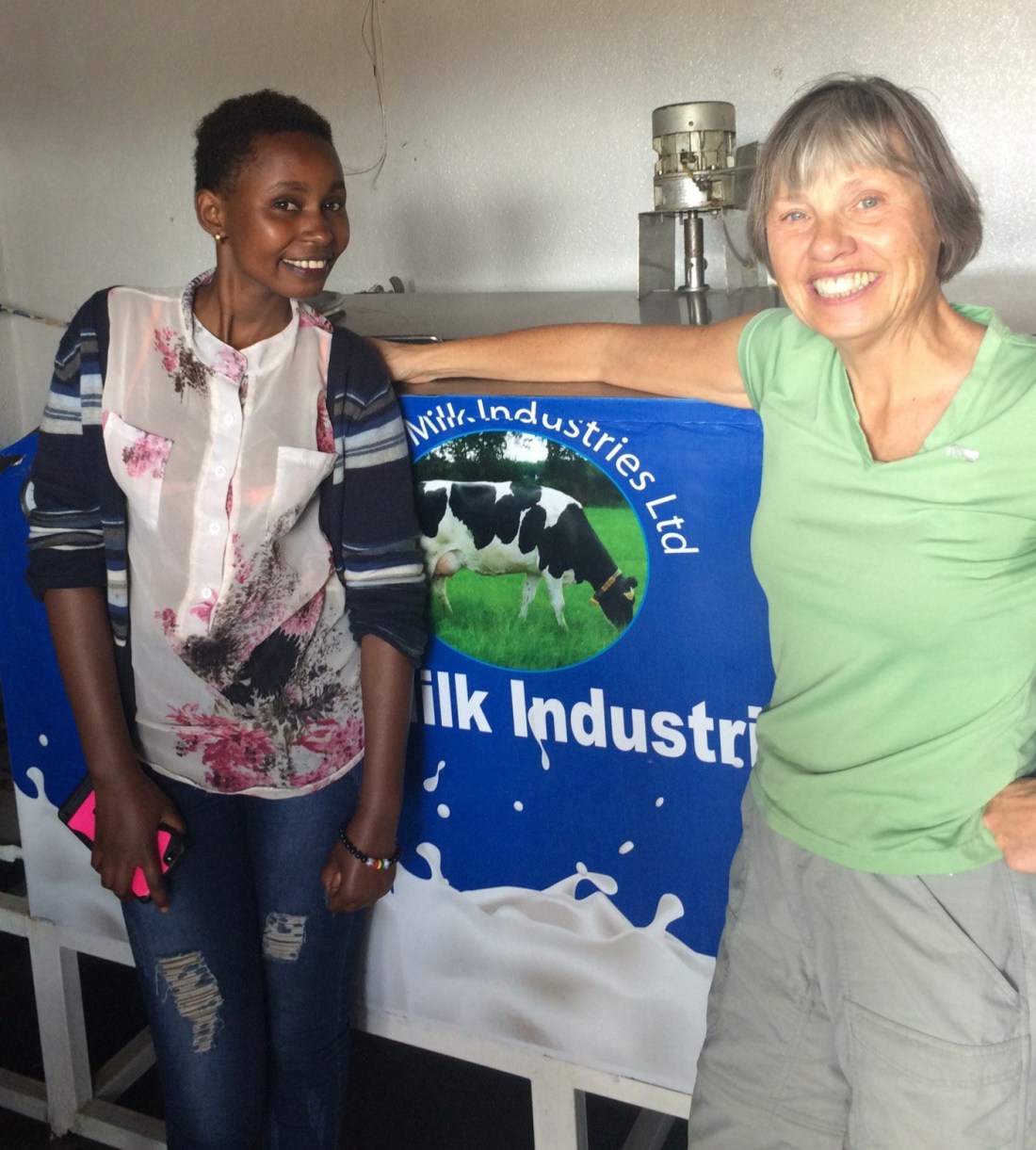
A friend and me at the Milk Store, in front of the large container of fresh milk.