EMERALD NATION

I’ve been sick with a nasty cold for about 10 days, but I’m not the only one.  Many other people  are down with the same thing, which here is called “grippe” (from French, but it really means flu, not cold, in French.  Maybe Marianne can elaborate).  And, so we commiserate together.  People here say that our colds are the result of the change in seasons.  When they do, I can’t help but laugh because we say the same thing in the U.S. as the seasons change – especially as spring, fall or winter approach.  Here, the change of seasons is not so sharp; I’ve barely noticed the change.  Now, instead of raining every day, there is one day a week where the weather is stunning – sunny and pleasantly warm, not hot, all day, followed by rain at night.  That subtle change in weather, I’m told, is responsible for the proliferation of colds, including mine.  That’s as good an explanation as any, and since Americans (apparently like people in most countries) use an identical excuse for catching colds, I accept it and gladly blame my cold on the change of seasons here.

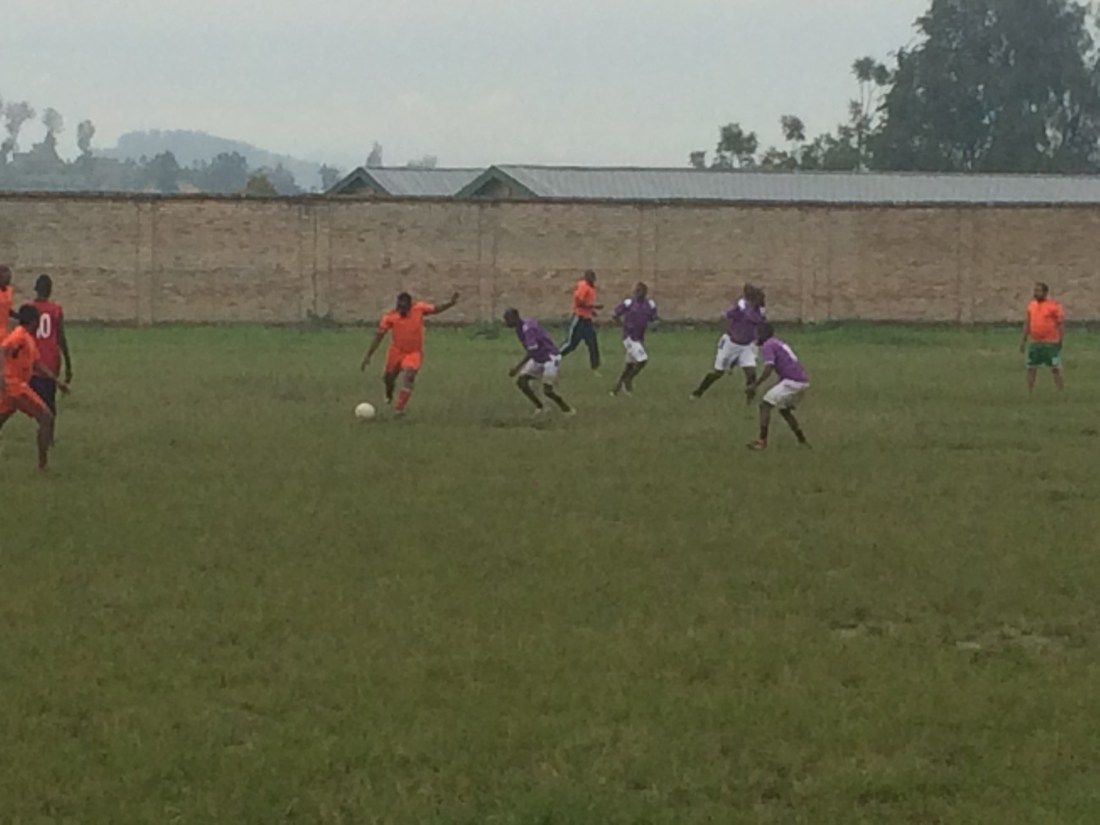
The result of so much rain is that Rwanda is a gorgeous country where everywhere one looks is green.  I recently learned the Kinyarwanda words for colors.  Green, of course, would be the most difficult one to pronounce: icyatsi kibisi (pronounced ichatsy-chibisi).  Because of the abundance of rain, Rwanda is particularly icyatsi kibisi.  It’s so amazingly lush that I’ve come to consider it the “Emerald Nation,” as it is not dissimilar to Ireland, which everyone knows as the Emerald Isle.  Rwanda’s ubiquitous greenery and cool temperatures remind me of Ireland’s cool verdant pastures and mountains, also due to incessant rainfall.

On the bright side, being sick has advanced my Kinyarwanda vocabulary, as I now know how to say I’m sick (Ndarwaye, pronounced Dargwhy-ye) and how to say cough (inkorora, pronounced inhorora).  I already knew how to say doctor  (umuganga), and fortunately I did not need one.

Kitabi Ecocenter & Nyungwe Forest National Park

This week I visited Nyungwe Forest National Park.  I camped at the Kitabi Ecocenter, which supplied a tent, sleeping bag, blanket and a particularly comfortable pillow.  The staff at the Ecocenter arranged for a car to take my group to Nyungwe Forest for a hike on its famous canopy walk trail, the highlight of which is a swinging bridge built by Canadians that is atop the canopy.  The bridge is 150 feet high and about 270 feet long in 3 sections, towering over the rainforest.  My acrophobia kept me from walking on the narrow, swaying bridge, despite my guide’s best efforts to convince me that I’d be fine if I just stayed with him.  Instead, I chose to hike on the ground and meet my group at the end of the canopy walk.  My hike included a beautiful, but muddy path, and a stable metal bridge over a ravine.  The hike from the beginning of the trail to the canopy walk is a steep, slippery downhill and, of course, after the canopy walk, a steep uphill hike.  Fortunately, the Park supplies wooden walking sticks to help with stability on the climb down and back up to the top.  

The Congo-Nile Divide is in Nyungwe Forest.  That means that the water on the west side drains into the Congo River and the water on the east side drains into the Nile River.  Nyungwe Forest is home to 13 species of primates and hundreds of bird species.  Because of the rain, I saw no birds, but did see 2 primate species: Blue monkeys and colobus monkeys.  Unfortunately, I wasn’t fast enough or near enough to photograph them.  The forest is incredibly beautiful.  The last elephant there was killed in 1994, and its enormous skull is on display at the visitor’s center (built by the U.S).  However, there is a plan to reintroduce elephants into the park, as elephants are needed to eat a particular parasite plant that strangles the trees in Nyungwe Forest.  

Nyungwe is a rain forest, which did not disappoint, as it rained in varying amounts the entire time I was there.  As a result, the best time to visit is probably during the dry season (July and August).  Despite the constant rain, I was overwhelmed by the splendor of the park and surrounding land.  

The Kitabi Ecocenter is located just outside the park amidst tea plantations.  The staff there could not have been more accommodating.  The meals were filling and tasty.  One night, we made vegetarian pizzas, using African chapatis as the base.  Another night, we had burritos made with African chapatis and an African version of guacamole.  Breakfasts were omelettes, fruit (bananas, pineapples, passion fruit), white bread, banana bread and coffee and tea.  Lunches were delicious and filling vegetable stews.  A photo of the oven is below.  There is a choice of accommodations:  tents with sleeping bags (which I chose) or more roomy traditional Rwandan thatched roof huts with a luxurious double bed.  The ecocenter is located atop a hill and the views of the surrounding countryside are spectacular.  The elevation is almost 6,000 feet, so the temperature is quite cool, even cold at night and, happily, no mosquitoes.  

Within an easy but very steep downhill hike from the ecocenter are 2 touristy shops:  first, the women’s handicraft cooperative, which unfortunately was not open when I visited, and second, the honey store that sells Rwandan honey and honey products.  I purchased a small candle in the shape of a gorilla (just in case the electricity goes out at my house) and honey lip gloss.  

I’ve included the link to the Kitabi Ecocenter if you’d like to learn more about it.

http://kitabiecocenter.com

Monkey Business

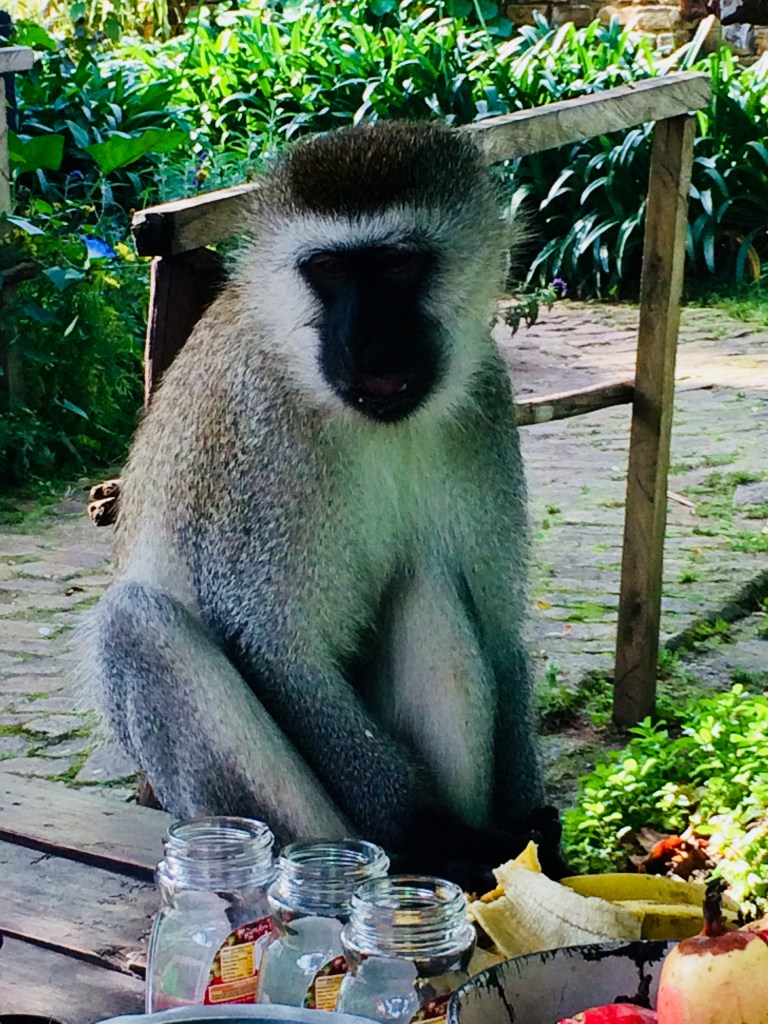
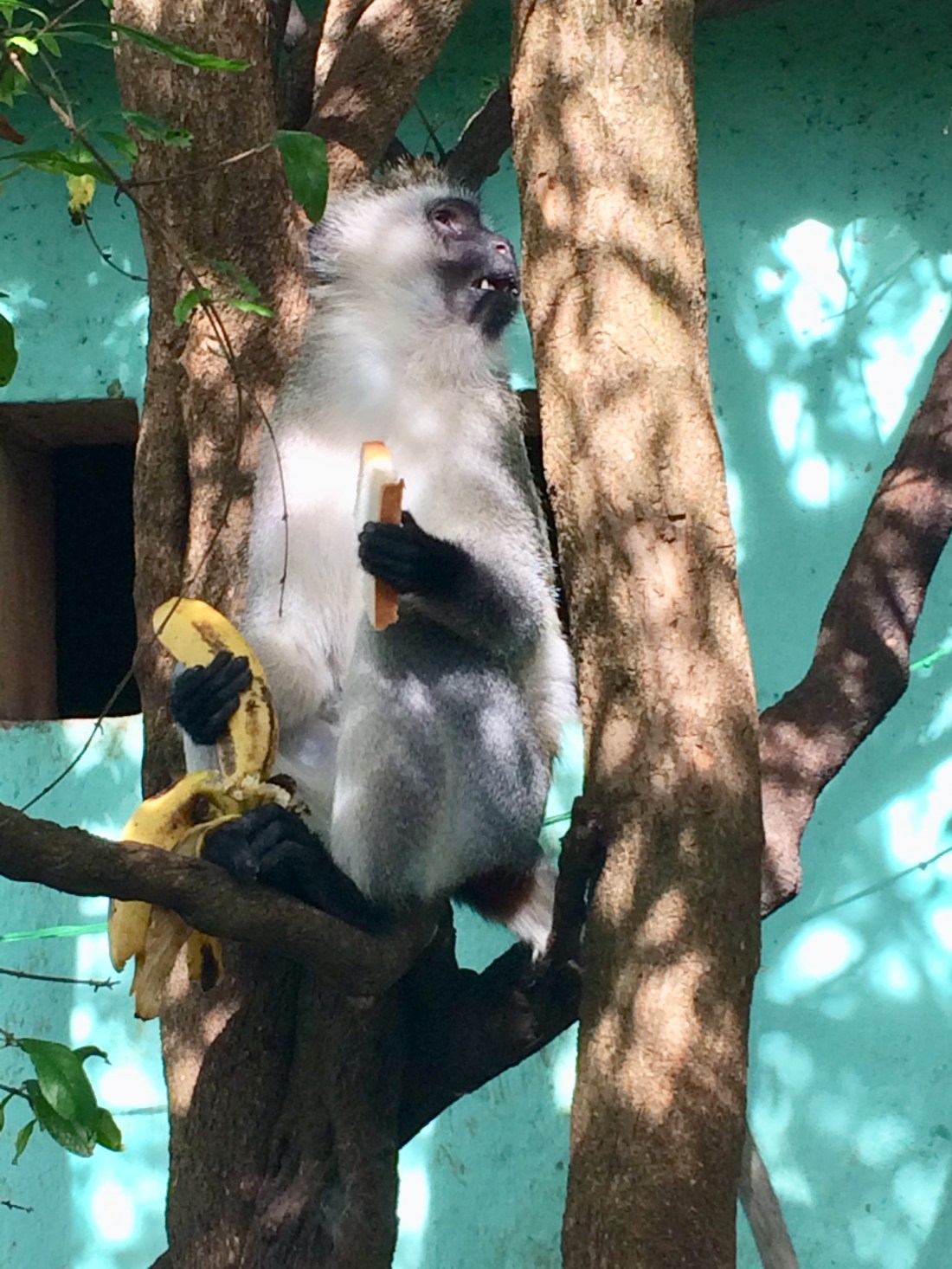
B629C0C9-7243-4139-A9DD-5D663F4C6409Since I had the day off from school, I walked into town to visit my friend, Zebounissa.  She’d been telling me of a monkey who comes to visit her almost daily.  However, the monkey had never visited when I was around.  But today, it did.  Zebounissa keeps a stash of bananas just for the monkey.  She also gives him a slice of bread.

D874A0C3-7C17-41C1-AEDE-3FAEADBB7A70

Why wouldn’t he return again and again?

My Second Umuganda

I spent my second Umuganda (monthly morning of community service) weeding the sides of a dirt road.  At first, all of the workers were veterans of various ages, wearing green uniforms, wielding hoes to wack away at the weeds.  They were incredibly strong, accomplishing in one whack of a hoe what took me at least ten whacks.  A security guard loaned me a hoe, which I shared with one of the veterans who offered to relieve me after seeing how slow and ineffective I was.  Later, we were joined by men and women of the community.  It was truly back-breaking labor.  I traded  off sharing a hoe (isuka in Kinyarwanda) with another woman, who also worked faster than me.

Rwandan women spend a lot of time toiling on family farm plots, weeding with hoes.  They bend straight over at the waist (no bent knees) for incredibly long periods of time, whacking away with the hoe to clear the plot of weeds.  Working in that position, however, was uncomfortable on my back so I was glad to take many breaks.  Fortunately, it rains a lot here so the ground was not as hard as it would have been without rain.


Several men asked me, “Vous etes fatigué?”, as it is still commonly assumed here that, if one is a foreigner, one must speak French.  That is a holdover from the colonial period, when Rwanda was under Belgian control, and many Belgians and French lived in Rwanda.  Strangers often greet me with, “Bonjour, Madame!”  In such instances, I attempt to recall my rudimentary knowledge of high school French to politely respond.

My Umuganda was only one of many in Nyanza and one of at least hundreds if not thousands throughout Rwanda on this Saturday morning.  It felt good to be part of the national community effort, but my back was glad when the leader said that we’d done enough for the day.

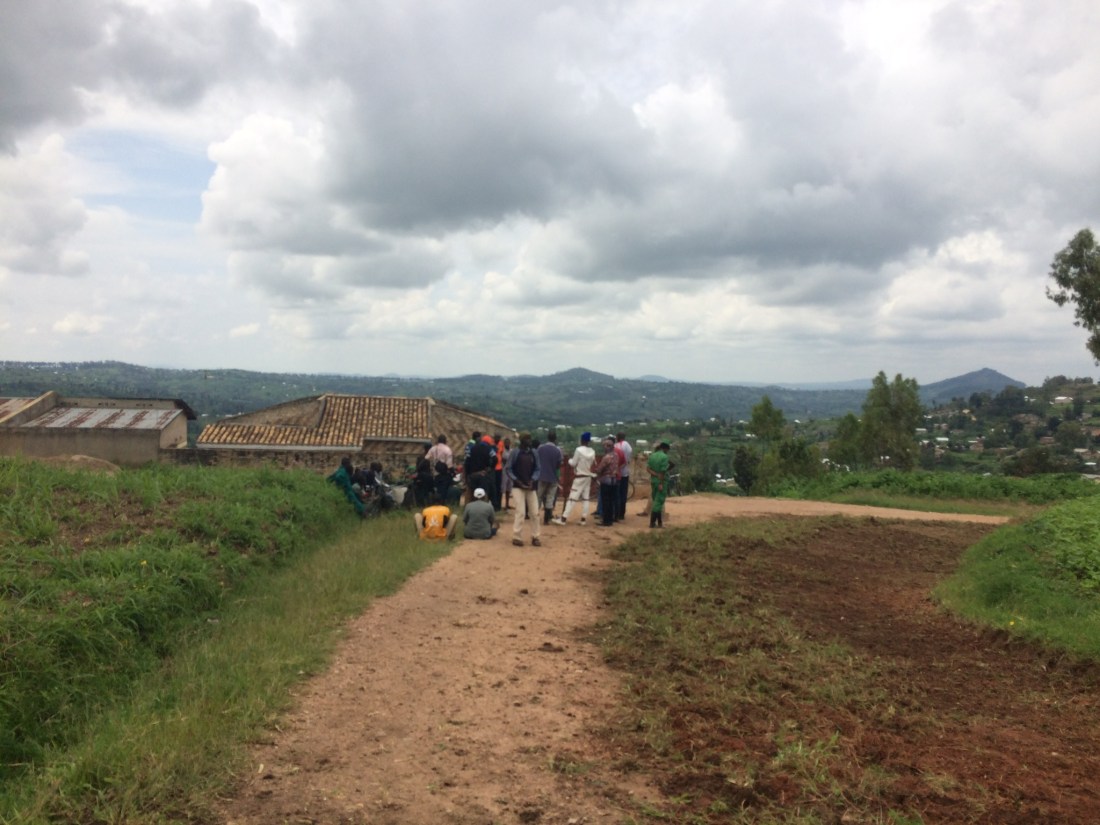
Below is a photo of our meeting at the end of Saturday’s Umuganda.  On the right side of the road, you can see part of the results of our weeding labors.  In the distance, you can see some of the ubiquitous hills of Rwanda, also known as the Land of a Thousand Hills.

B4E43B26-3D80-4596-AEFF-01319372A969


Tackling Time in Rwanda

Happy red cloclkThis week, I decided to tackle how to tell time in Kinyarwanda, Rwanda’s local language.  Because telling time in Rwanda is not an easy task and procrastination is my strong suit, I’d been purposely putting off learning how to tell time, hoping that it would come to me through osmosis and without any effort.  Not surprisingly, that didn’t happen.  So, I told Olivier, my new Kinyarwanda teacher, that I was finally ready to dive into the subject of time.

Most of us are used to English, French, Spanish and other languages, where the day starts at midnight and thus the next hour is 1 a.m.   However, in Kinyarwanda and Kiswahili (known in the West as Swahili and spoken throughout East Africa), the first hour of the day is when the sun is up and people are moving about.  That actually makes sense.  Why begin the day in the middle of the night?  Why not begin the day when the sun is up and we are, too?  Thus, instead of 7 a.m., for Rwandans, it’s one in the morning.  Our 8 o’clock is 2 o’clock for Rwandans, our 9 o’clock is their 3 o’clock or third hour, our 6 o’clock is their 12 o’clock and so on.  Fortunately, like our time system, they only use twelve numbers and repeat the same numbers to get to 24 hours, so I only had to learn 12 ways of saying the time.

This different concept of telling time was so hard for me to wrap my head around that I resorted to the time-honored way of learning (remember elementary school addition and subtraction) of making flash cards to try to memorize the various times of the day.  After considerable effort, I can now haltingly tell time.  So, when someone says “Ni saa nagahe?” (pronounced nee-san-ga-hay)  (What hour is it? Or literally, “It is hour what?”) or “Ufite saa nagahe?” (Do you have the time?), I can, with a bit of hesitation, answer: “Ni saa kuminimwe” when it’s 5 o’clock.  For 7:35, it would be “Ni saa moya n’iminota mirongo itatu n’itanu.

Note that the word for minutes (iminota) is similar to the English word, which made me jump for joy.  Finally, a word that did not take considerable effort on my part to learn!  Ah, I tell myself, perhaps these mental gymnastics that I’m putting my brain through will help to ward off Alzheimer’s.

Sunbirds of Rwanda

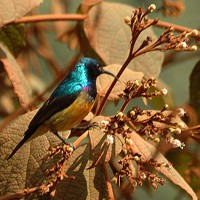
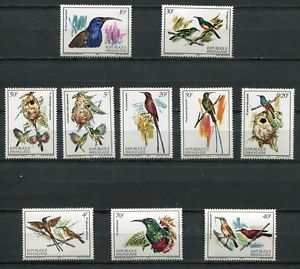
In Arizona, I live in Sierra Vista, known as the hummingbird capital of the United States, where hummingbirds are a common sight.  Imagine my surprise yesterday, as I was disposing of my morning coffee grounds on a neighboring farm plot, to see a gorgeous iridescent blue hummingbird just six feet away.  (Of course, I had no camera).  I stared at the bird for close to a minute as it sipped nectar while furiously flapping its wings in a dazzling show of strength and beauty.   Hummingbirds in Rwanda?  I did a quick internet search to learn that there are no hummingbirds in Rwanda, as hummingbirds are endemic only to the Americas.  However, Africa and Asia have sunbirds which, to my untrained birding eye, look remarkably similar to America’s hummingbirds.  See for yourself.  Here is a photo that I found on the internet of a Rwandan sunbird not much different from the one that visited me yesterday.  photo-nectariniidae-cinnyris-venustus-2669_largecrop  Sunbirds, like hummingbirds, have handsome, iridescent, colorful males and are slim, tiny, powerful birds with long, narrow beaks perfect for extracting nectar.  Accordingly to Wikipedia, Rwanda is home to 26 species of sunbirds.  Sunbirds are apparently so common in Rwanda that there is a collection of stamps dedicated to them.  The one I saw resembles the sunbird on the top left below:

Rwanda sunbird

 
Continue reading “Sunbirds of Rwanda”

Mosquitos, mosquitos, mosquitos

Some of you have asked for a picture of my bed.  I have a very comfortable and commodious bed.  I also have a mosquito net over my bed.  Here is a picture of my mosquito net rolled up during the day.
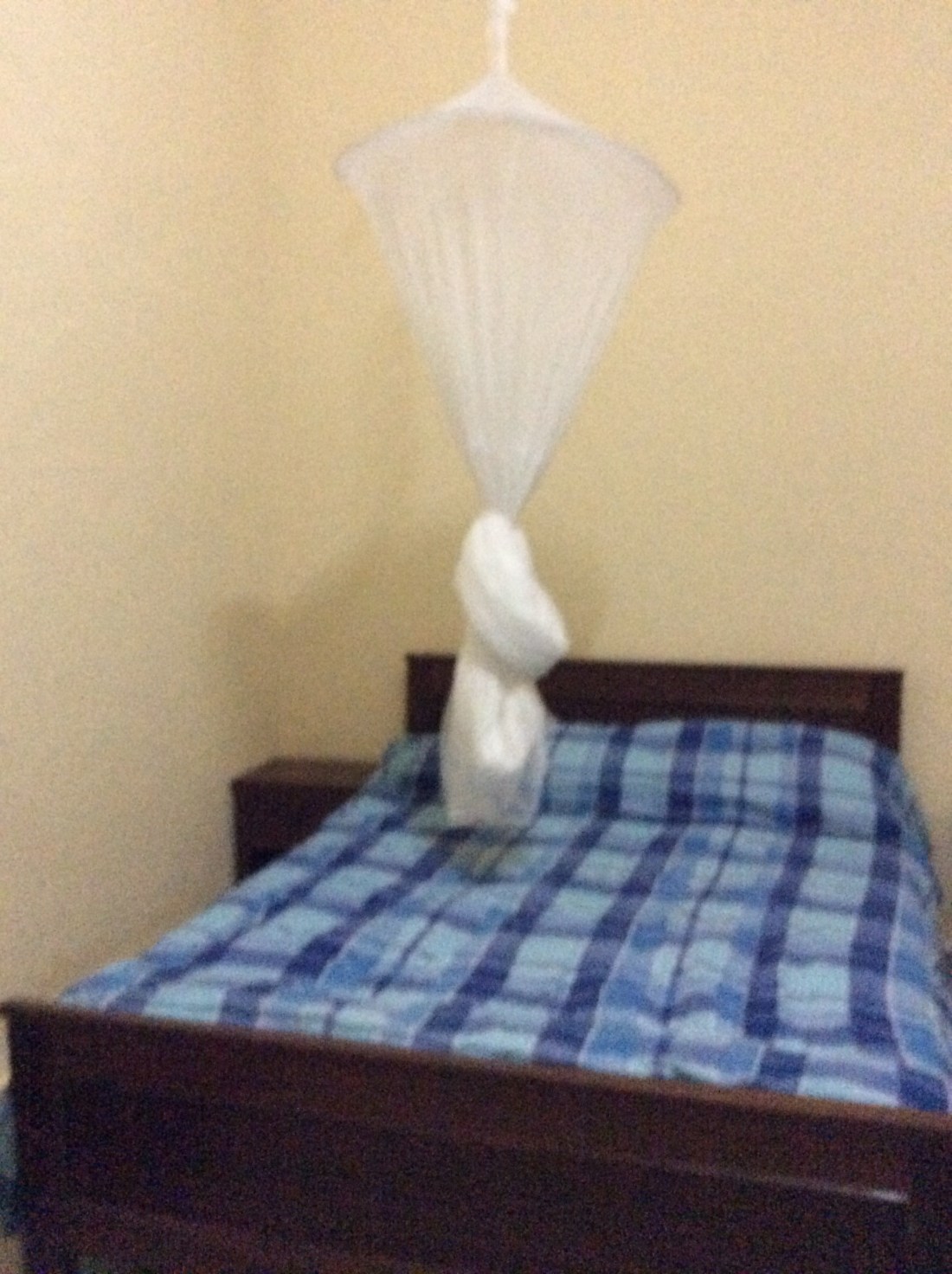
C9CFDF08-C337-49D0-8B6B-9F70947DCC23

And here is a picture of what my bed looks like when I get into it at night:
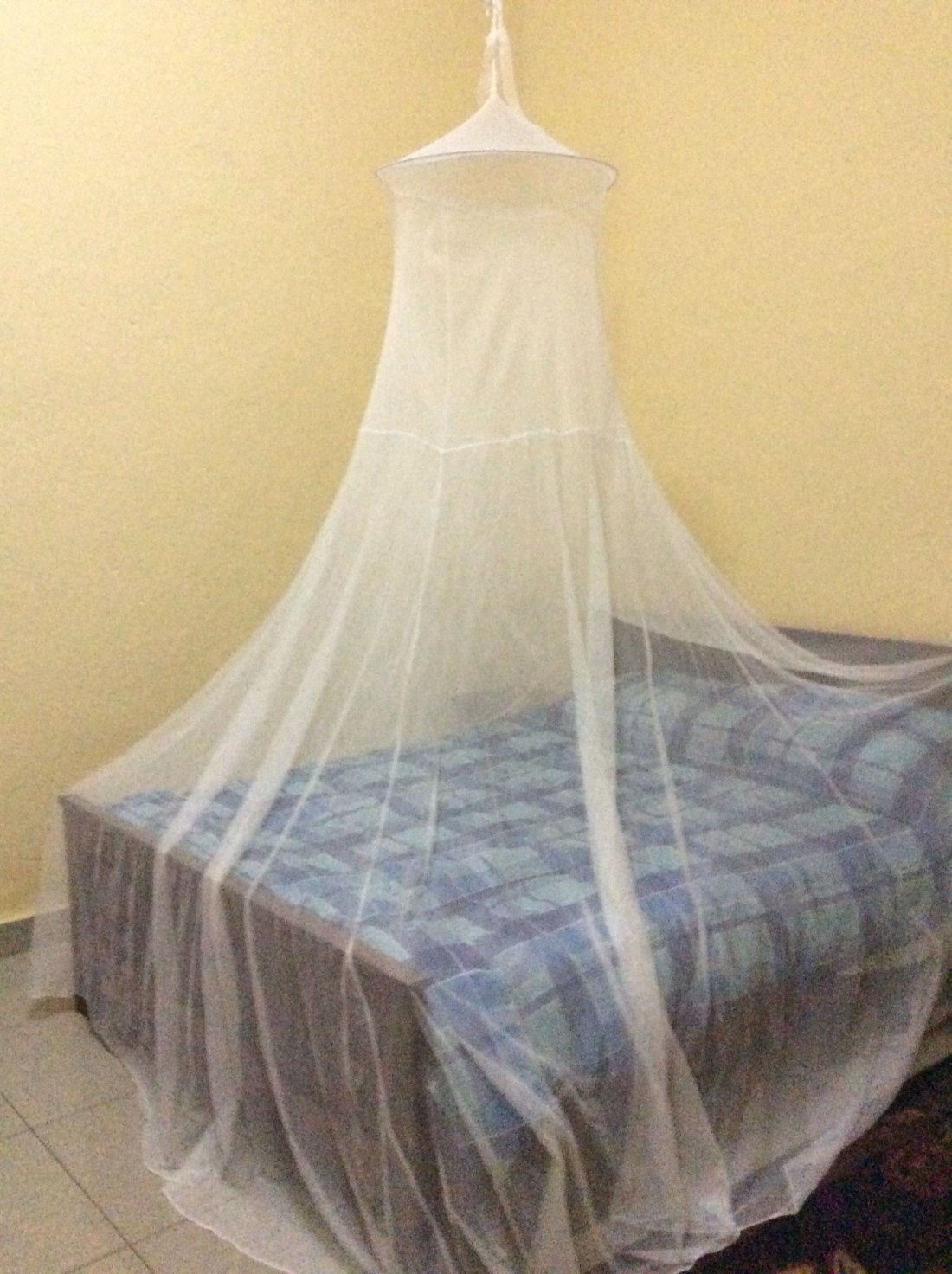
2759F38B-EDBE-4134-AC05-FA5C79475941

I thought it might feel claustrophobic, but it doesn’t at all.  It effectively keeps out mosquitoes, although one morning I did wake up to find a mosquito inside at the top of the net.

I thought I was doing a good job of avoiding mosquitos (making sure my windows were closed from 4 p.m. till 7 a.m. (which is the time when mosquitos love to be out and about) and wearing long sleeves and long pants in the evenings.  In the evenings and mornings, I always see a few mosquitos and have even killed a few, though hardly making a dent in the population.  A few days ago, I happened to look down at my feet and saw that they were covered with small red dots, which I was completely unaware of.  No itch, nothing.  Those sneaky little mosquitoes found the one exposed part of my body, because I love to wear sandals!   Fortunately, I take my anti-malarial pill every morning like clockwork, so no malaria symptoms yet.

Because there is so much rain here, it’s a perfect breeding ground for those nasty little critters that pack an incredibly powerful punch, considering their minuscule size.  And, I find it amazing that malaria is still so prevalent in so many parts of the world and that the only answer is mosquito bed nets.  But that’s another subject.

I knew that my house was far from mosquito proof.  I had noticed that my double metal front door had a gap in the middle where the 2 doors come together and on the bottom, perfect entry points for those little pests. The gap on the bottom is so big that a small lizard entered last week, which actually made me happy because lizards eat insects like mosquitos.  I had tried to block that gap with a towel, but the mosquitos were still getting in.  So I decided I needed some thick tape to tape over the gaps.  I had been looking for tape in the market for a couple of weeks and had not seen any.  So I looked up the word for “tape” in a Kinyarwanda dictionary: “ibande,” from the French word “bande.”

Equipped with my new Kinyarwanda word, I went to the market in search of “ibande,” but again did not see any.  I stumbled on a market stall that sold hardware items: tools, nails, plumbing items, etc.  It was like a mini, mini Home Depot.  Aha, I thought, it must have ibande.  So I asked the market seller if he had ibande.  He looked puzzled, as he repeated the word “ibande,” shaking his head.  As usual, a small group of Rwandan men crowded around to see what the umuzungu (foreigner) was up to.  They also looked at me quizzically when I said I wanted “ibande.”  I even wrote the word down, thinking perhaps my pronunciation was off.  The men all looked at the word, as if I had written down something in hieroglyphics.  As I continued to scan the numerous items in the market stall, I finally saw a large roll of tape in the back of the stall and pointed excitedly to the tape, shouting “ibande, ibande.”   Everyone was still confused by that word and the men and the market seller pointed to every item on the shelves except the ibande that I wanted.  It was quite comical, with me saying “oya” (meaning no) to every item presented to me.  I also tried using the word “tape,” which brought even more perplexed looks.  Finally, I got the seller to see the roll of tape.  And, everyone shouted what the name of that item was:  “Scotch.”  “Scotch?” I scratched my head as the seller handed me the tape.  Nowhere on the packaging was the word “Scotch.”  However, the word “TAPE” in very large letters was on the package, and I pointed that out to all the men around me.  “No,” they unanimously insisted, “The name is Scotch.”  A lesson in the enormous power of corporate advertising.  The 3M company, the owner of the tradename Scotch tape, should be proud of their marketing team.

Well, I was happy to have found the Scotch.  As soon as I got home, I used the Scotch to seal the gaps in my door to keep those pesky mosquitos out.  But, as there is always something else, this morning I noticed that a window in my house had been broken, creating a brand new welcome mat for the entry of mosquitos.  I used my new roll of Scotch to tape a piece of cardboard over the broken glass, which will do to keep out those awful pests until the school replaces the glass in the window.

 

Soccer Mania

3BB62794-28DC-4917-9756-420128DC92D2

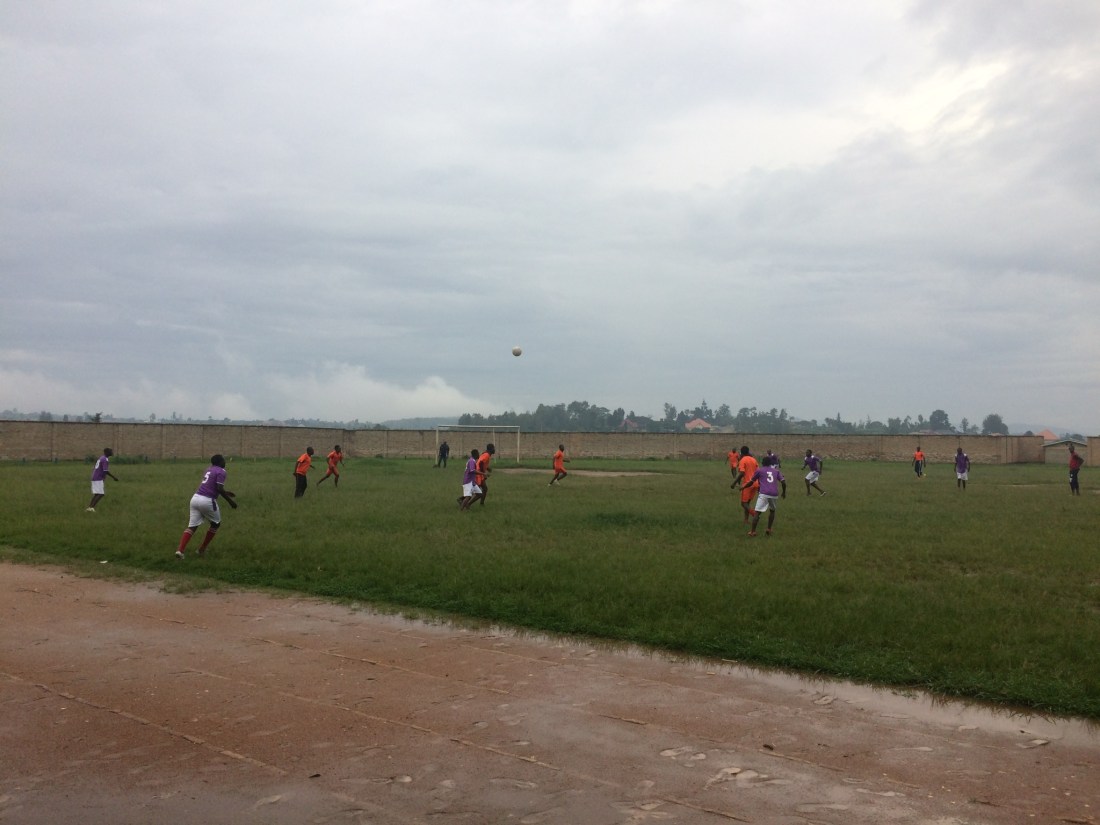
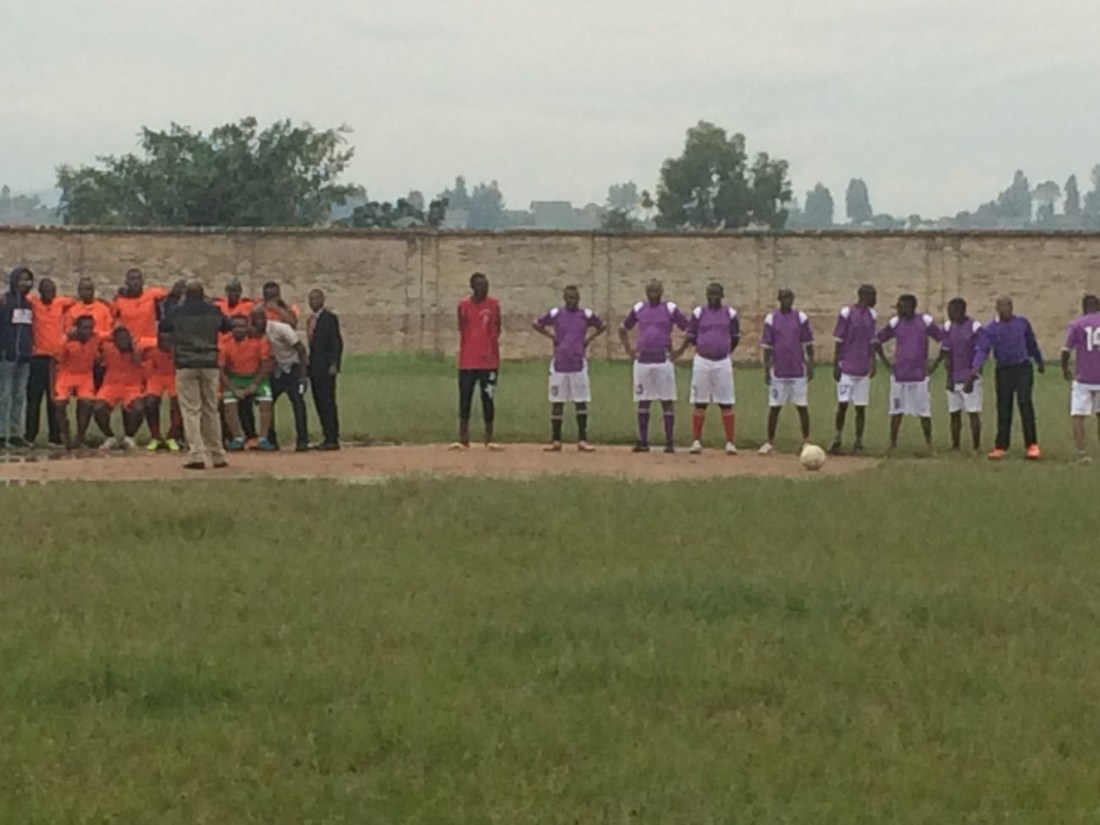
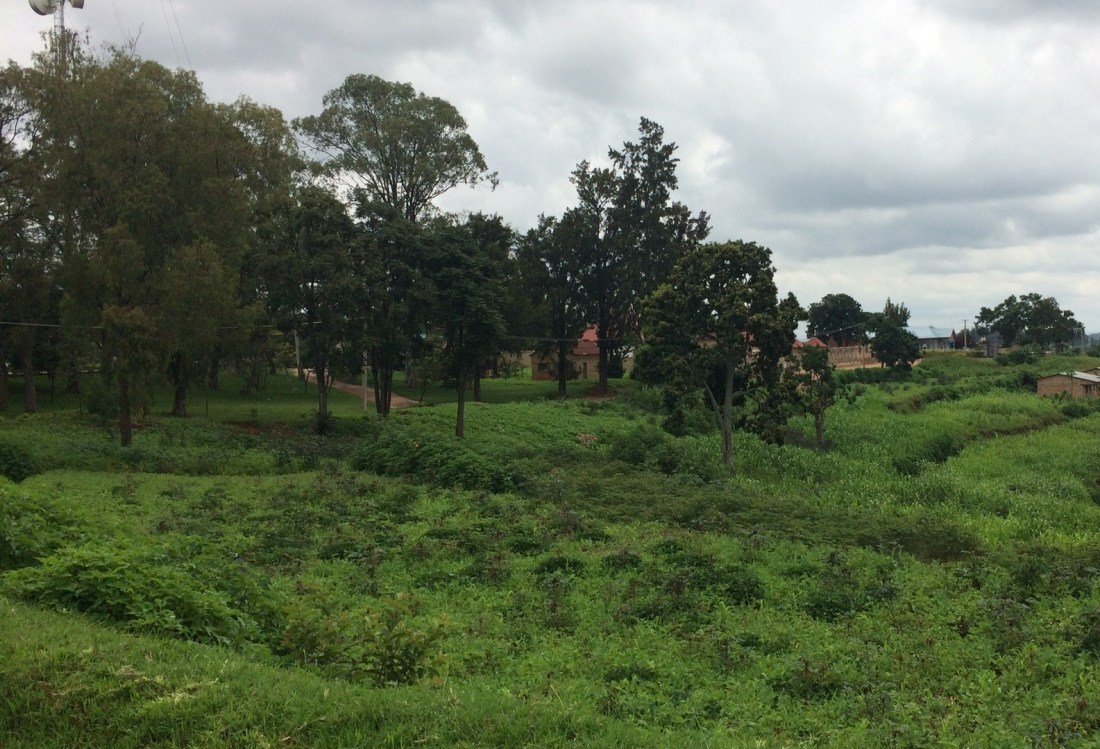
The much anticipated soccer match (which is called football here) between the school staff and students took place on Thursday.  The tension was palpable all week as both teams practiced for and strategized about the upcoming game.  I was invited to play on the staff team, but laughed as I told them that they’d be sure to lose with me on the team.  Nevertheless, my office neighbor loaned me an official staff jersey to wear to the game to show my support for the staff team (although I actually was rooting for both teams).  One of the students interviewed me on his smartphone before the game began and asked me what I thought the final score would be.  I replied that I hoped it would be a tie.

29118E32-80CE-41E6-894D-347D58C6BA0D

When the rain started at noon and continued until 4 p.m., the designated time for the match, I was sure the game would be postponed.  But not in Rwanda, where it has been raining nearly every day.  And, when it rains in Rwanda, it’s a torrential downpour, raining cats and dogs.  So, when the rain stopped, the teams took to the soggy field, and the fans, including me in my staff jersey, took to the stands.  There was an official referee unrelated to either team, who did a professional job.   The purple team was the school staff, and the orange jerseys the students.  And, what an exciting game!   Filled with so much action.  Because the field was saturated from th665DEE5B-1A75-4E8D-9BB2-9C23EEC797F3e rain, there was a lot of slipping and sliding.  Fortunately, no one was hurt.  The shoes and uniforms of both teams were so muddy, they looked like they were made for a Tide commercial.  The goalies on both teams did a fantastic job of deflecting lots of balls that would have otherwise been goals.  There was so much excitement that the fans were constantly cheering and shouting.  The final score was 5-4 in favor of the students.  The students couldn’t have been happier.

Rwanda’s Pied Crows

Pied crows are everywhere I’ve been in Rwanda.  They are said to be common throughout most of Africa. However, I don’t recall seeing them in West Africa.   Because they look like they are wearing a tuxedo, I think of them as “penguin” crows.  Although they look more formal than our drab-in-comparison standard American crows, they behave the same way.   I often have a large flock of them land on the metal roof of my house, and what a racket they make!