
This morning, Béné and I couldn’t agree on what to do so parted ways. Béné wanted to get an early start. However, I had some Peace Corps business to attend to, plus I woke up with a miserable cold, so I wasn’t able and, more to the point, was not eager to join her. Thus, after breakfast, Béné literally hit the road, as the Trail from here on is on paved road. She was headed for Mugonero, which she hoped was only 21 kilometers (13 miles) away and had a base camp where we could stay. However, the information that I scoured from the internet, was that Mugonero was 20 miles away and warned that finding a place to stay there would be difficult, if not impossible. Everything that I had read stated that the only place to stay was the Esperance Orphanage, but that it may no longer be in operation. I had read a blog by a very strong young hiker who, just two months before, had been unable to find Esperance and so had hiked many extra miles to find a place to sleep. Not being nearly as young or strong as that hiker and feeling sick to boot, I was not looking forward to such an ordeal.
So, I let my fingers do the walking. But first, I looked up the Kinyarwanda word for boat: ubwato. Then, I called a young man I knew who was an ubwato captain in Kibuye. He quoted me an even more outrageous price than Béné was given yesterday in town. Drats! Next, I asked the manager of the guesthouse if he knew of any boat captains, and he gave me Claude’s number (0789085982). I called Claude and told him where we wanted to go; he replied that it would be 40,000 francs (about $46) for about 1 1/2 hour boat ride. I agreed to meet him at 9:15 a.m. at the boat dock, which was less than a mile’s walk from the guesthouse. I immediately called Béné who, though miles on her way on the road, did not hesitate to turn around and meet us at the boat dock. On the way, I stopped to purchase water at one of the group of small shops across from the boat dock.


The boat ride was peaceful, the scenery spectacular and Claude a delight. After five days of hiking, Béné and I were content to simply sit backpackless, take in the 360 degree panorama views of the lake and mountains and let Claude do the work.
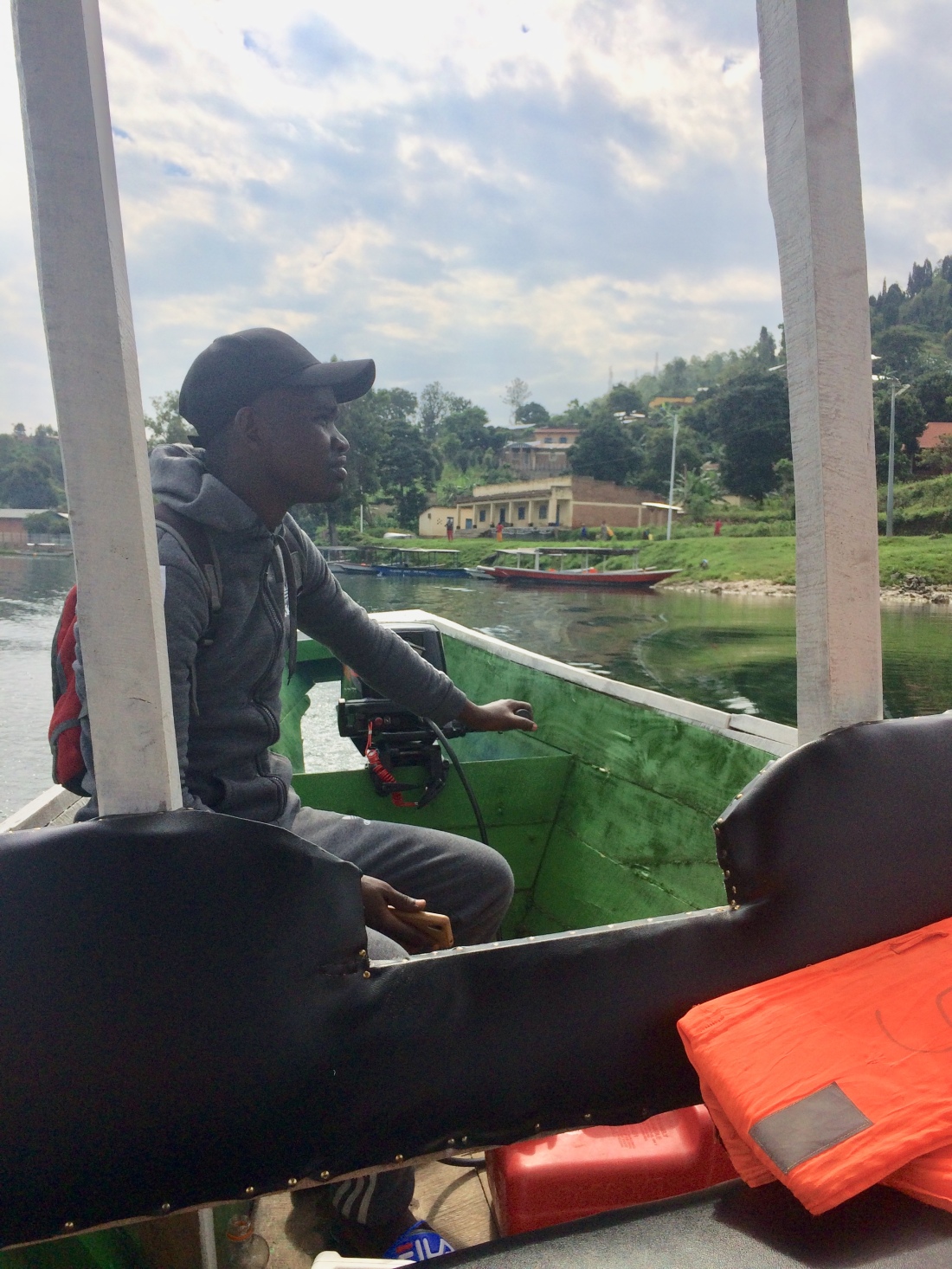
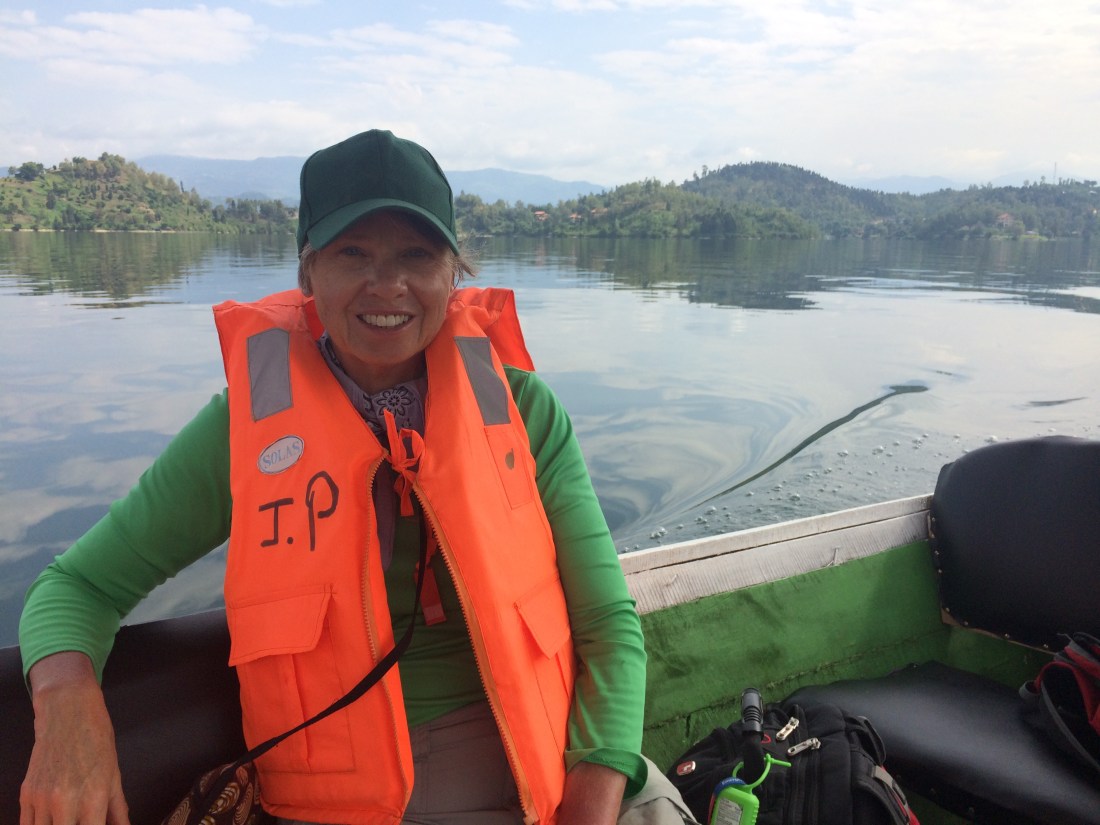
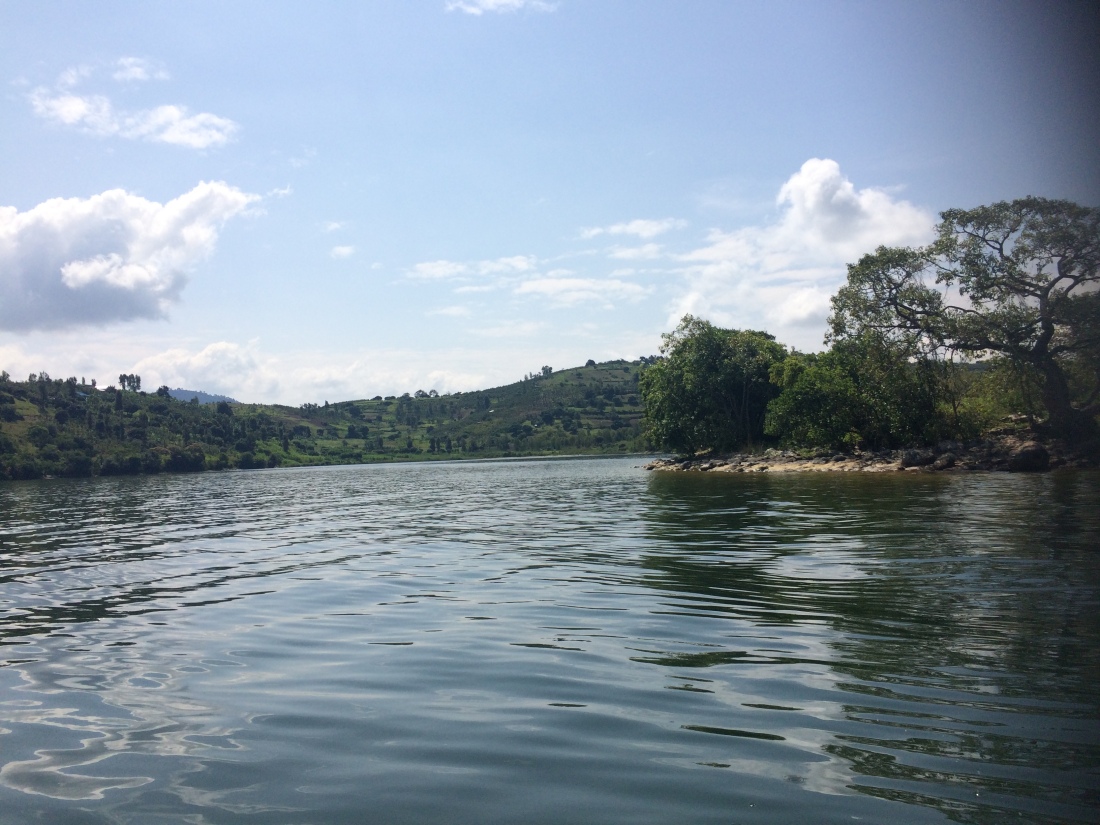
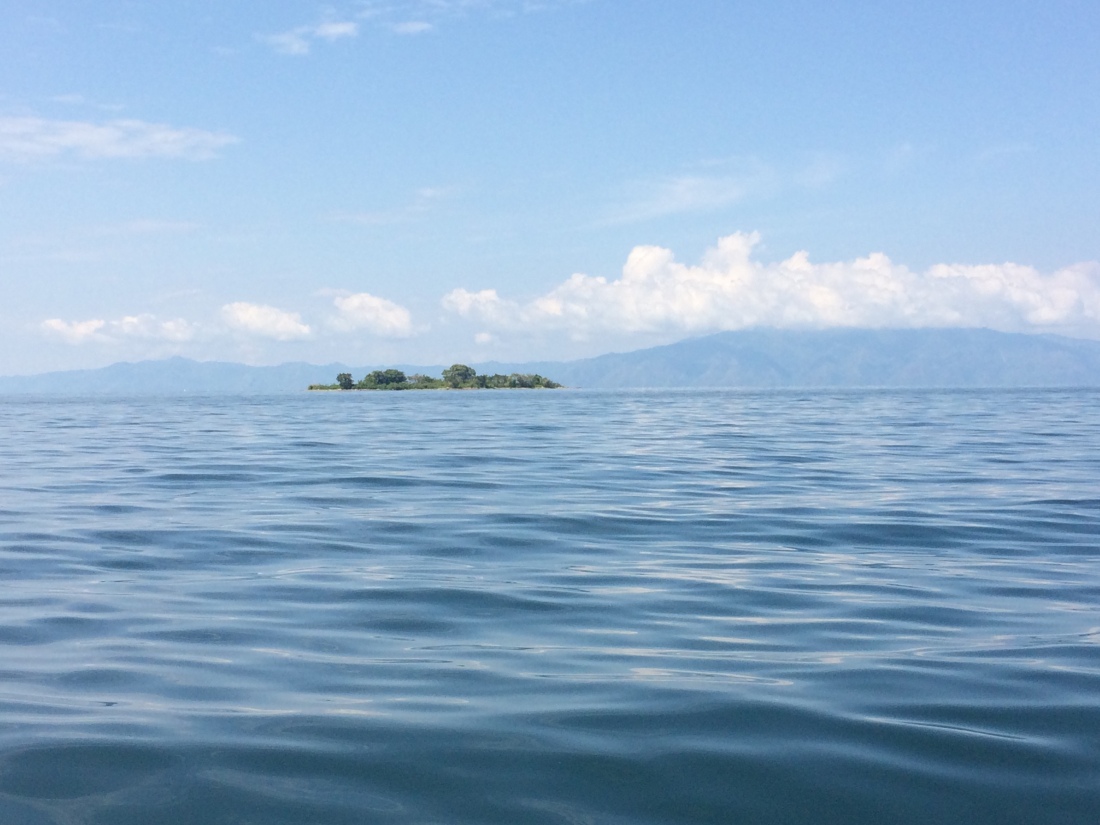
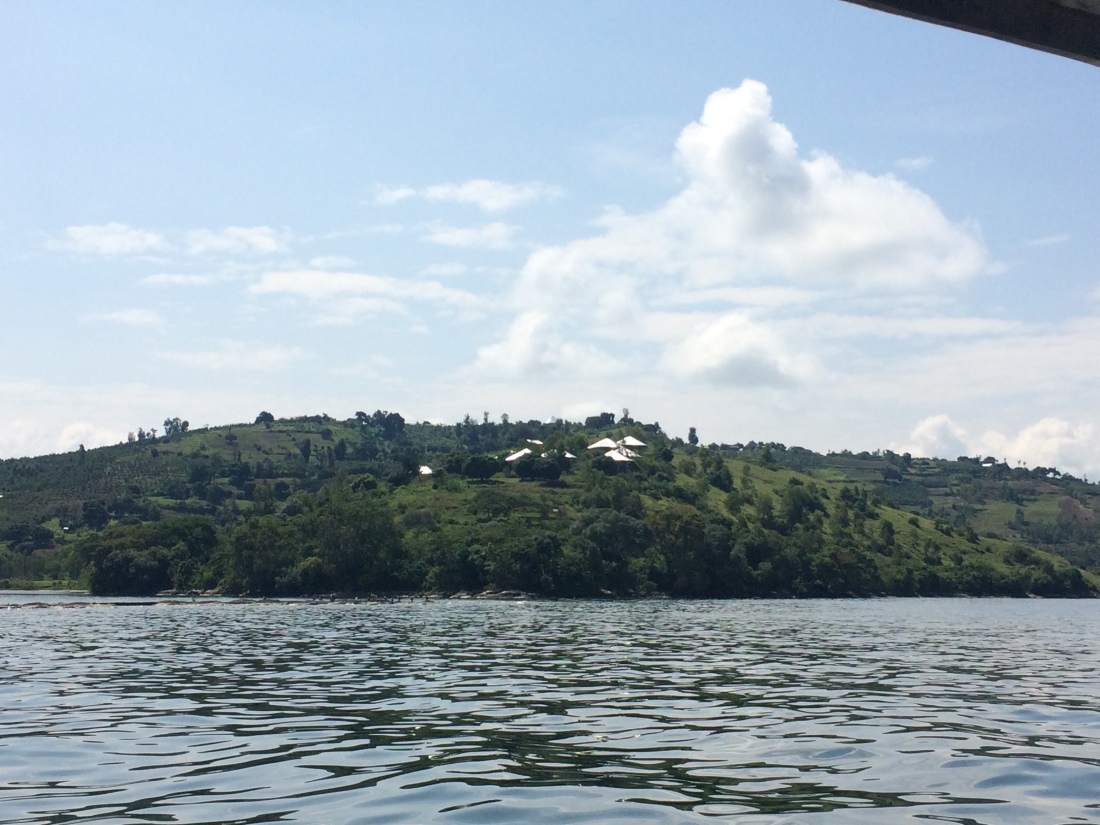
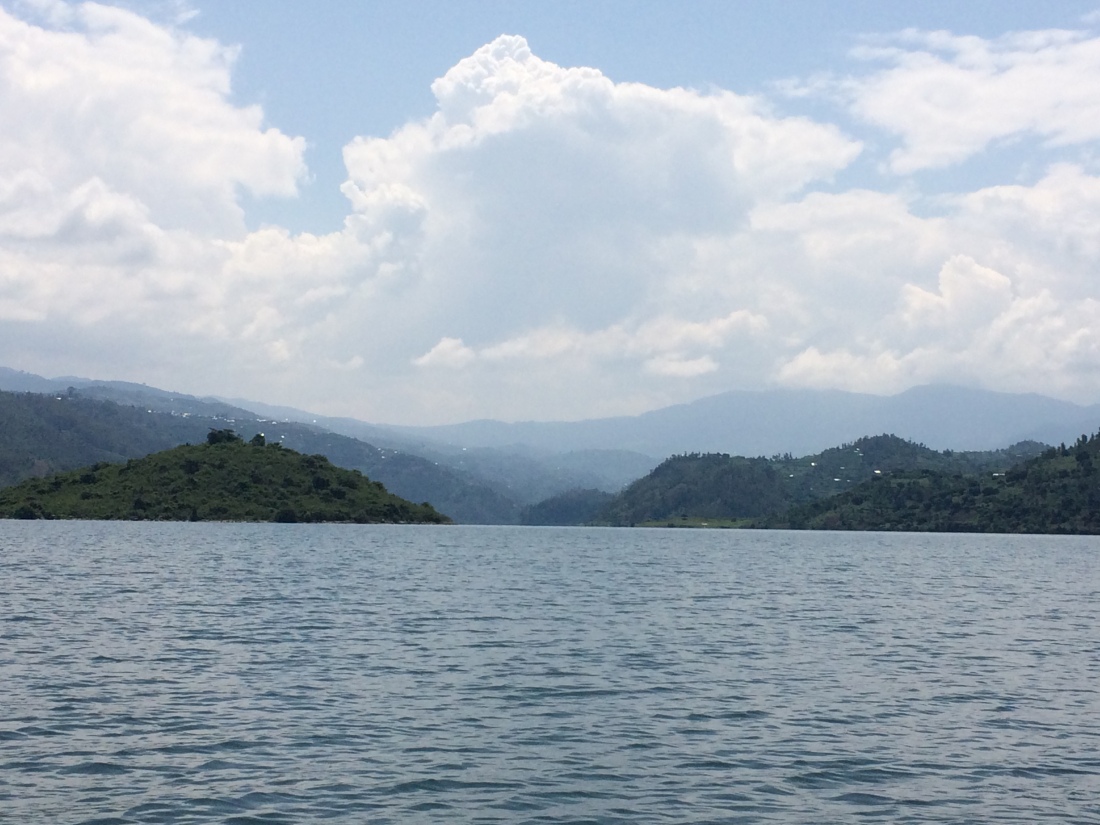
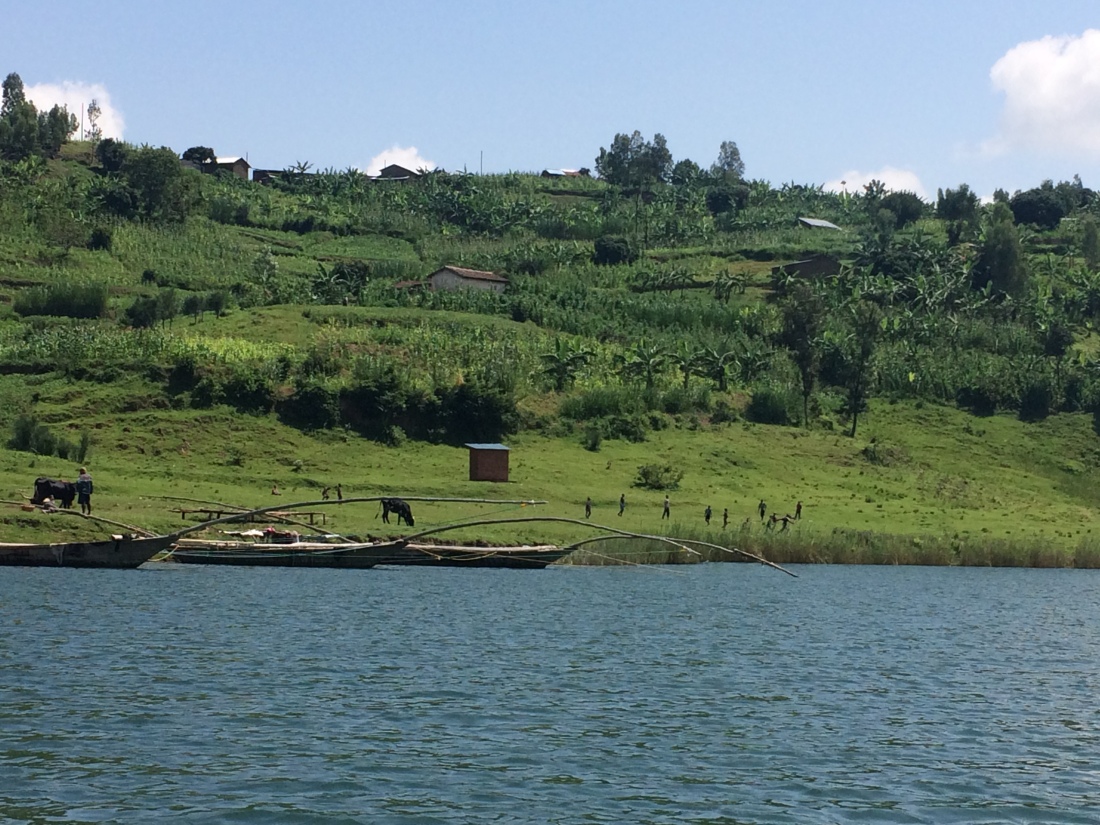
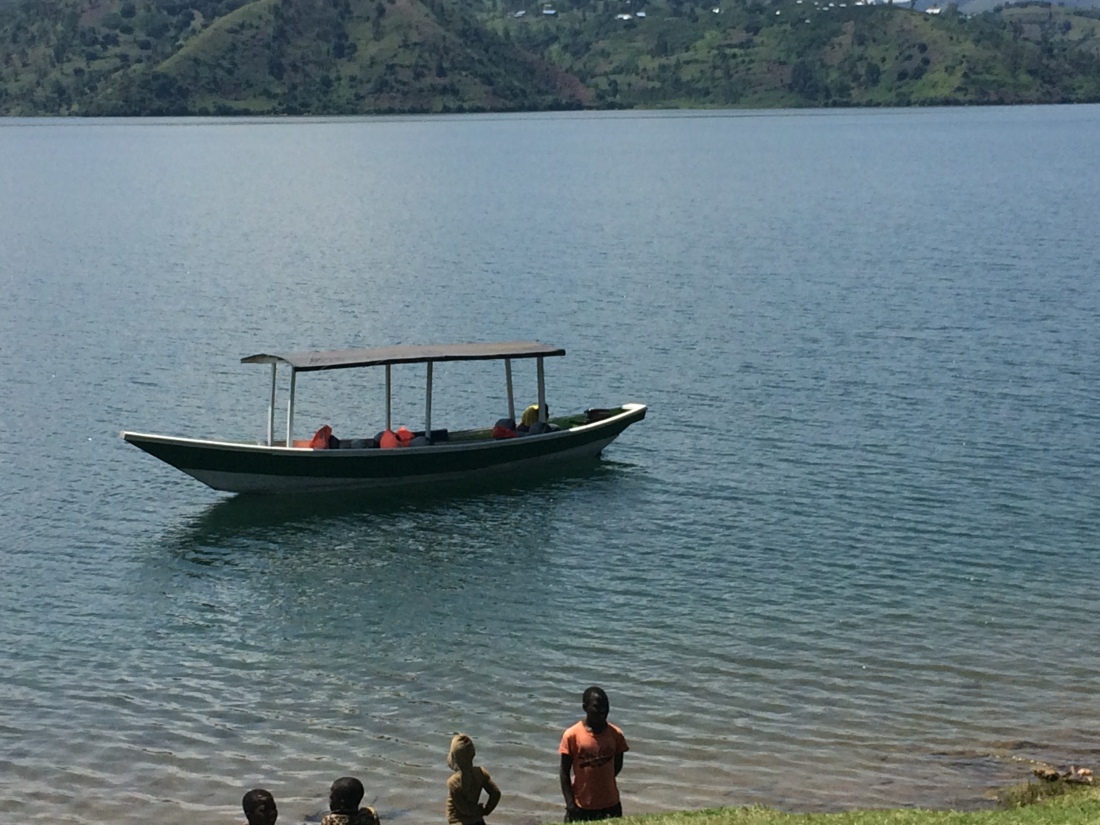
We reached the shore about 11:00 a.m. and Claude pointed out the direction of Mugonero. After waving goodbye, we heaved our backpacks on. At this point, we were not on the Congo Nile Trail. Instead, we were on a self-selected detour. Being at the lake’s edge, we faced an all uphill hike on a dirt road. We hoped that it would rejoin the Congo Nile Trail at the end of the day.
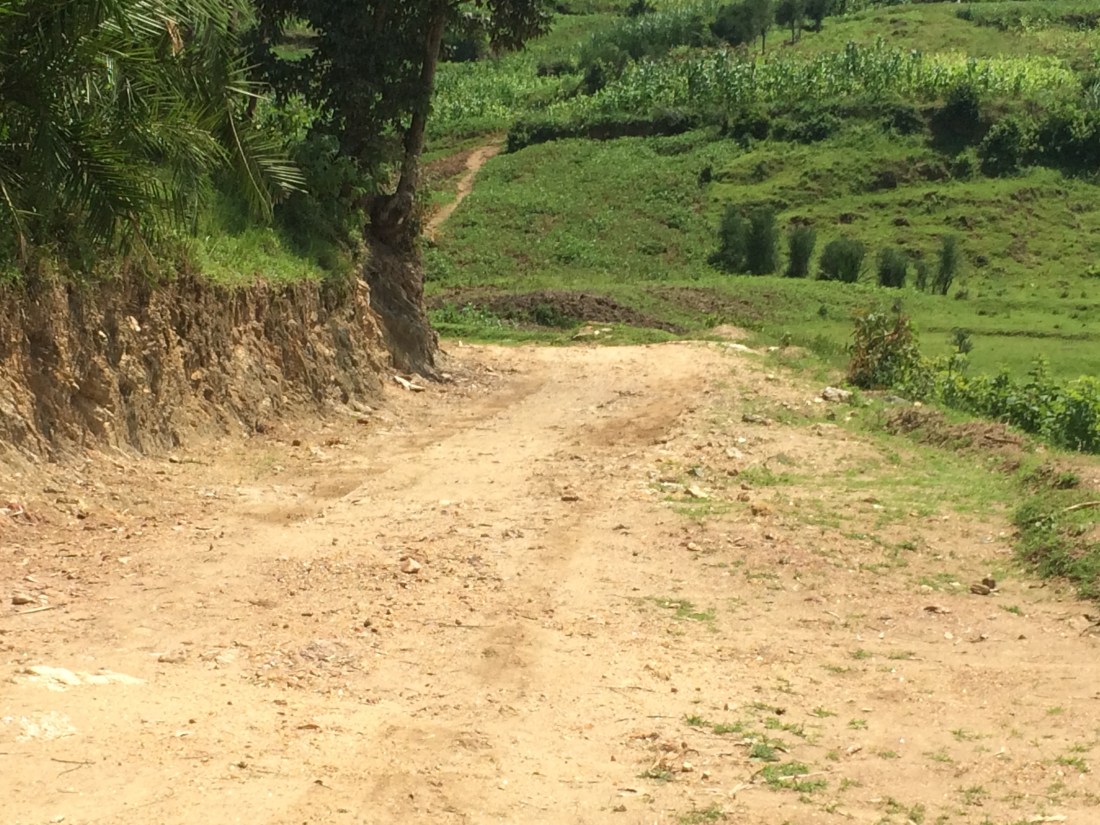
We continued to meet many friendly people as we hiked through small villages. I asked a young man where we could buy water and he directed us to a tiny dark shop where we purchased two bottles at 300 francs each. As we climbed higher up the road, the views of the lake became more spectacular.
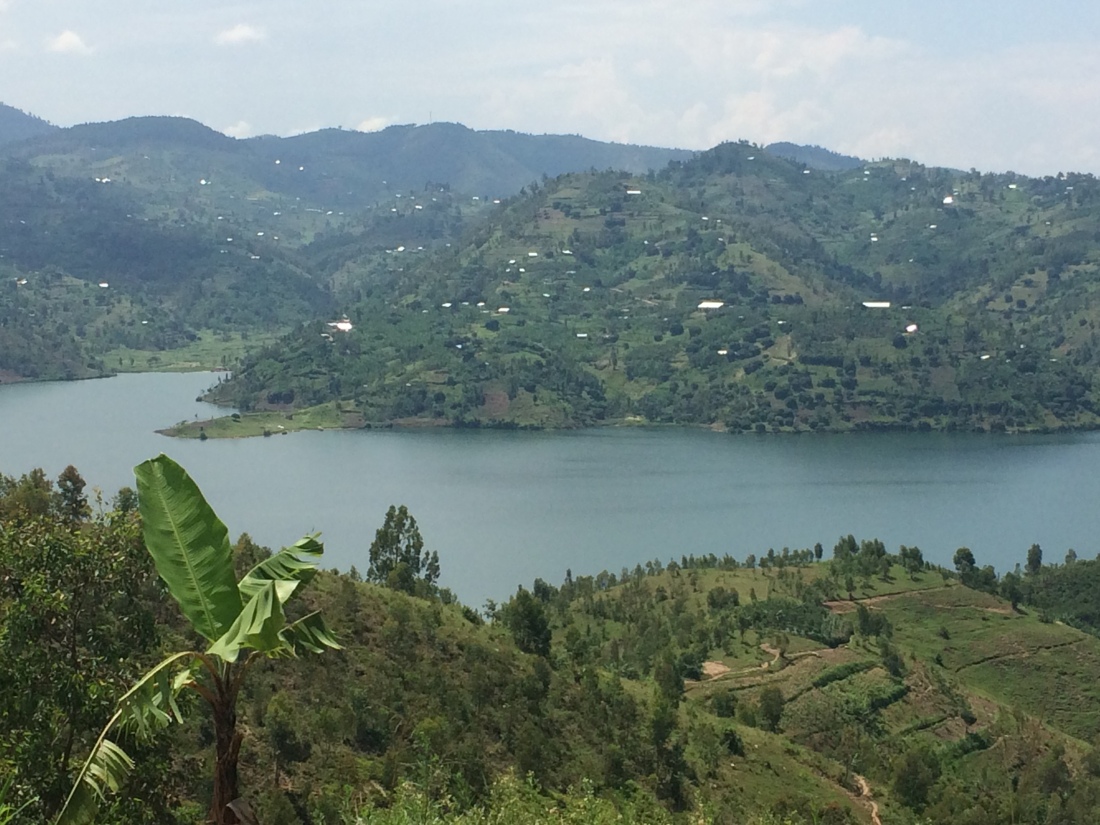
Nervous about not finding Esperance, I soon began asking everyone we met if it was ahead and if it was far. My spirits were buoyed each time someone seemed to know of it and assured me that it wasn’t far. But, it was far – and constantly uphill in the blazing sun and no shade. We were glad to be on a dirt road, but it was rocky and steep. We stopped a few times to catch our breath and let our heartbeats return to normal. We saw cows, chickens and goats, as well as fields of corn and bananas. As we had seen everyday, today we saw Rwandans hard at work in the fields. Béné bought two bananas from a shop and we sat on the side of the road as we snacked on them. Afterwards, we threw the peels to grateful goats. Once, we stopped to talk to two young men, who asked us if we were married. I responded by asking one of them if he wanted to marry Béné, and he became very embarrassed and sputtered, “No, it is not possible.”
After one hour and 45 minutes, we came upon the back of a Congo Nile Trail sign. I walked around to the front of the sign and was surprised to read “Mugonero base camp.” 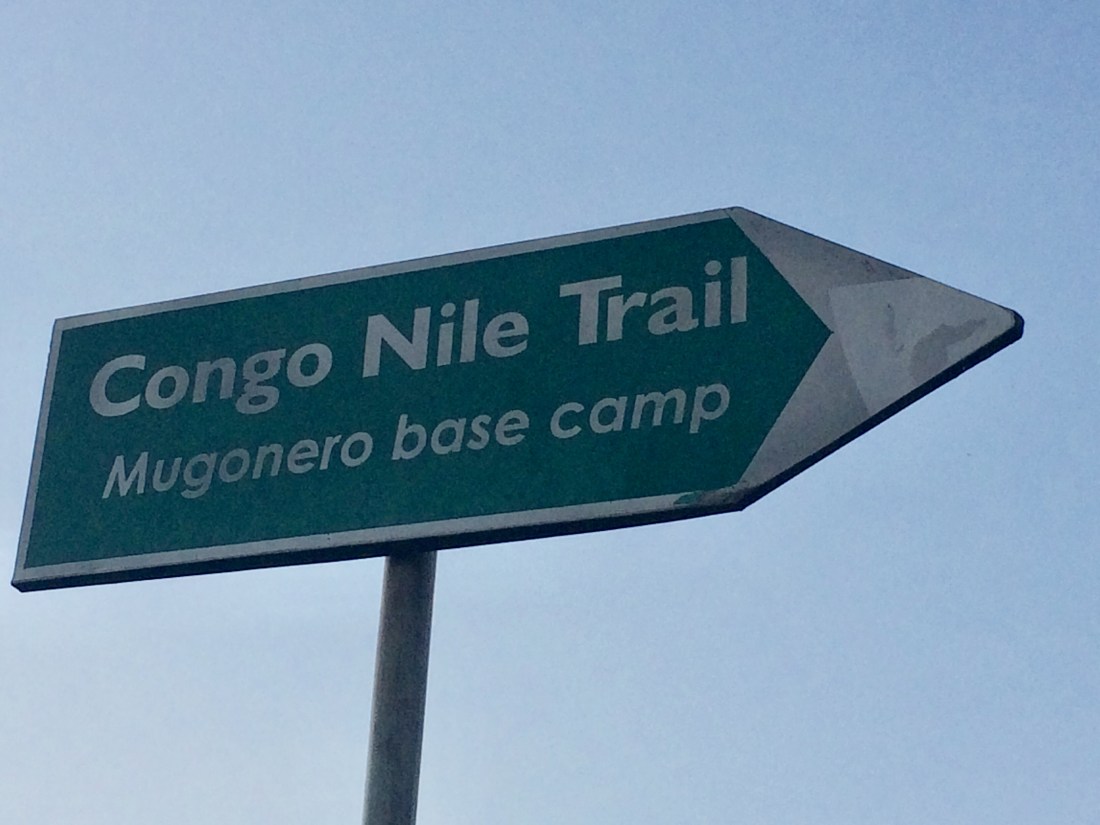 We turned in the direction of the sign and saw the word “Esperance” written on the side of a building. Esperance turned out to be a TVET school, a high school. (TVET, standing for Technical, Vocational Education and Training.)
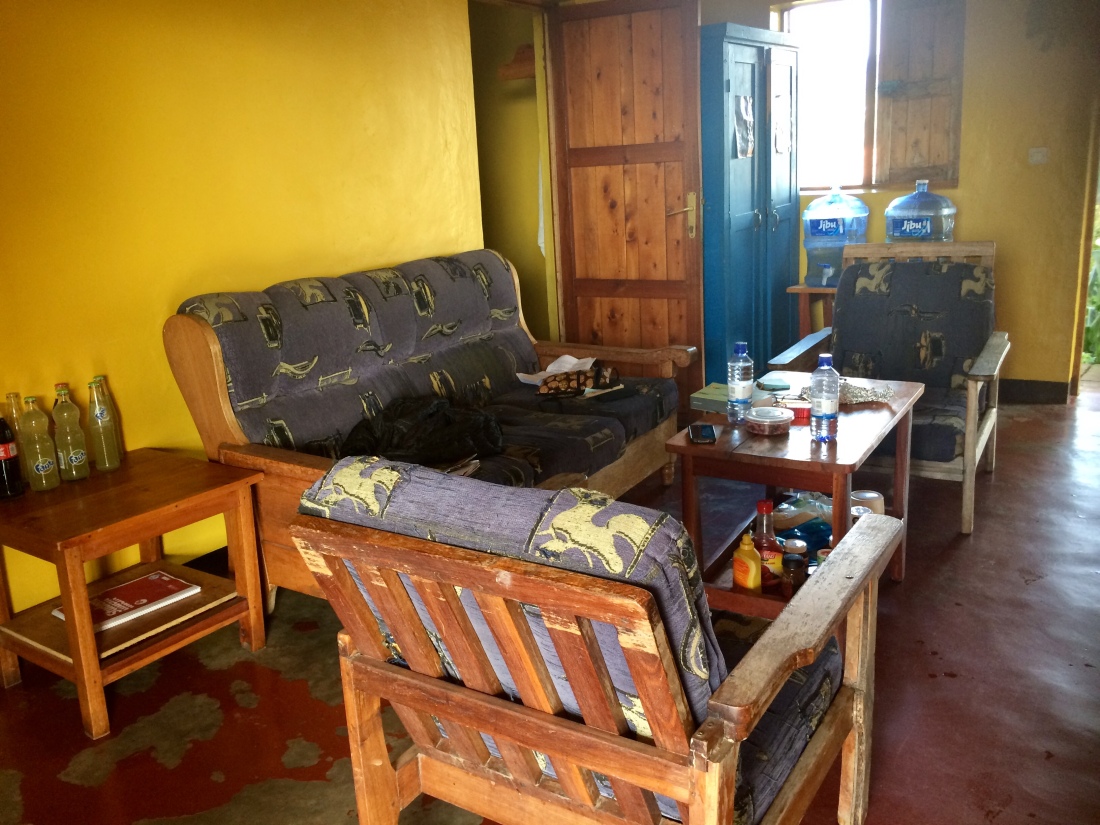
 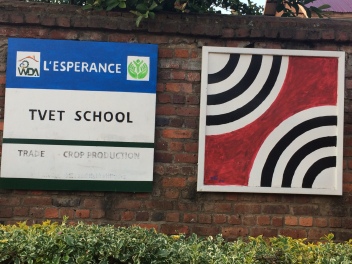 A man named Johan greeted us, asking if we spoke French or English. He said he spoke French and was delighted when Béné responded to him in her perfect French, which has come in handy many times on our adventure. He explained in French that the Mugonero base camp and Esperance are one and the same place. He took us through the school grounds and past many flourishing vegetable gardens to a building with a colorful flower garden in front. Inside was a large sitting room with two huge containers of filtered water. On one side was a bathroom with a makeshift shower made from a calabash,
 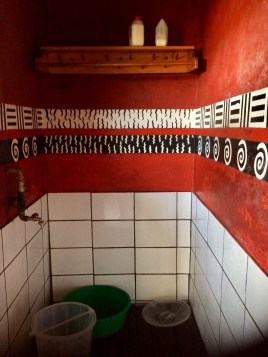 and a bedroom. On the other side of the sitting room were two more bedrooms. Just outside the door was the latrine with a wooden seat.
Béné and I chose a room with two twin beds (with mosquito nets), which was spotlessly clean. For 15,000 francs (just over $17 each), we got our shared room, dinner and breakfast. Our engaging host, Prince, (who speaks excellent English) told us that the guesthouse can accommodate up to twenty people and that it had been an orphanage but is now a secondary school specializing in agriculture. Prince explained that the orphanage, which was funded by German church groups, closed in 2014, then switched to a secondary school. Observing the many meticulously cared for gardens, I could see that the school was proud of its work. Prince also told us that the last hiker who stayed at Esperance came through a week earlier. (Scovia and John at Musasa Homestay had told us the same thing. Indeed, we never saw any other hikers on the Trail.) The school’s students were gone for the Christmas vacation so the grounds were quiet.
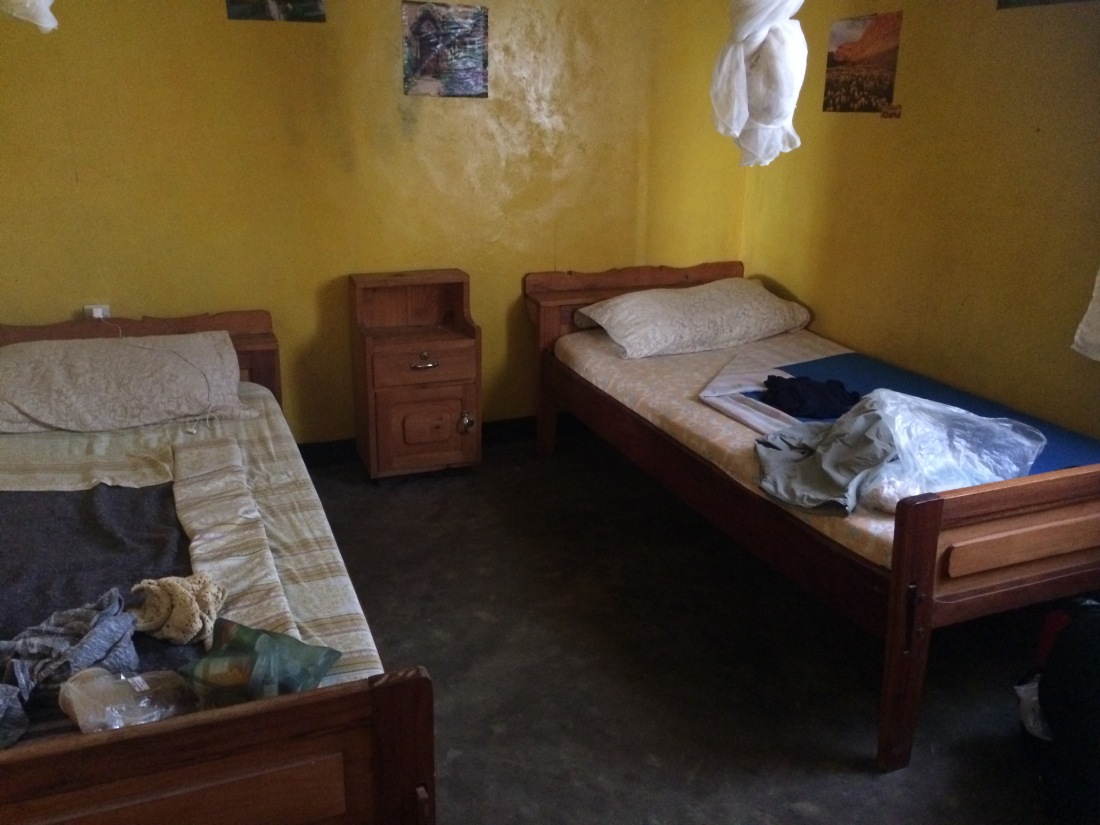
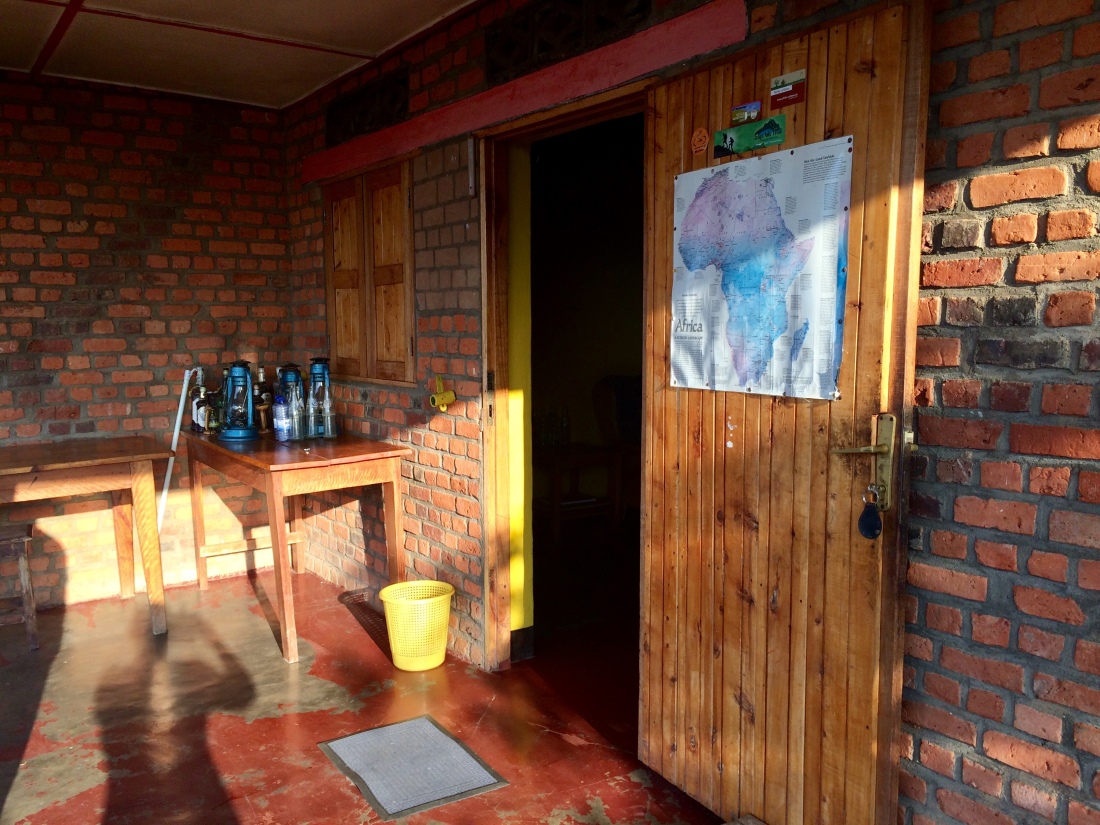

Our dinner and breakfast were served to us by the cook in our sitting room. For dinner, we had the best vegetable soup that I’ve ever eaten in my life. It was chocked full of vegetables – asombé (a leafy green that is similar to, but different from, spinach) and potatoes in a tomato base, accompanied by gargantuan homemade buns. Our dessert was bananas. There was also a large thermos of hot water for us to make tea. Our sitting room had a cabinet with boxes of black and green Rwandan tea bags to choose from.
The sitting room contained lots of games, including Dominoes and Uno. Hikers leave all kinds of things, like sunscreen and games, hoping that someone else can use them.
After settling in, we roamed the beautiful grounds, particularly enjoying the many paintings on the buildings.
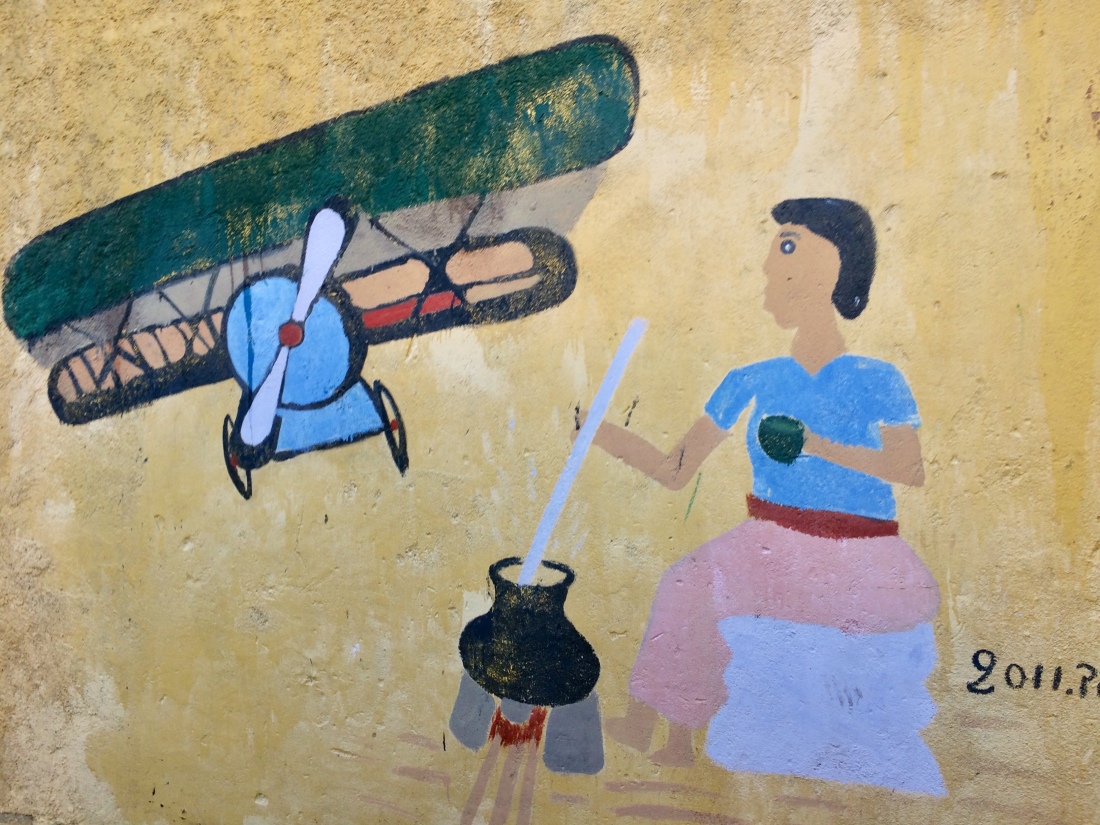
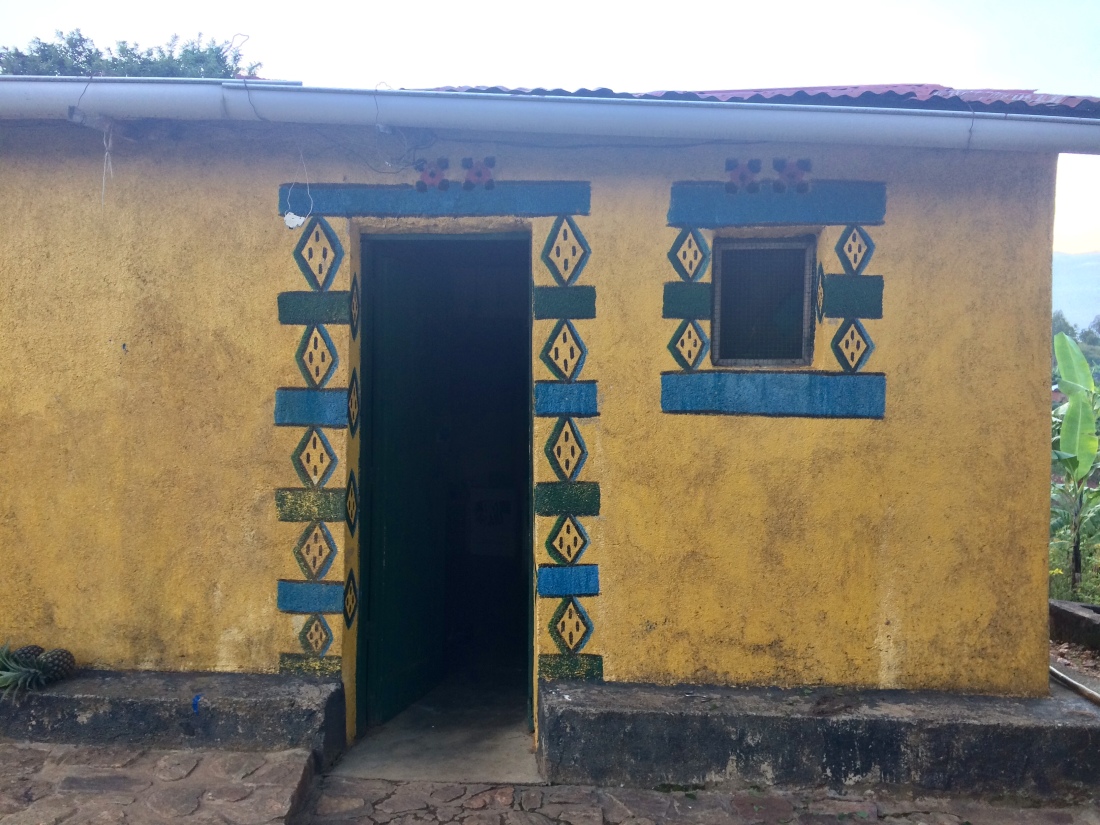
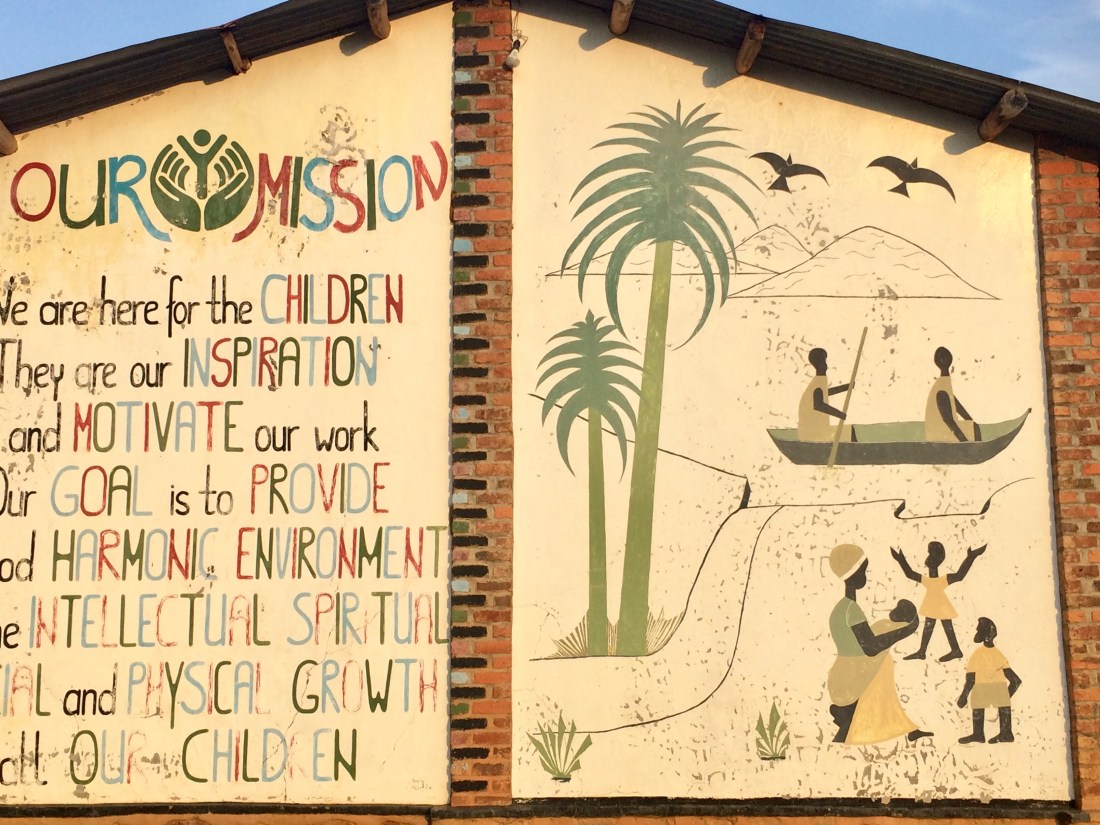
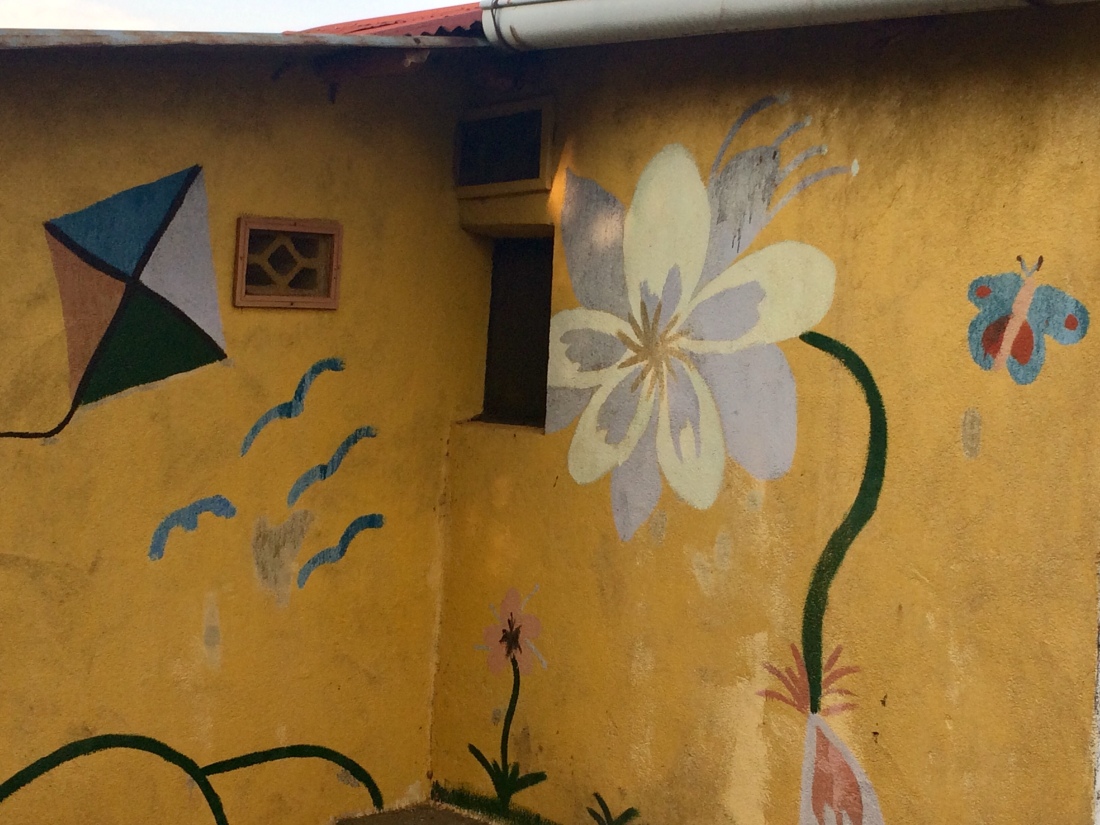
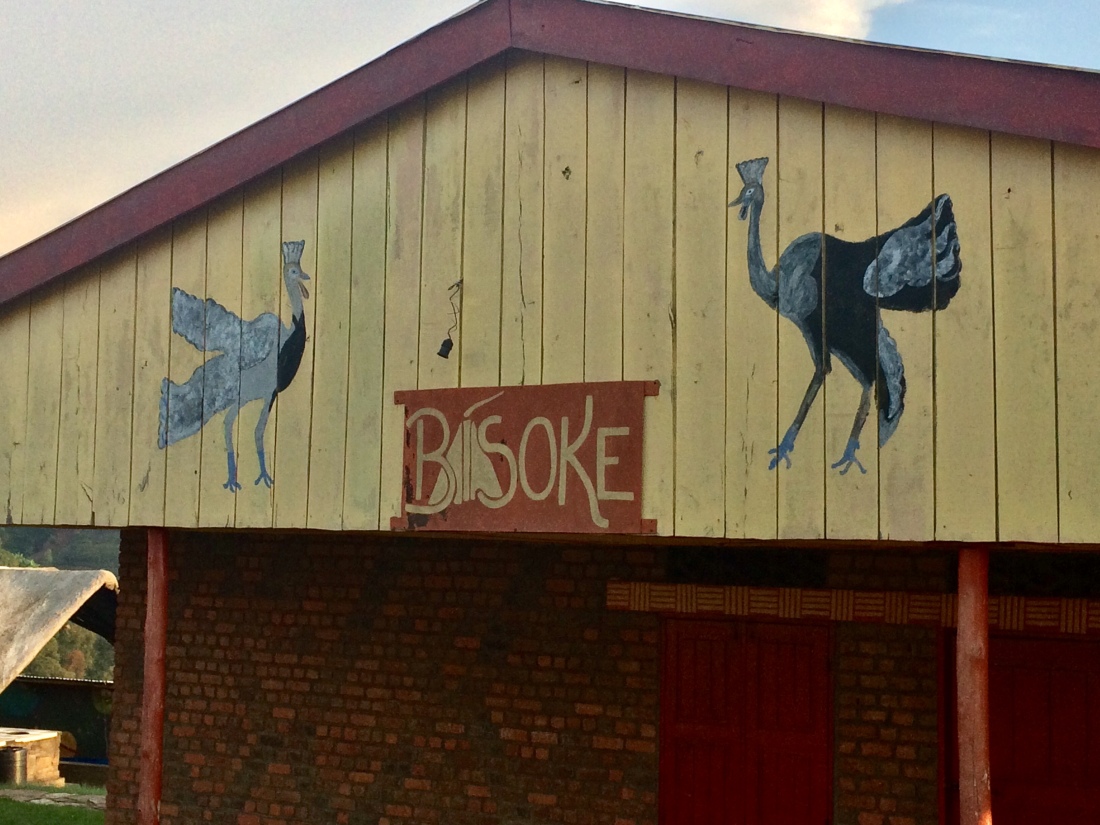
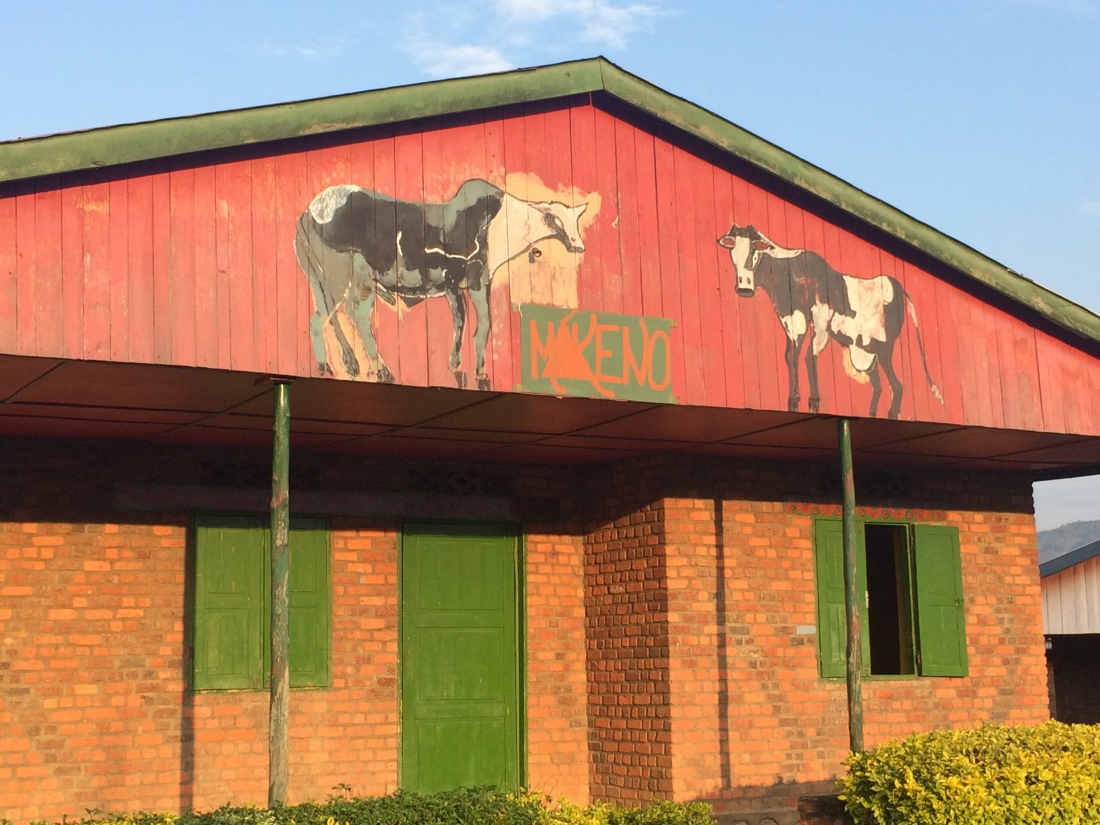
And, we saw a cow being taken to be slaughtered.
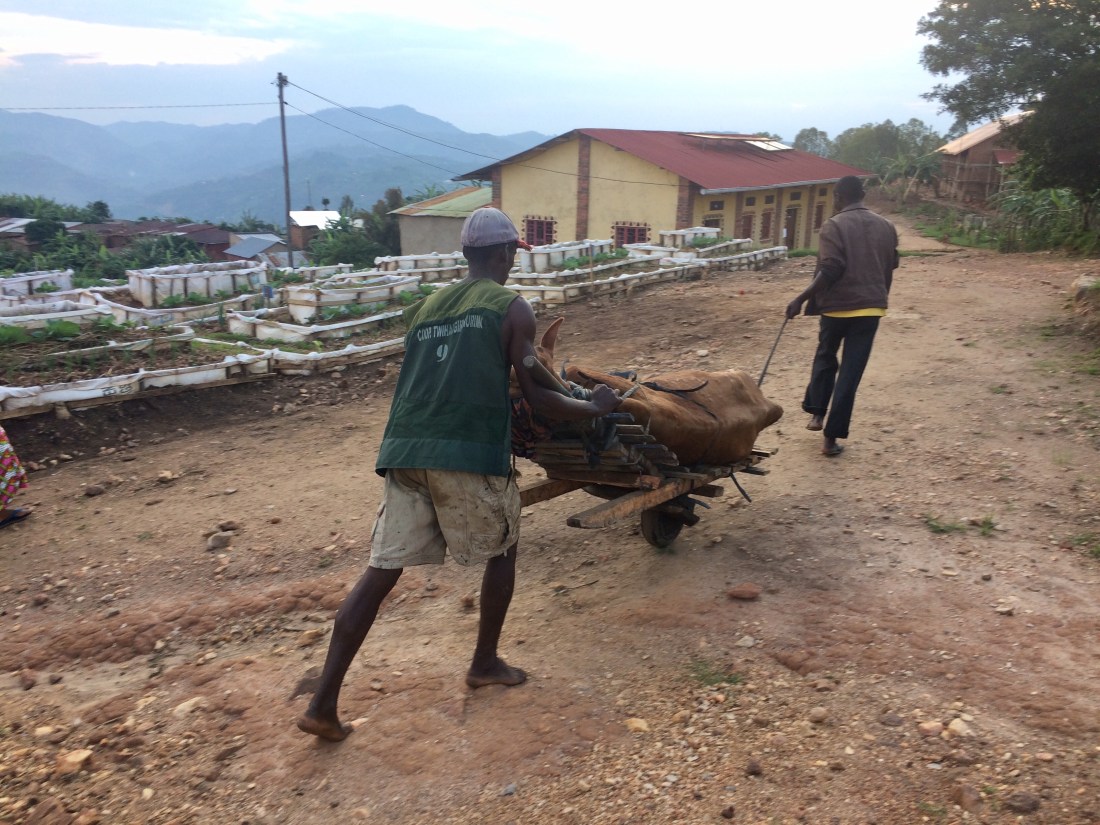 I was impressed with the neat, sturdy and functional latrine building erected for the students by Engineers Without Borders.
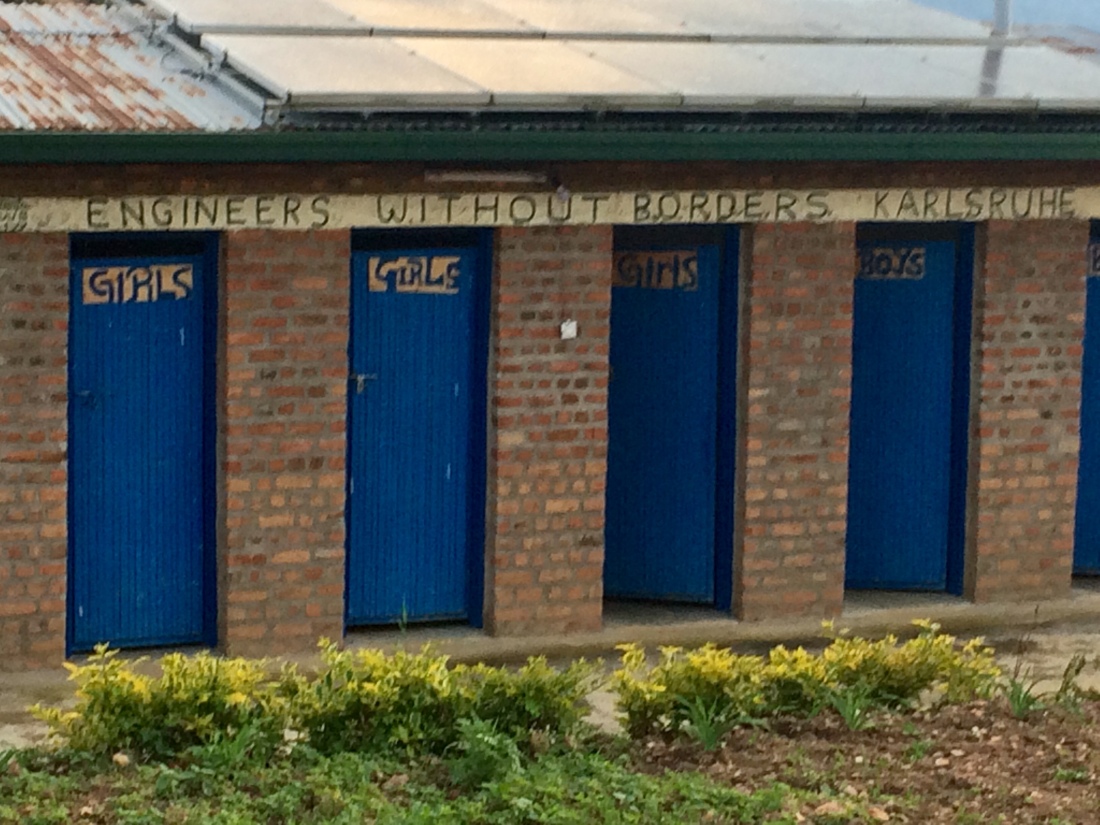 And, I enjoyed the numerous attractive well-tended gardens, some of which are in the photos below.


Our breakfast the next morning was a scrumptious omelette sandwich: two chapatis with bits of leafy greens in them and an omelette inside. The chapatis were the best I’ve had in Rwanda, and the eggs, laid by the school’s obviously organic chickens, were the brightest yellow-orange I’ve ever seen. For fruit, we had big bananas from the school’s own grove. To drink, we had a choice of hot Rwandan green or black tea. We saved one of the chapatis to have for lunch.
Some comments about Esperance’s location. We found it easily because we came to it from the lake, not the Congo Nile Trail. It is actually not on the Congo Nile Trail but rather on a dirt road that is off the main trail, which is probably why some hikers have had difficulty finding it. Esperance is a lovely place and would meet any hiker’s needs. However, there is an alternative place to stay for well-heeled travelers seeking luxury. (Rooms are over 200,000 francs, which is over $230.) The Kivu Lodge is perhaps an hour’s hike from Esperance downhill and thus much further from the Congo Nile Trail. We were surprised to see it when our boat docked near it. As beautiful as it appears to be, I bet it’s not anywhere as interesting as sweet and lovely Esperance!
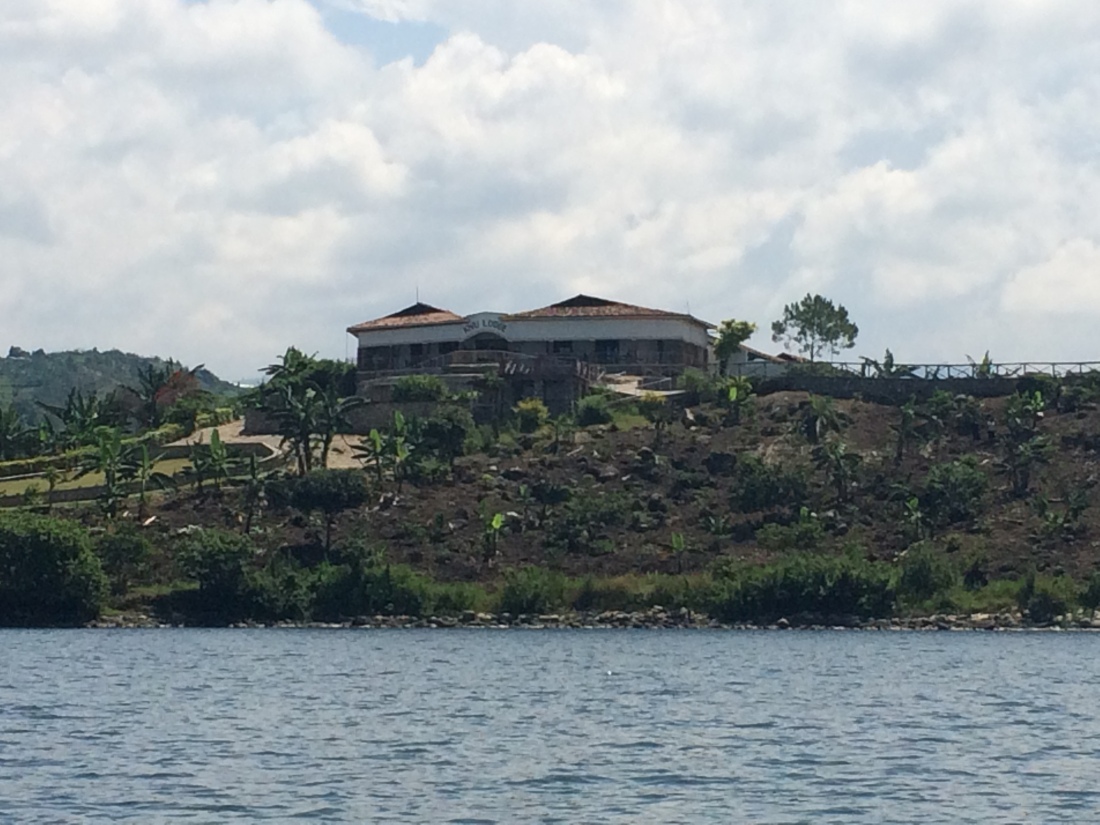
From the Trip Adviser website:
“The new Kivu Lodge is now open for business. The lodge is located on a small piece of land that juts into the calm waters of the Lake Kivu in Karongi District. The lodge boasts 20 spacious cottages, 2 of which are executive suites. It also has a restaurant, coffee bar and lounge bar. It boasts an outdoor cascading swimming pool overlooking the waters of the Lake Kivu. All the rooms offer stunning views of the Lake Kivu. They also have private balconies. The lodge is located on a private peninsula on Lake Kivu. It is surrounded by a private coffee plantation.”
 Ruminations from Rwanda